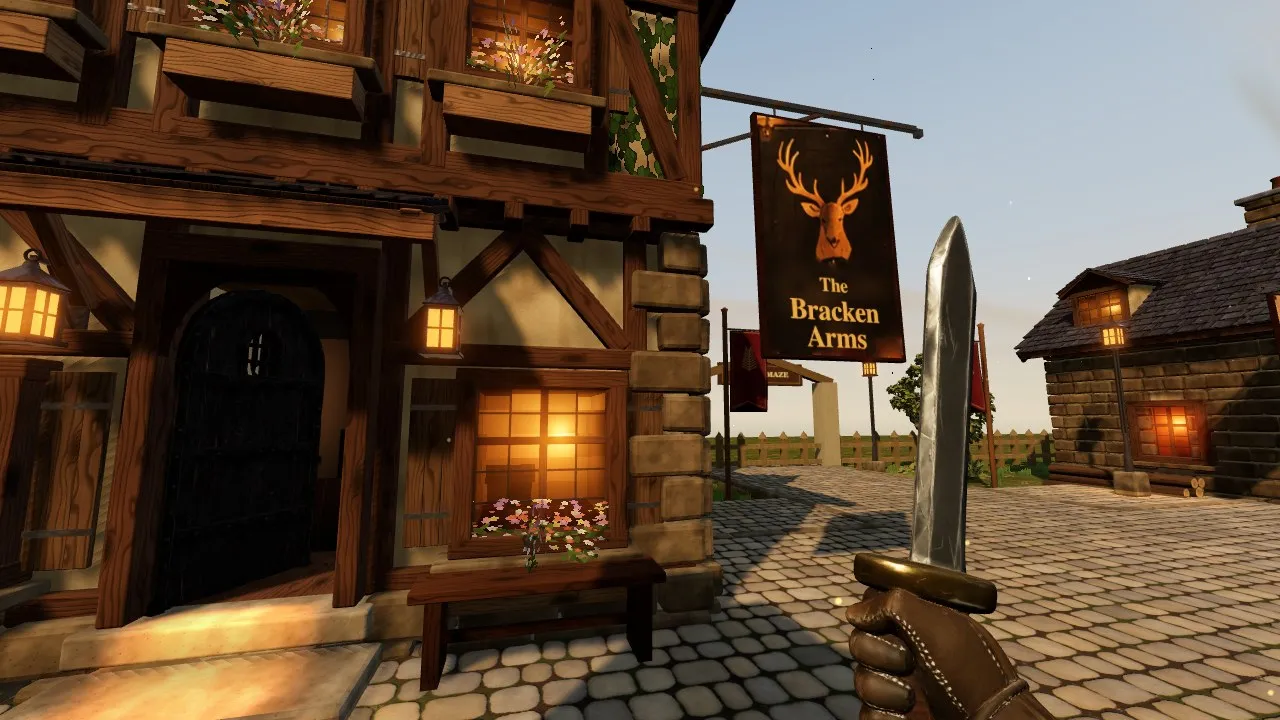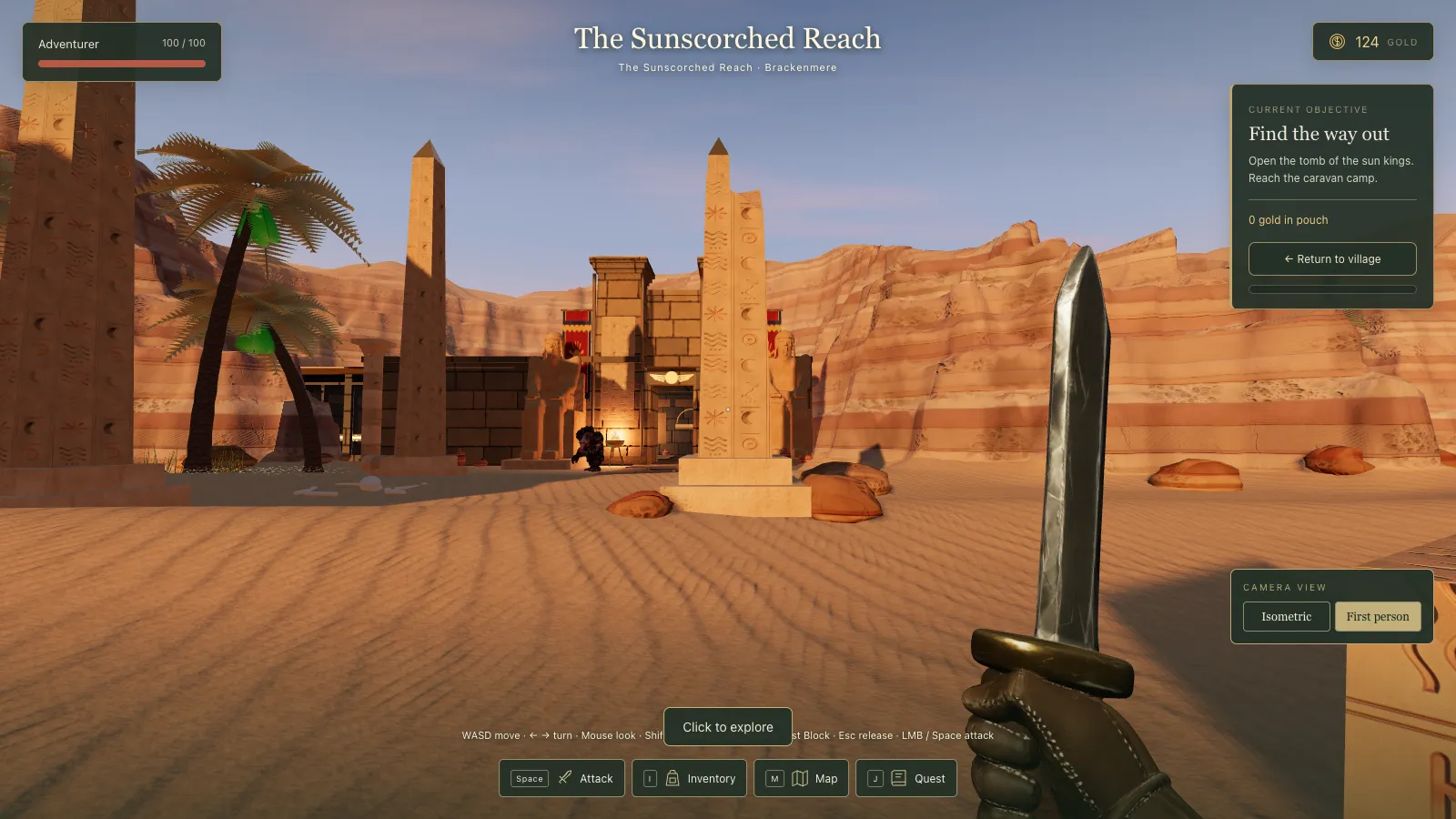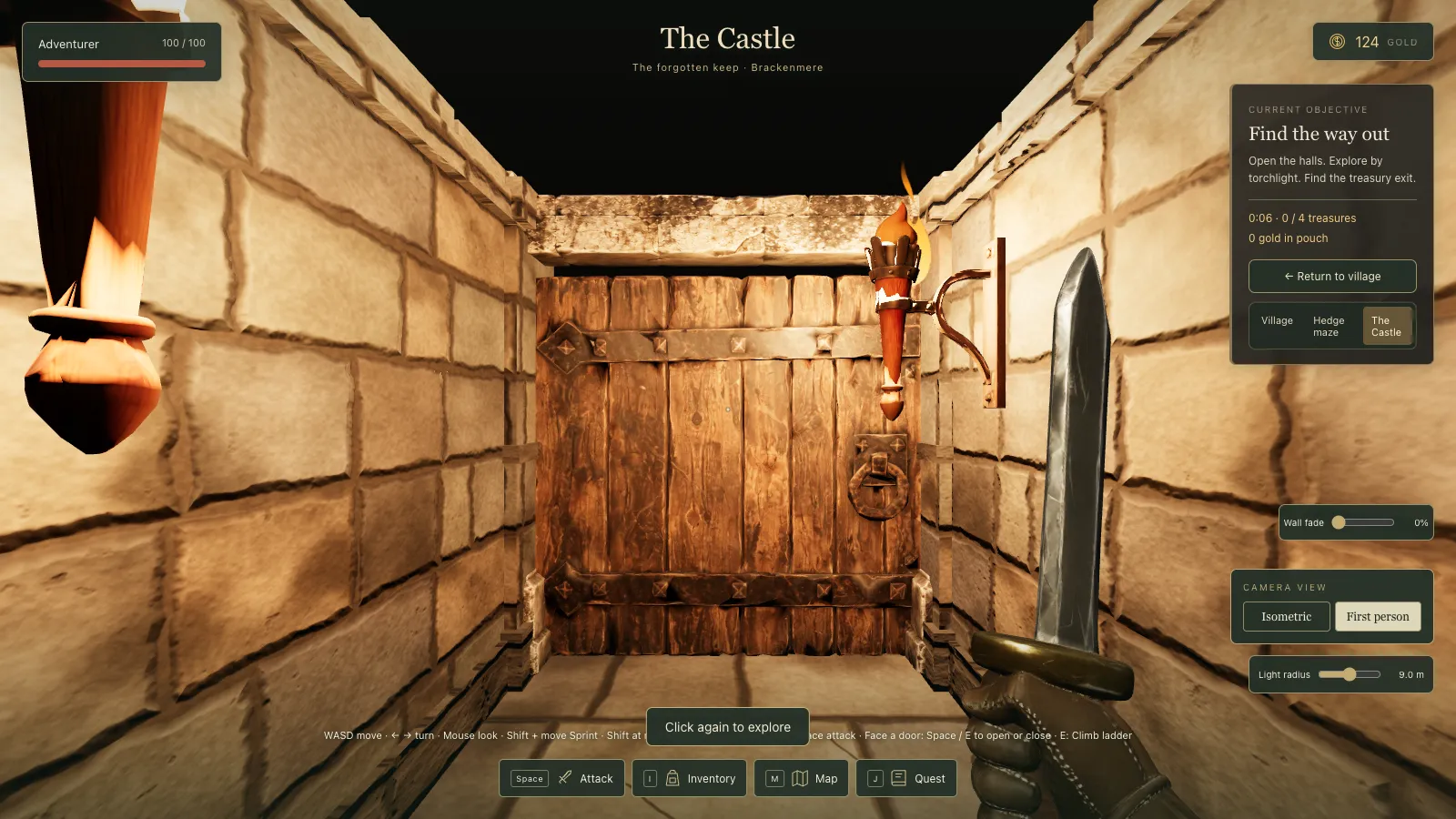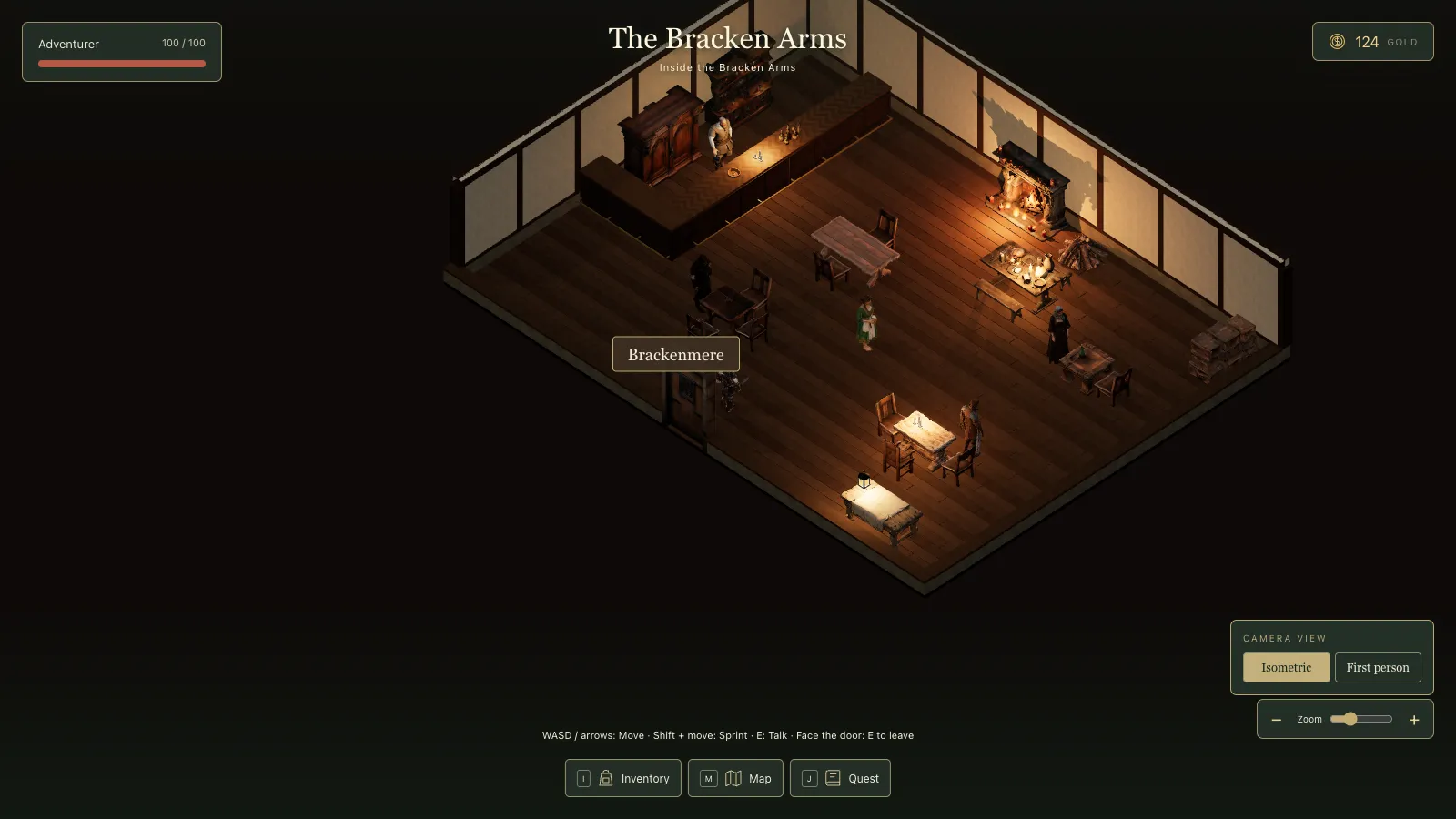
Brackenmere / dev log

Series

Building Brackenmere

The game, one major story at a time: worlds, combat, the village and the kids who played it.

G39 6 min read

The quest ledger, and five worlds finally joined up

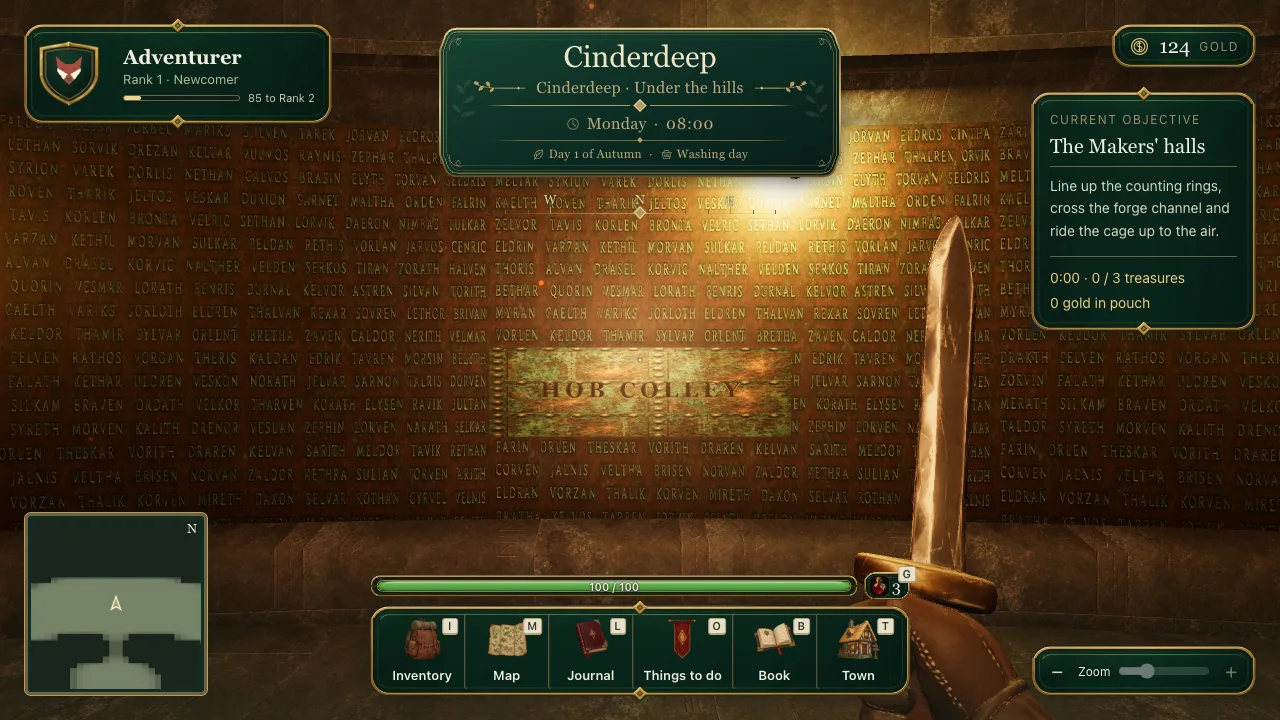
Brackenmere had five worlds that no quest sent you to. I asked for the quest ledger to be redrawn as a map, sent it to two AI reviewers to play it in their heads, and the agents built the chapter that threads those worlds into the story: the Five Stones.
G38 6 min read

Three new worlds in one night

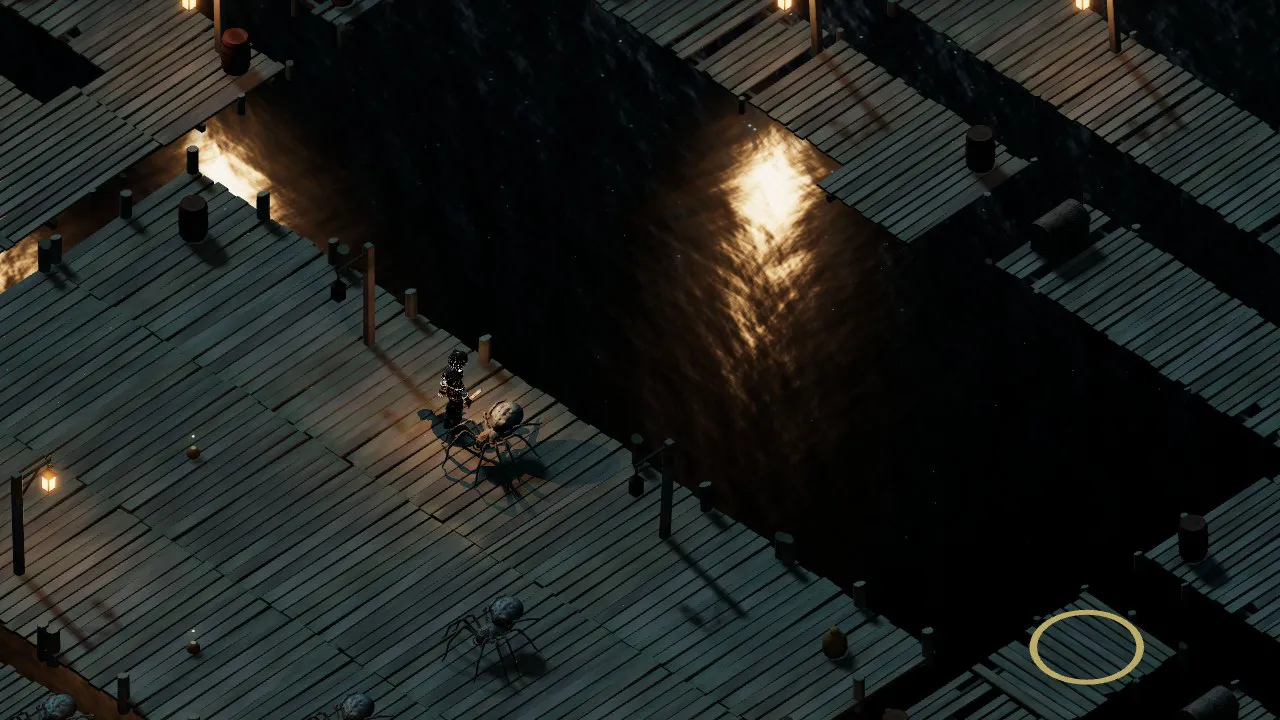
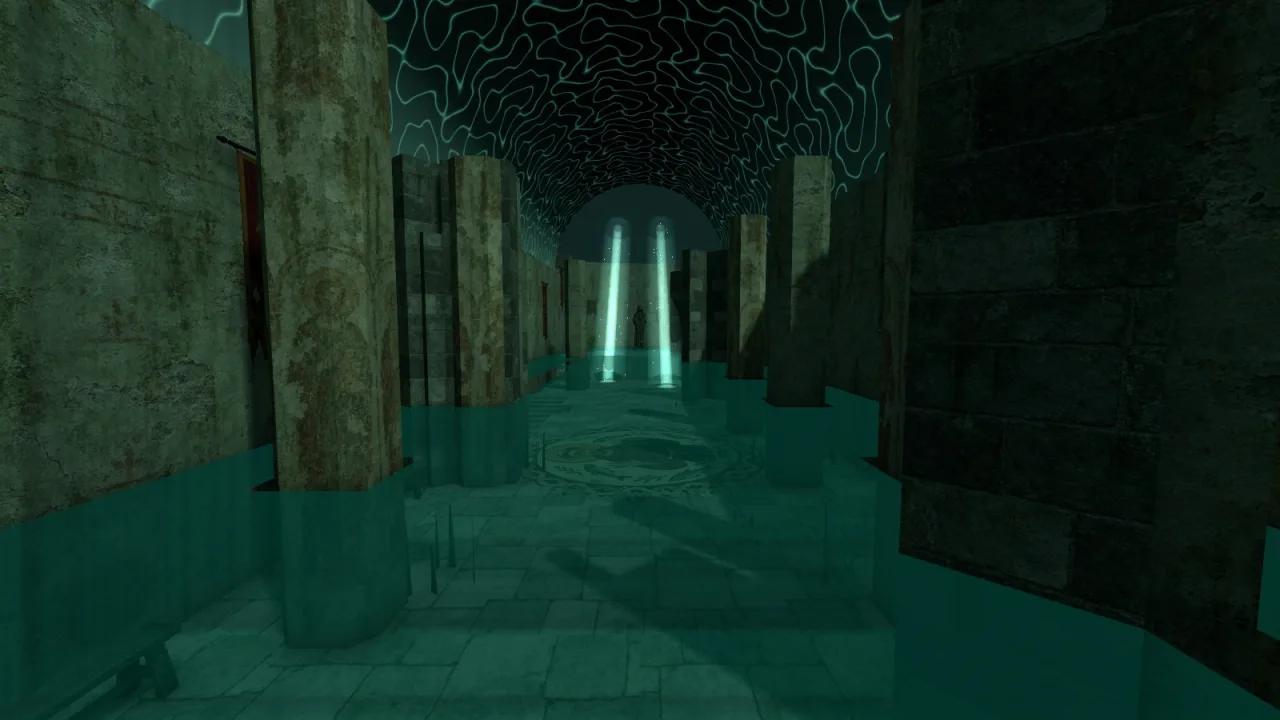
One evening I asked for three new maze worlds that were not rectangular grids, with movement and emotion, and stepped away. By morning a drowned abbey, a giant's kitchen and a clockwork hall were on main. Then I played them.

G37 6 min read

Four rooms, built from the pictures I sent

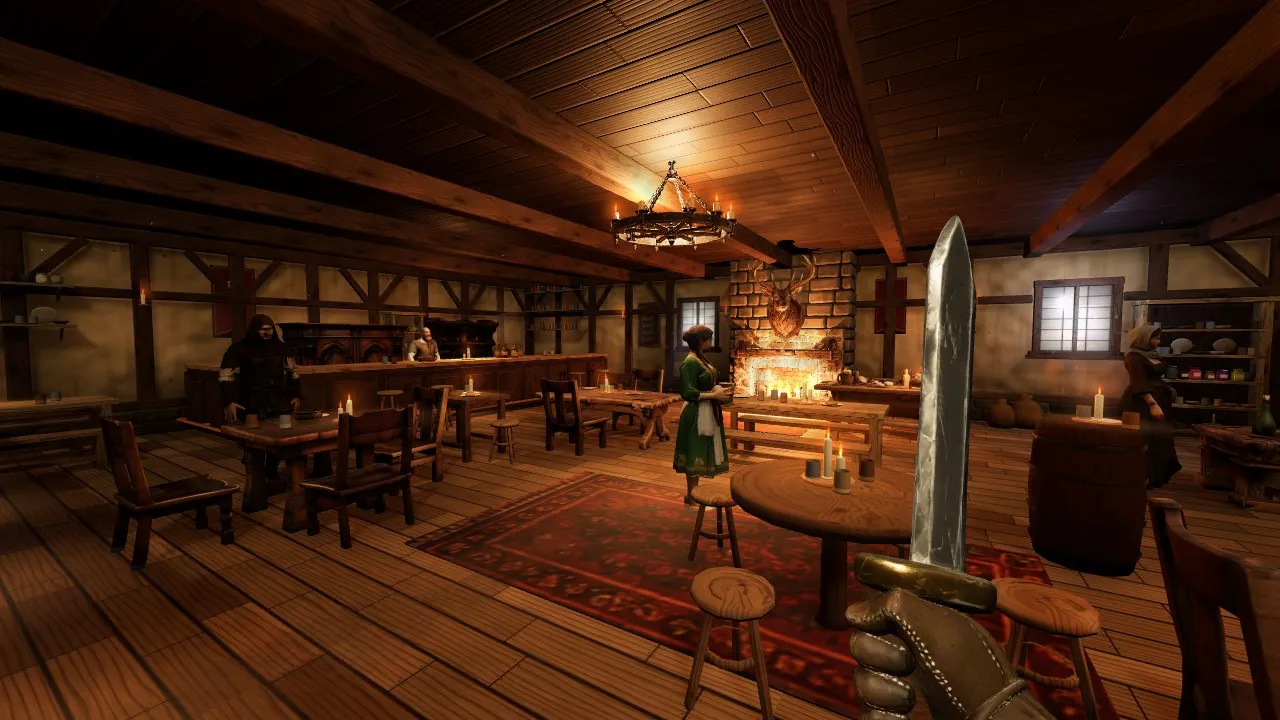
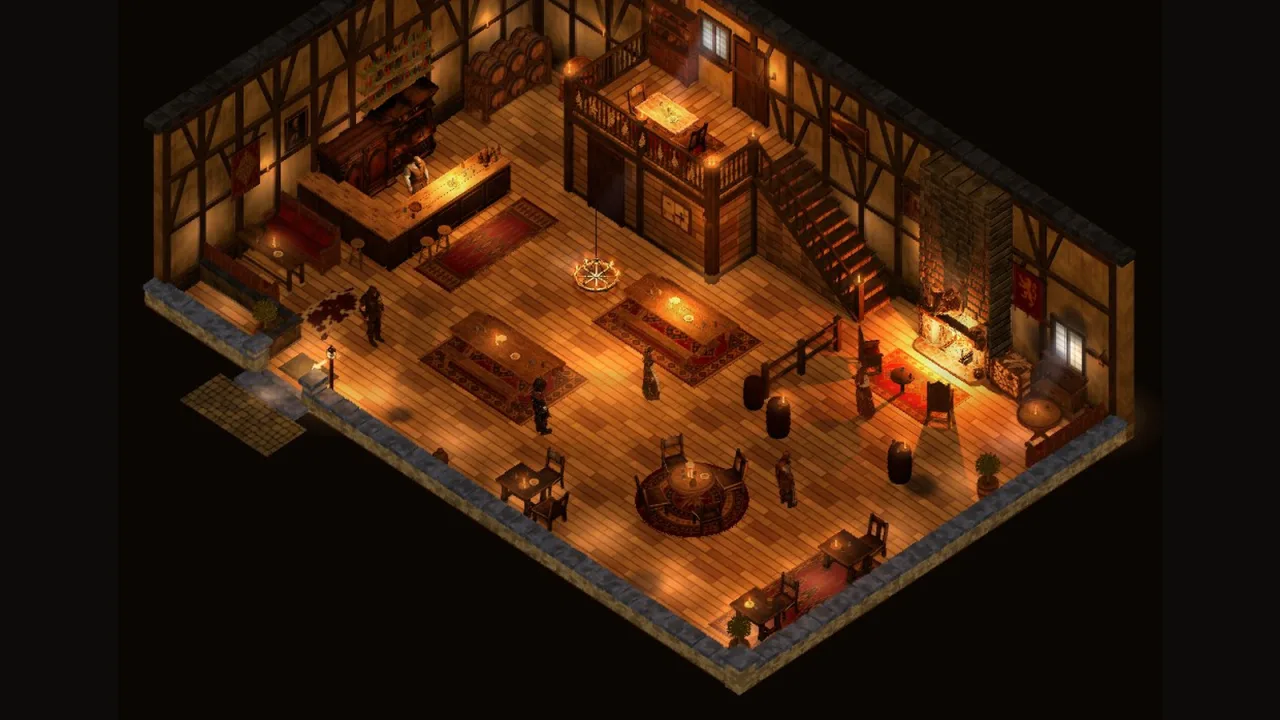
I sent the agents an isometric picture of the inn I wanted, then three more for my home, the Forge and the Apothecary. All four were rebuilt in one evening. It took a second day, and my complaint that the inn felt stale, to make them warm.

G36 6 min read

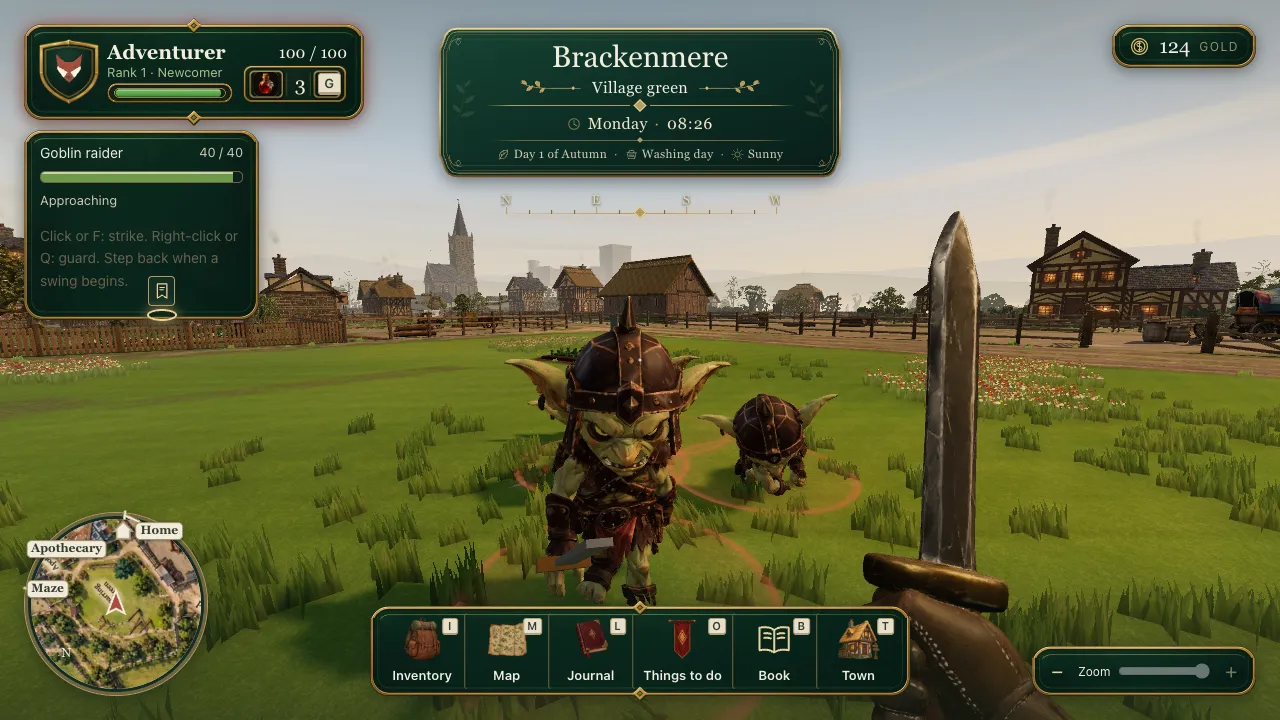
Goblin raids, kept forgiving

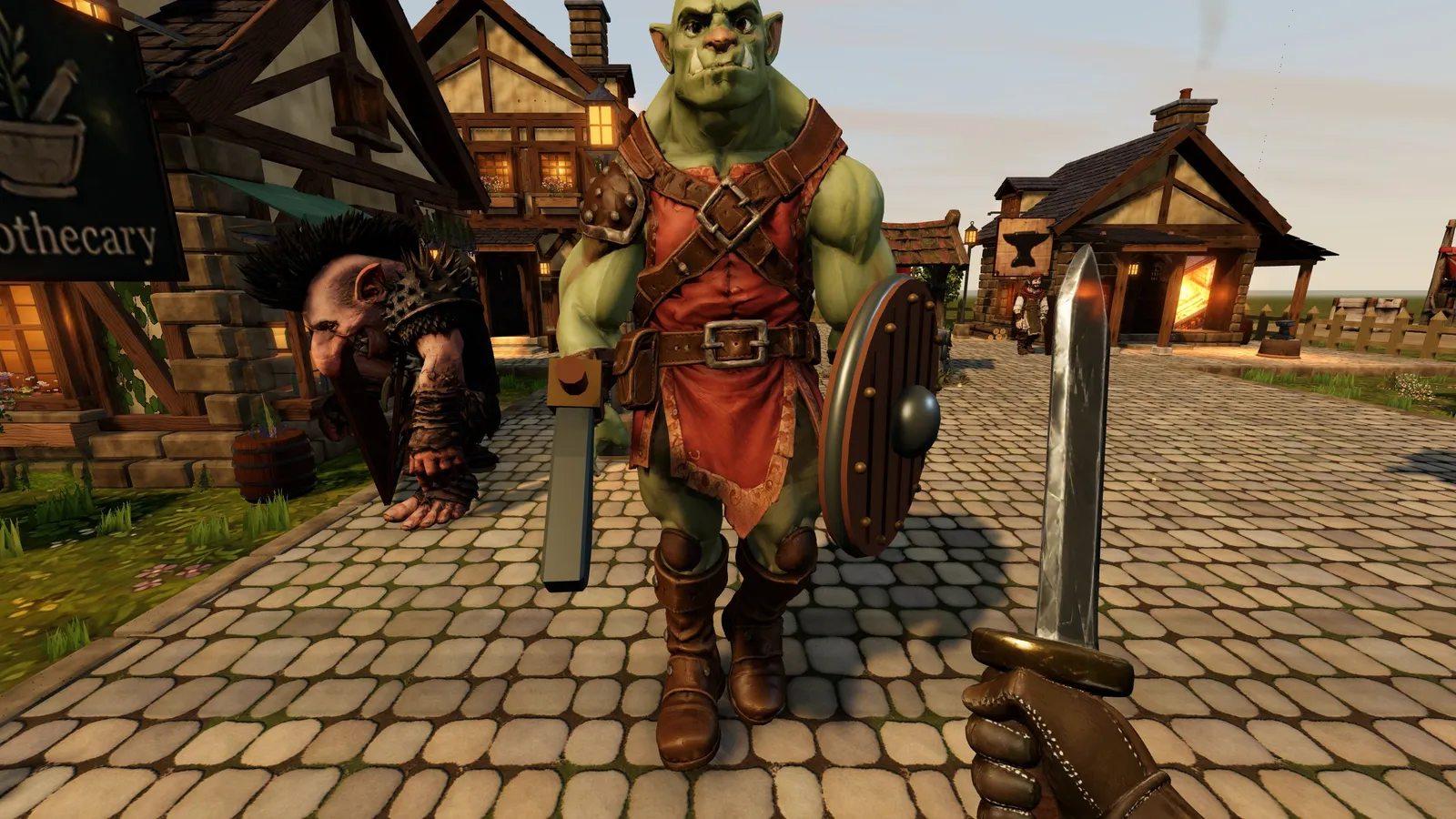
My son voted for goblins running into the village, so the game's one safe place got a fight. The first raid worked in the tests and meant nothing to a player; it took my own walk on the green, a few dictated paragraphs and a day of fixes to make it a raid you notice, can win and can never really lose.

G35 6 min read

A world, not a to-do list: the village changes because of you

I played Brackenmere end to end and found an errand chain: talk, fetch, return, repeat. Three AI designers diagnosed it independently, my son voted on their ideas, and by the evening every quest left a mark on the village.

G34 6 min read

Renown that matters: I reverse the vision

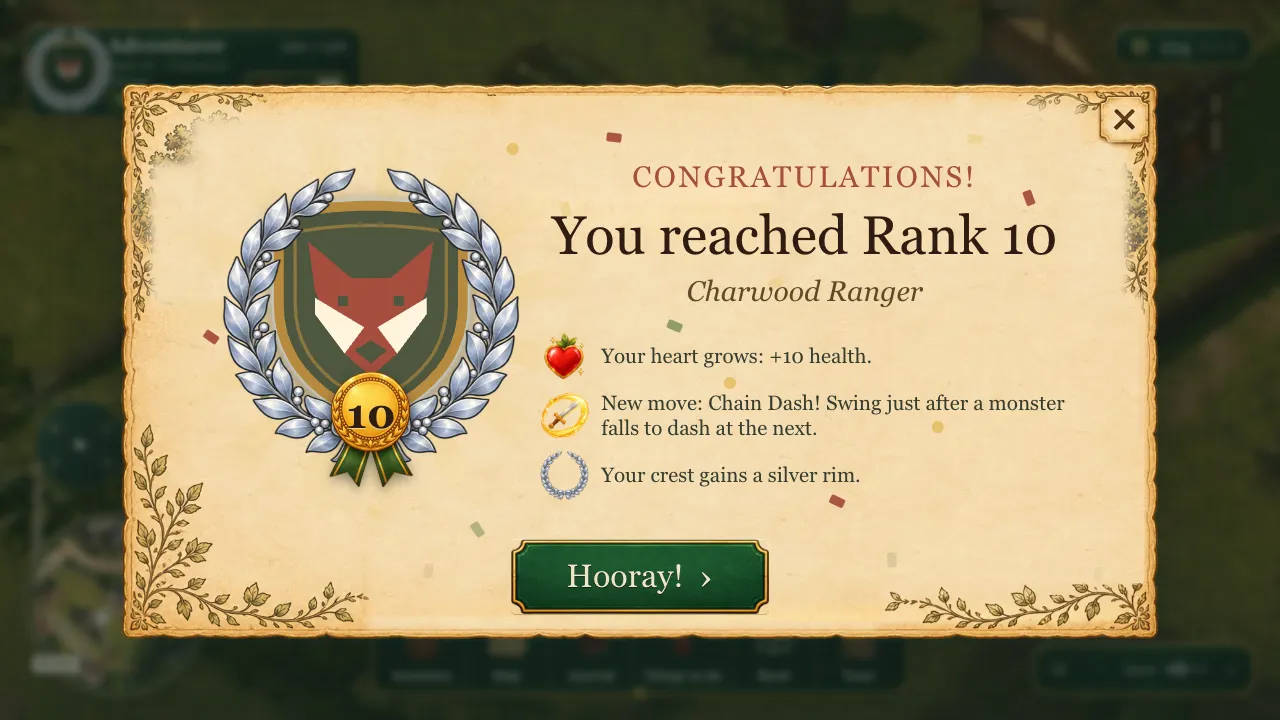
The first version of Renown gave my kids a rank, a title and a Book of monsters, and kept my own rule that the hero's health never grows. A day later I shot up four levels without getting any stronger, and asked for levels that really mean something.

G33 6 min read

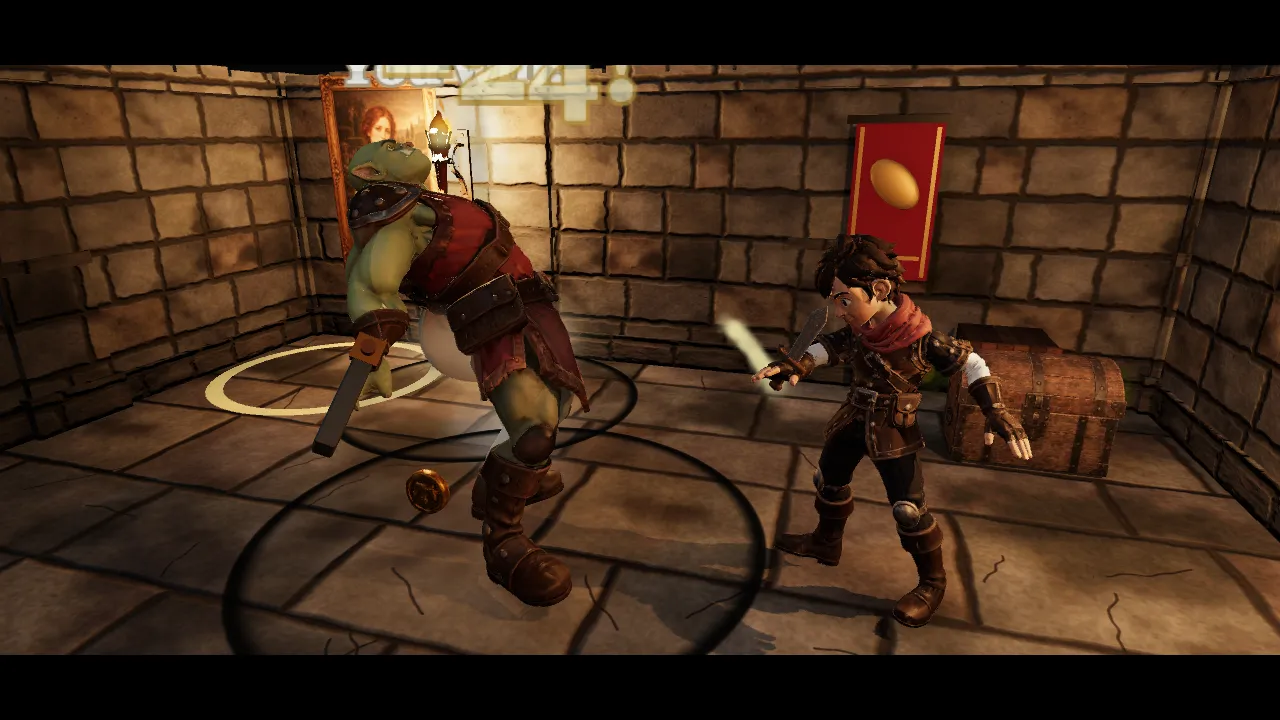
Combat for kids who love fighting

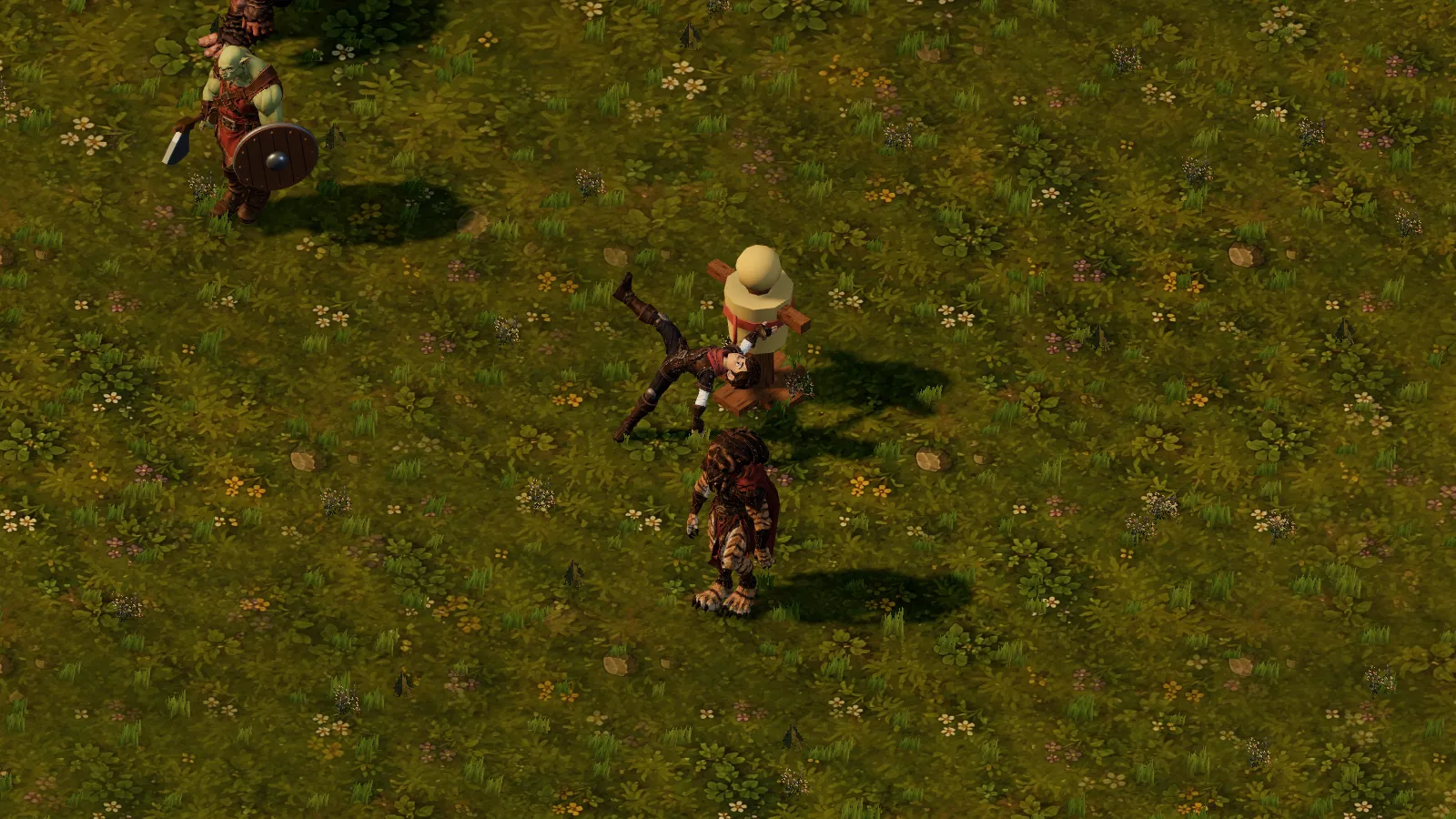
My kids told me fighting was their favourite part of Brackenmere, and that it was dull. In one day it became a one-button fight with five moves you discover by playing, a maze full of easy monsters, and a slow-motion kill cam that a research agent had warned me against.

G31 6 min read

Village life: 22 new people, their weeks and how they walk

In one day Brackenmere went from fifteen people in a village of empty houses to thirty-eight with homes, trades, bedtimes and a week of named days, and they stopped walking like chess pieces. The surprise was how empty the old village really was once the agents measured it.
G27 6 min read

The Charwood: a new wood every visit

The Charwood, a charcoal burners' wood that is generated fresh for each visit, was built in an afternoon on 13 October and rebuilt that evening because it felt like the hedge maze in different clothes. The fix was a new layout, not more decoration, and playing it changed it twice more.
G32 5 min read

"Not stale in its world, stale in what the player gets back"

On 15 October I asked the agents whether we had built a stale world. A research round said no: the world was rich, but almost nothing answered the hero back. The first fix landed that same night: a town that hears about your adventures, gossips about them and shows its friendships as hearts.

G30 6 min read

Immersion: a world that answers the hero

One quiet night I asked the agents to research what makes game worlds feel real and build it in three independent rounds: the hero's touch, a world that lives, and places that tell stories. Then three more rounds paid for it, and my own play the next morning found the rough edges.

G29 6 min read

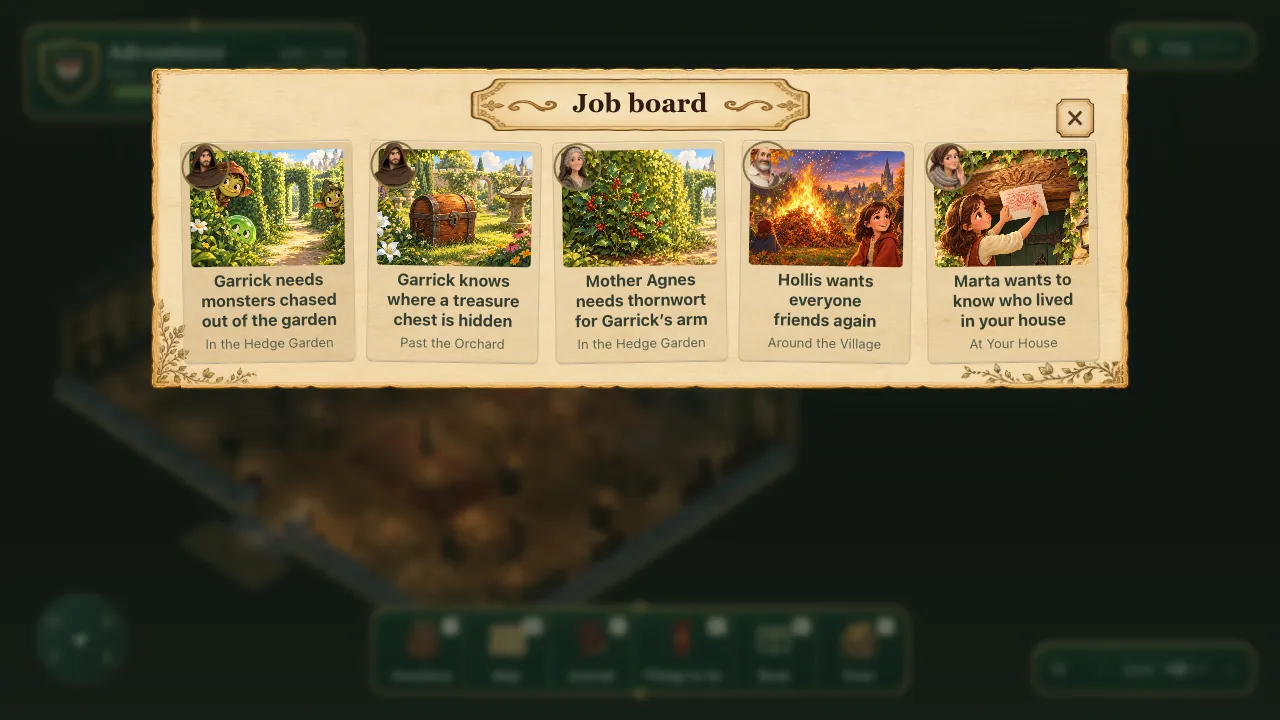
A quest card an eight-year-old can read

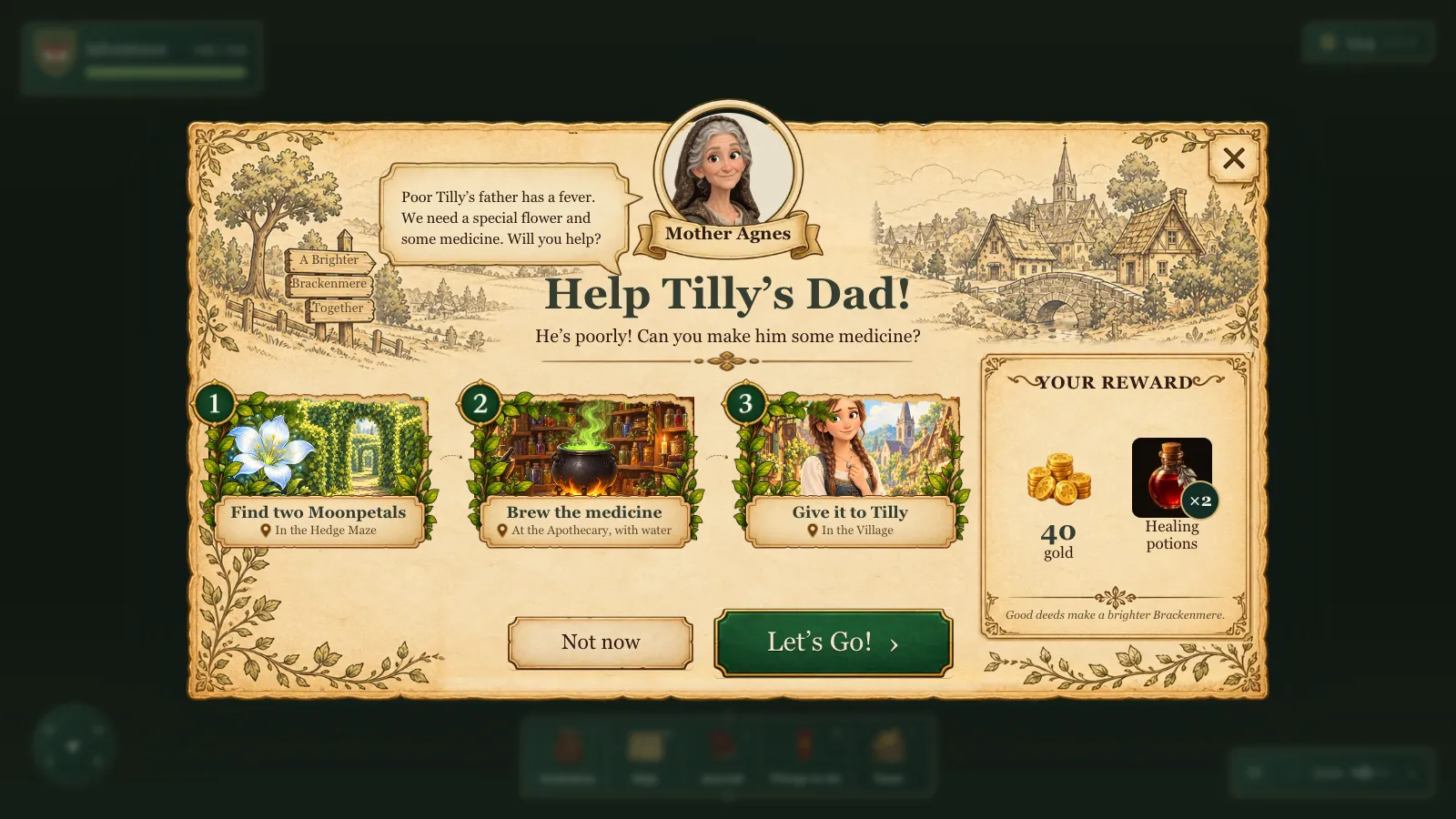
The card that offered a quest was too much for an eight-year-old. The agents tidied it, then I drew my own and they built that instead, and by the evening every panel in the game spoke the same picture-first language.

G28 6 min read

A whole campaign in a day: first morning to Lantern Night

One evening I asked the agents for a whole story, and by the next morning Brackenmere had seven main quests, nine side quests, two named bosses and a finale on Lantern Night. Two reviews on paper and a playthrough by a fresh hero did most of the work; my own play found the rest.

G26 5 min read

A storybook UI built from research on child readers

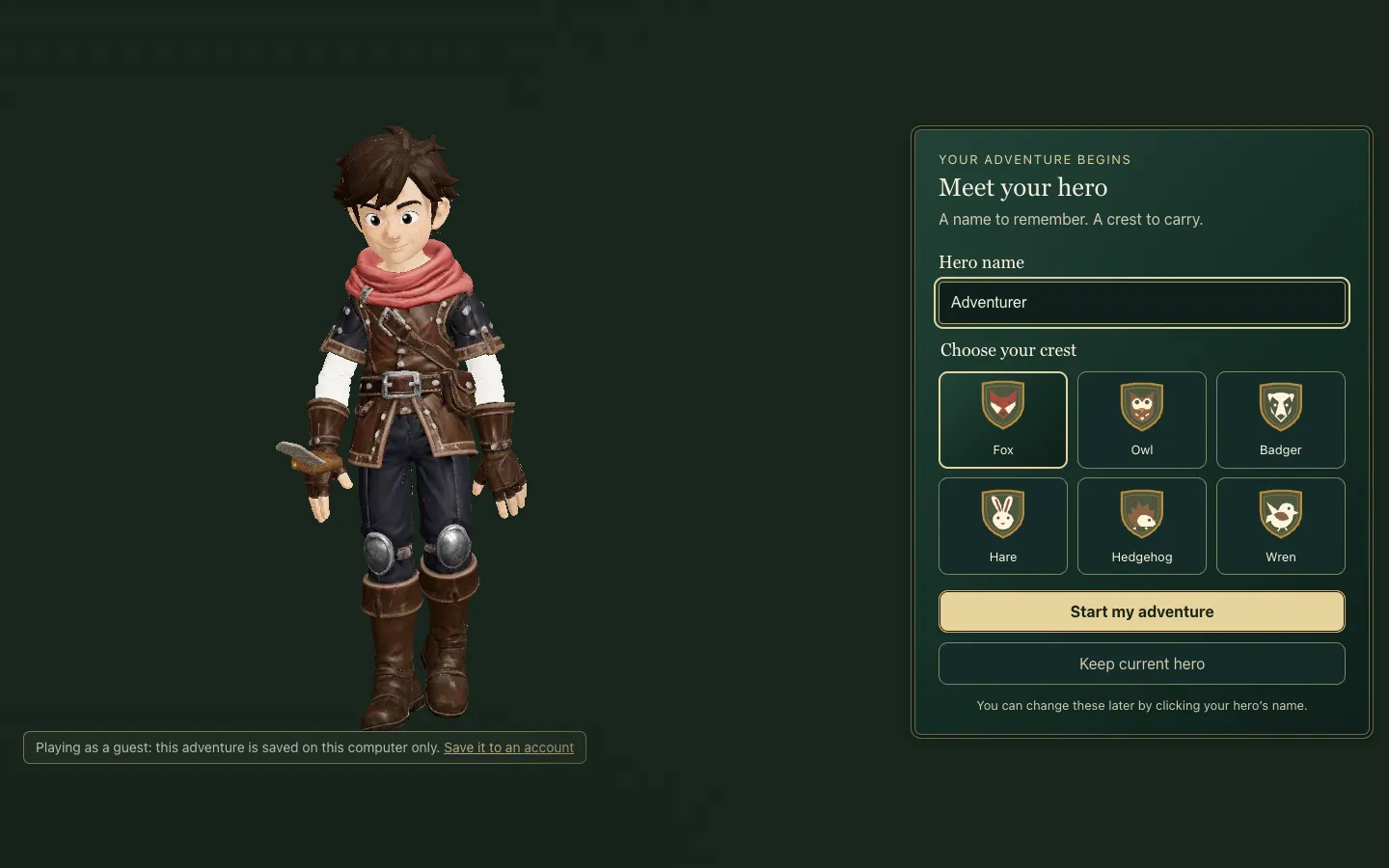
I asked for a professional facelift for 8 to 12 year olds with a $5 art budget. The agents read the research on how children read and click, spent nothing, and by the evening my kids had a hero of their own to name, a crest to choose and a lesson in the arrow keys.

G25 6 min read

Steady frames, 2x MSAA and the limits of optimisation

Four agent passes made Brackenmere's village noticeably smoother without changing a pixel of the art, then hit a wall: the last 25% of a steady 60 could only come from changing the picture. Those calls came back to me, and I made them without knowing what MSAA was.

G24 6 min read

The kids got lost: keep everything, fix the pacing

My kids played Brackenmere's first quest and got lost. Three fixes went in that night; two days later AI reviewers proposed cutting the game down, and I chose to keep all of it and rework the opening, pacing, controls and rewards instead.

G23 6 min read

A storybook way in, and a fine first morning

On 9 October Brackenmere got a way in: a narrated paper storybook in the style of a film prologue, a spoken welcome that bridges the story to the game, and a first morning that is always fine autumn weather. Most of the turns came from my own run-throughs.

G19 7 min read

The village, laid out three times

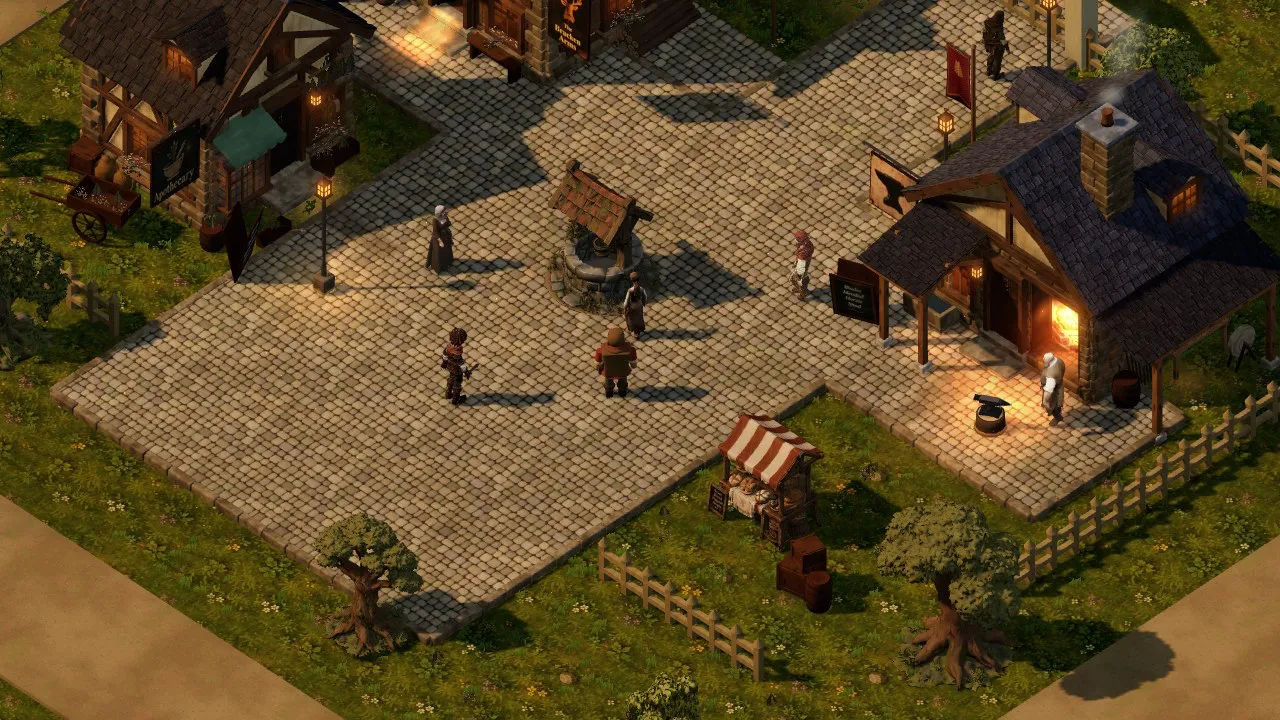
In five days I laid Brackenmere's village out three times: stretched over my hand-drawn map at 40 metres a cell, pulled in tight when the walks felt endless, then traced properly at 28 metres. The lesson was that a stylised map is a set of relationships, not a blueprint.

G22 6 min read

Twenty-seven pieces of feel

On 8 October I asked the agents what makes a game feel real, as someone who is not a game designer. One research pass became 27 small pieces of atmosphere and polish, built and merged in a day, and a lesson about how many agents one Mac can carry.

G21 5 min read

Sword moves you press on purpose

On 6 October I asked for "slicker moves" and reversed one of the game's own rules: hold Space, press a fresh direction, and the hero throws a named sword move or a two-direction finisher, while a tap still just swings. The same day Space became one button for everything, and the next day the monsters stopped standing still.

G20 5 min read

Far tiles and tree cards

The valley I had just laid out was 448 metres across and you could not see the other side of it. In a day the agents drew the far land as baked tiles and the middle distance's trees as cards: the view opened up, but the frame time I hoped it would fix barely moved.

G18 6 min read

The village becomes a streamed region and Kit Yard retires

On 3 October the village moved onto the open-world engine without a single building moving, and Kit Yard, the test hamlet, was retired. The proof was boring on purpose: every village test passed without changing what it checked.

G15 7 min read

Streaming an open world: chunks, paths and haze

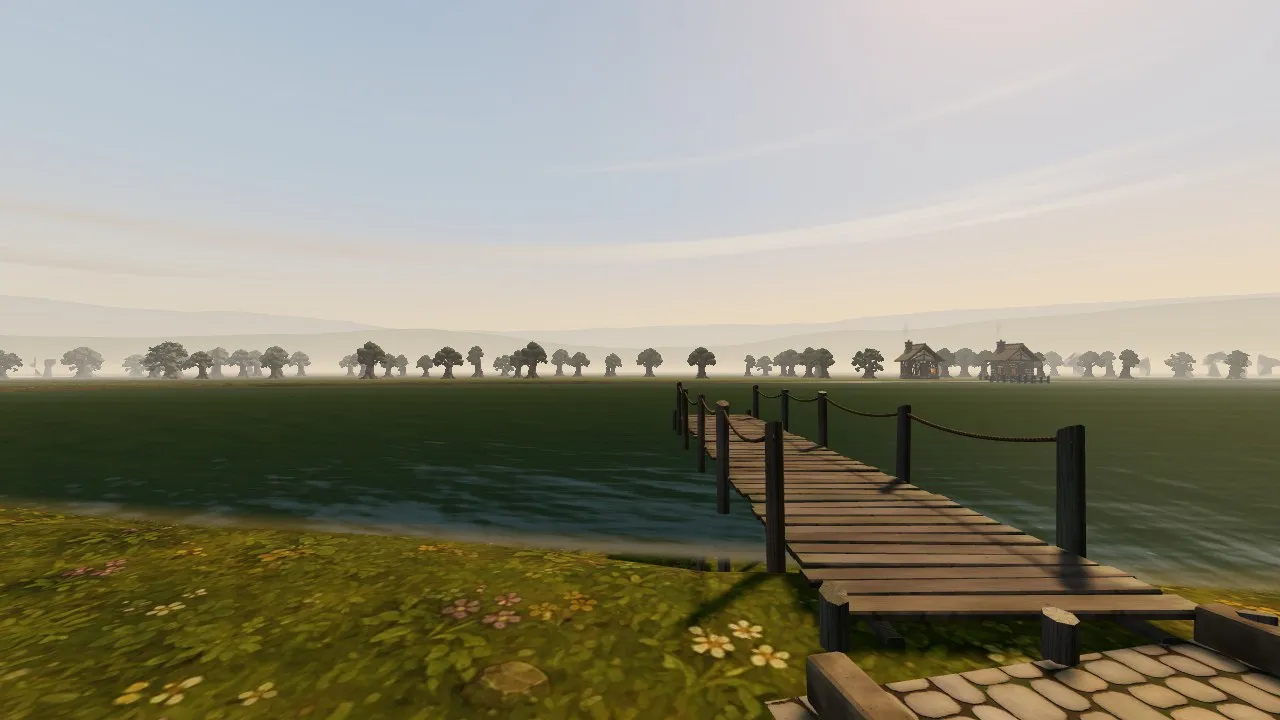
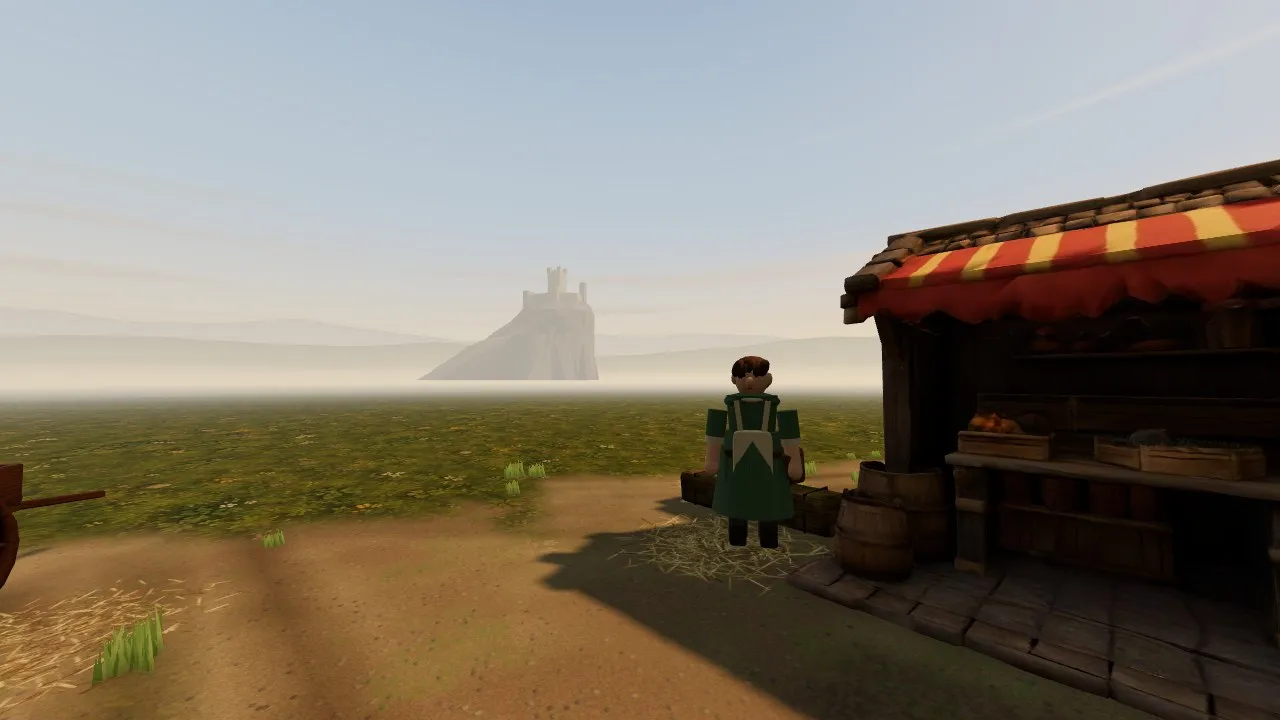
Over three days the agents built the groundwork for Brackenmere as one seamless, ever-growing valley: chunks that stream in round the hero, a test square kilometre, people who can walk across it and haze instead of fog. The real faults were found by walking it, not by the tests.

G14 7 min read

The lore arrives: a world, a town and a running story written in the cloud

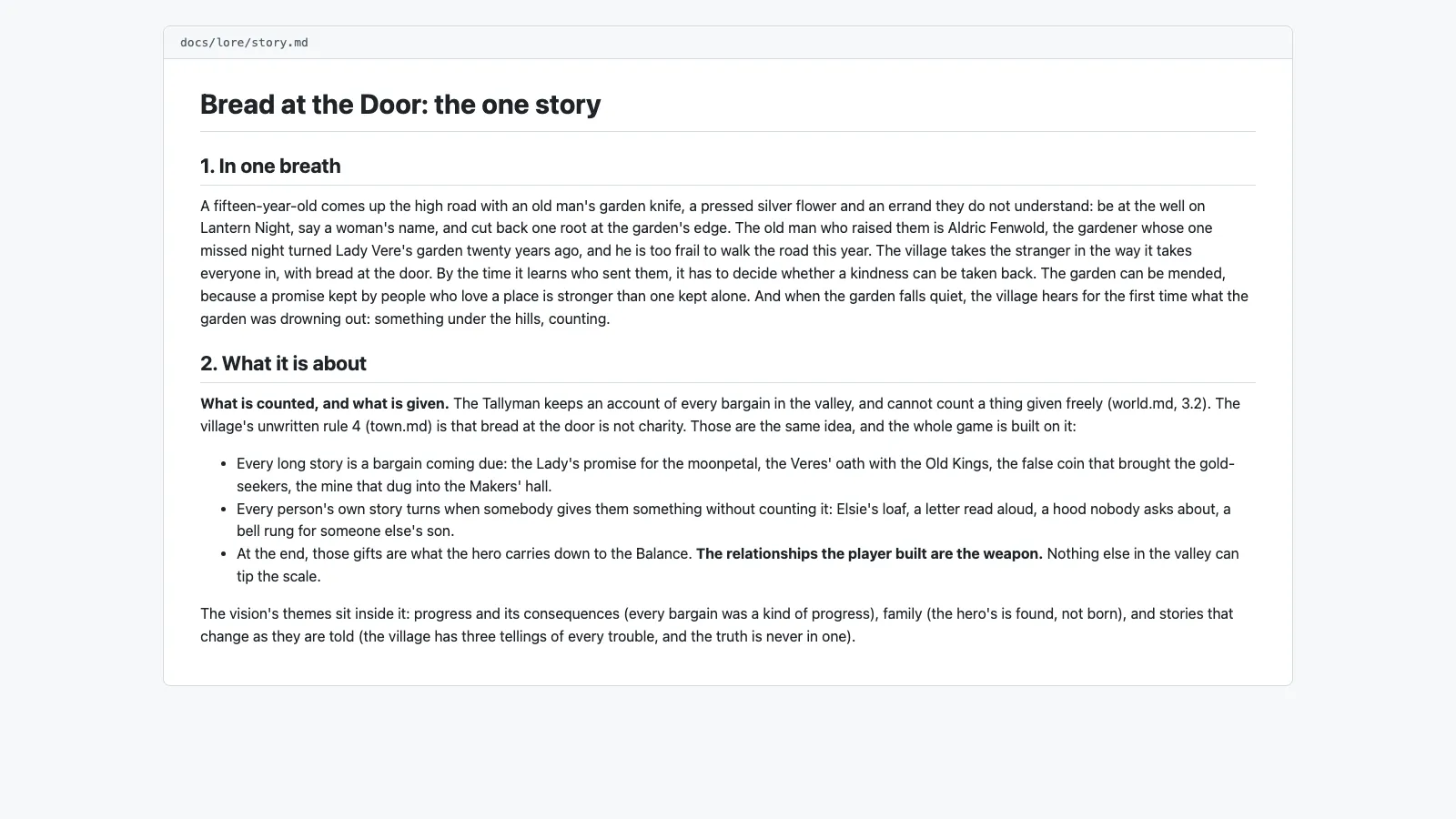
On 30 September seven pull requests from cloud sessions turned Brackenmere's scattered monsters, potions and quests into one world with one running story, "Bread at the Door". The lesson: lore written in parallel drifts like code, and it holds together the same way, with one source, a compile step and a checker.

G16 6 min read

A Laravel backend for families

Overnight, the agents gave Brackenmere a Laravel server: a grown-up owns the account, children play under their own names, and a game follows them from one computer to the next. The interesting part was what the real run caught that the tests had not.

G13 6 min read

A home that grows with the hero (and "no 8 of 10 bar")

In two days a hovel became a house that grows a room at a time, with builders, wear and repair. Along the way I stopped the agents chasing an art score: fix what is broken, and no 8 of 10 bar.

G12 6 min read

Meshy from Nick's own pictures

For nine days every model in Brackenmere came from me clicking around Meshy's website. On 28 September I handed the agents the API with a credit cap, and by the evening 150 models were in, most of them built from one clean picture of one object.

G10 6 min read

Performance by construction

A week in, Brackenmere ran well on my Mac and I had no idea what it cost anyone else. One day of measuring turned performance from a clean-up job into rules the tools enforce, and an overnight blind review stopped the agents optimising away detail my kids would see.

G11 6 min read

The living town, written overnight

I gave the agents my biggest brief yet, a town of people with back stories, memories and gossip, told them not to ask me anything, and went to bed. By morning Brackenmere had sixteen characters, four running stories and a simulation that could live through months in a unit test.

G09 6 min read

The kit: one catalogue of placeable pieces

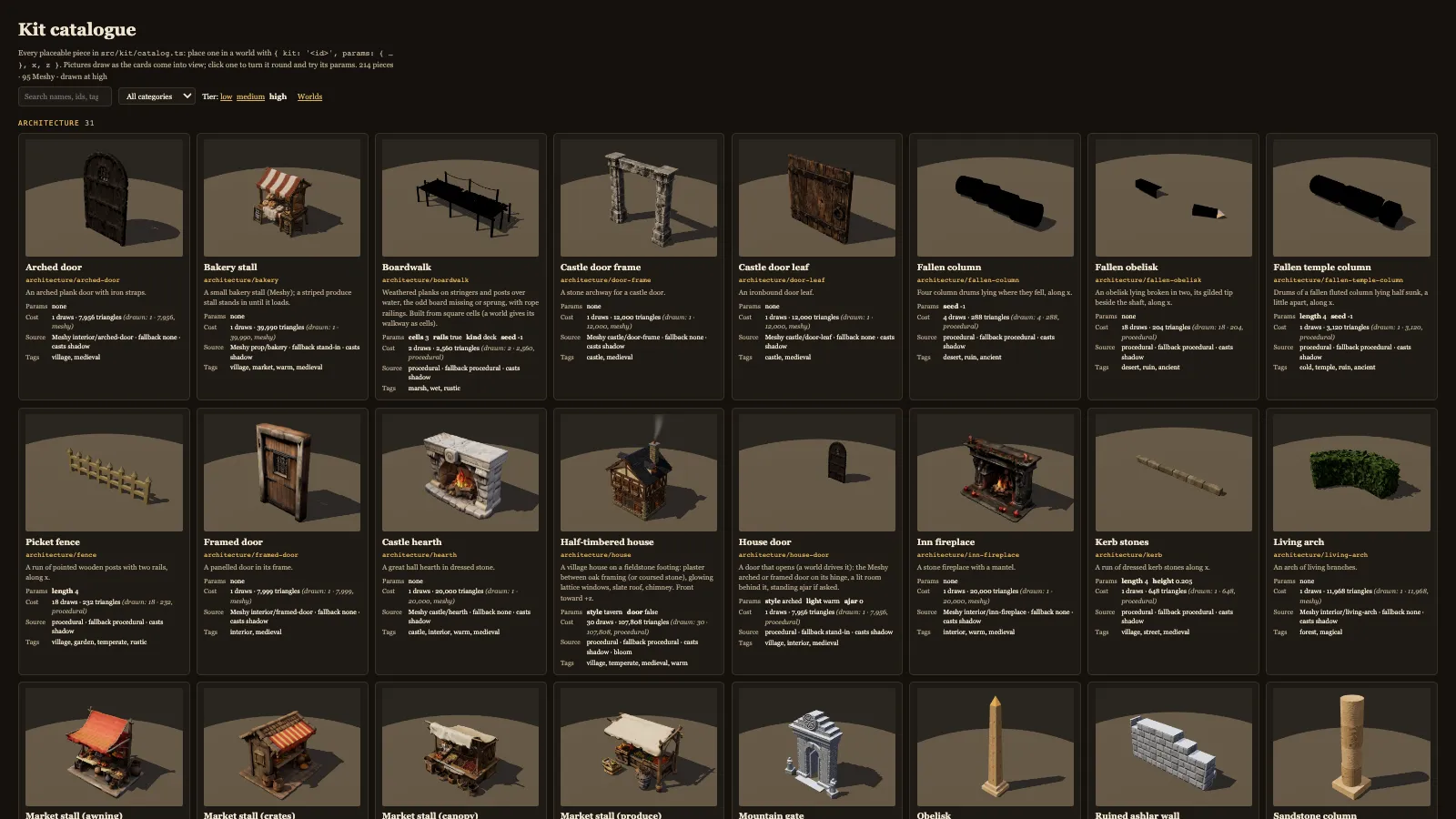
On 25 September every reusable object, light and effect in Brackenmere moved out of the worlds that first used it and into one catalogue, placed by id, measured, and drawn on a page I could browse. The next day a hamlet built only from those pieces showed where the kit was still weak.

G08 6 min read

The village rebuilt in timber, plaster, stone and slate

I told the agents the village buildings felt "stale and fake" and gave them nine reference pictures. Over two days the inn, forge and apothecary were rebuilt in oak, plaster, fieldstone and slate, and the hardest lesson was that the agent building the art could not be trusted to mark it.

G07 5 min read

Worlds as data: a mine to prove it, then three worlds in one evening

On 24 September every world in Brackenmere became a piece of data run by one shared runtime. A small dark mine proved a new world needed no changes to the core, and that same evening three agents built a marsh, a frozen temple and a desert tomb side by side.

G06 5 min read

The asset diet and quality tiers

Five days in, Brackenmere's village was a 215 MB download and the castle took a thousand draw calls. In one day in the cloud the agents put every model on a diet, measured before fixing anything, and gave the game Low, Medium and High graphics, without changing how it looked on my Mac.

G05 6 min read

Walk into the inn, forge and apothecary

On a Wednesday evening I asked to open a village door and step inside. By bedtime the inn, the forge and the apothecary were rooms bigger than their houses, furnished with my own Meshy models and staffed by eight people you could talk to.

G04 7 min read

The torchlit castle and the see-through walls problem

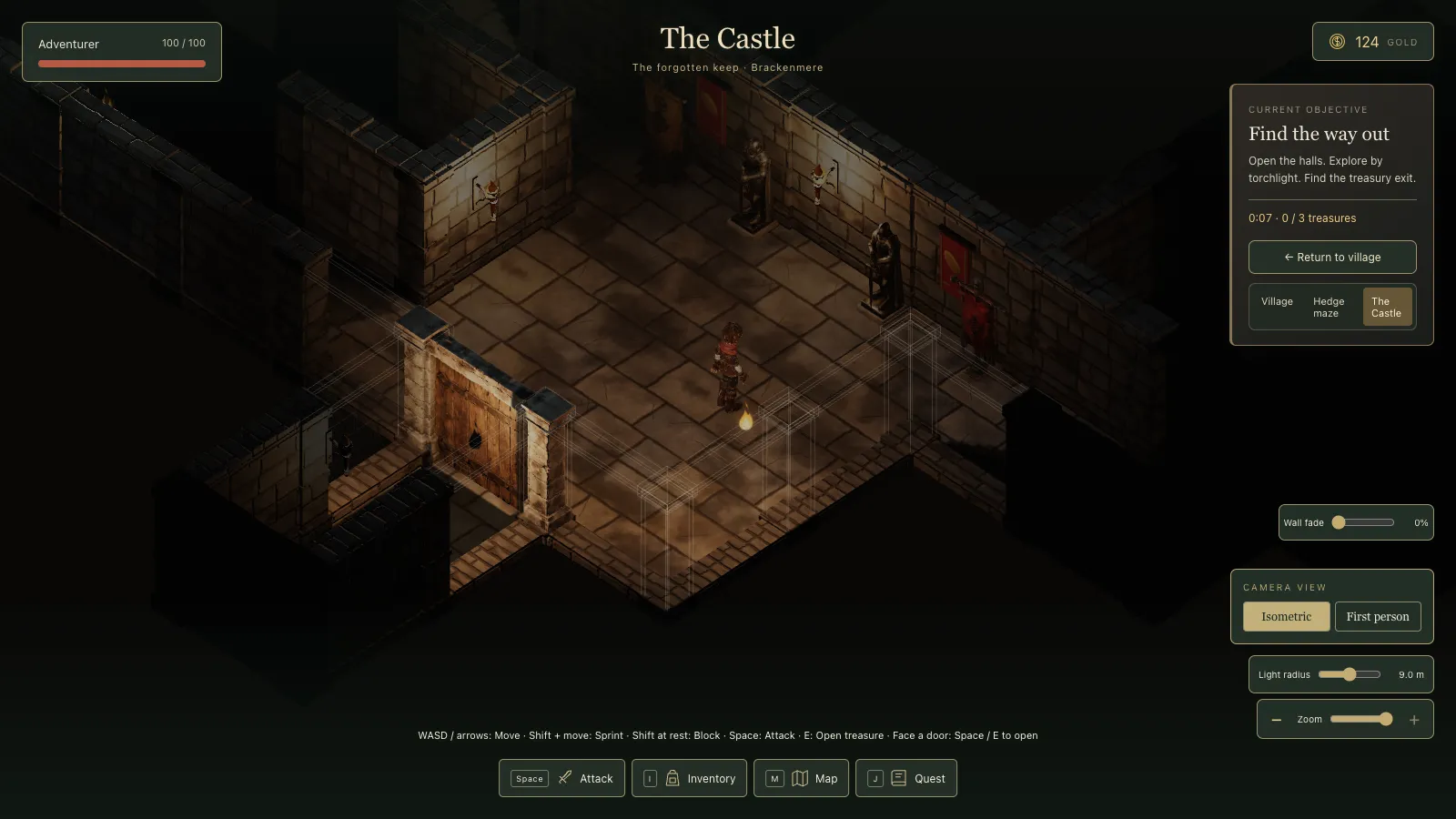
I gave the agents a dungeon picture I loved and had a torchlit castle within half an hour. Then I couldn't see my hero behind the walls, and it took a night of screenshots, a slider and a list of rules about which walls may vanish to fix it.

G03 6 min read

First person and sword combat

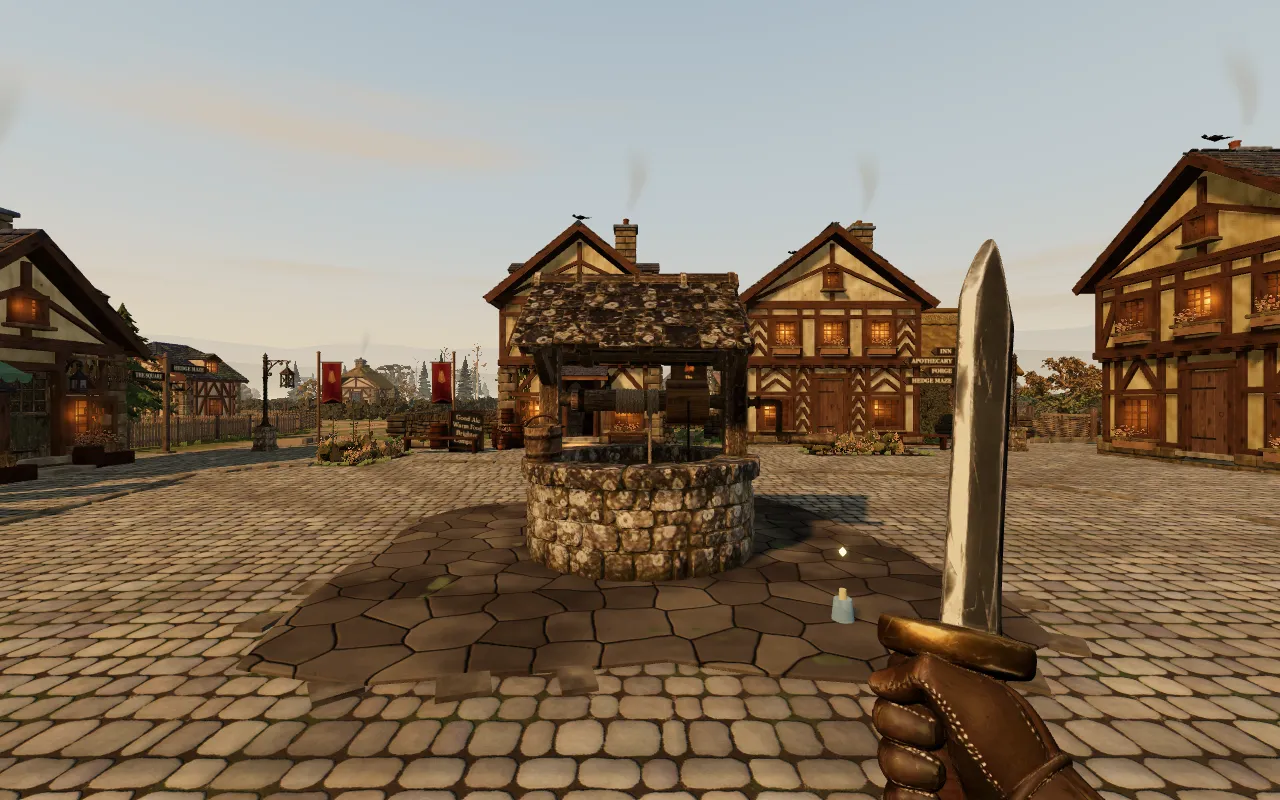
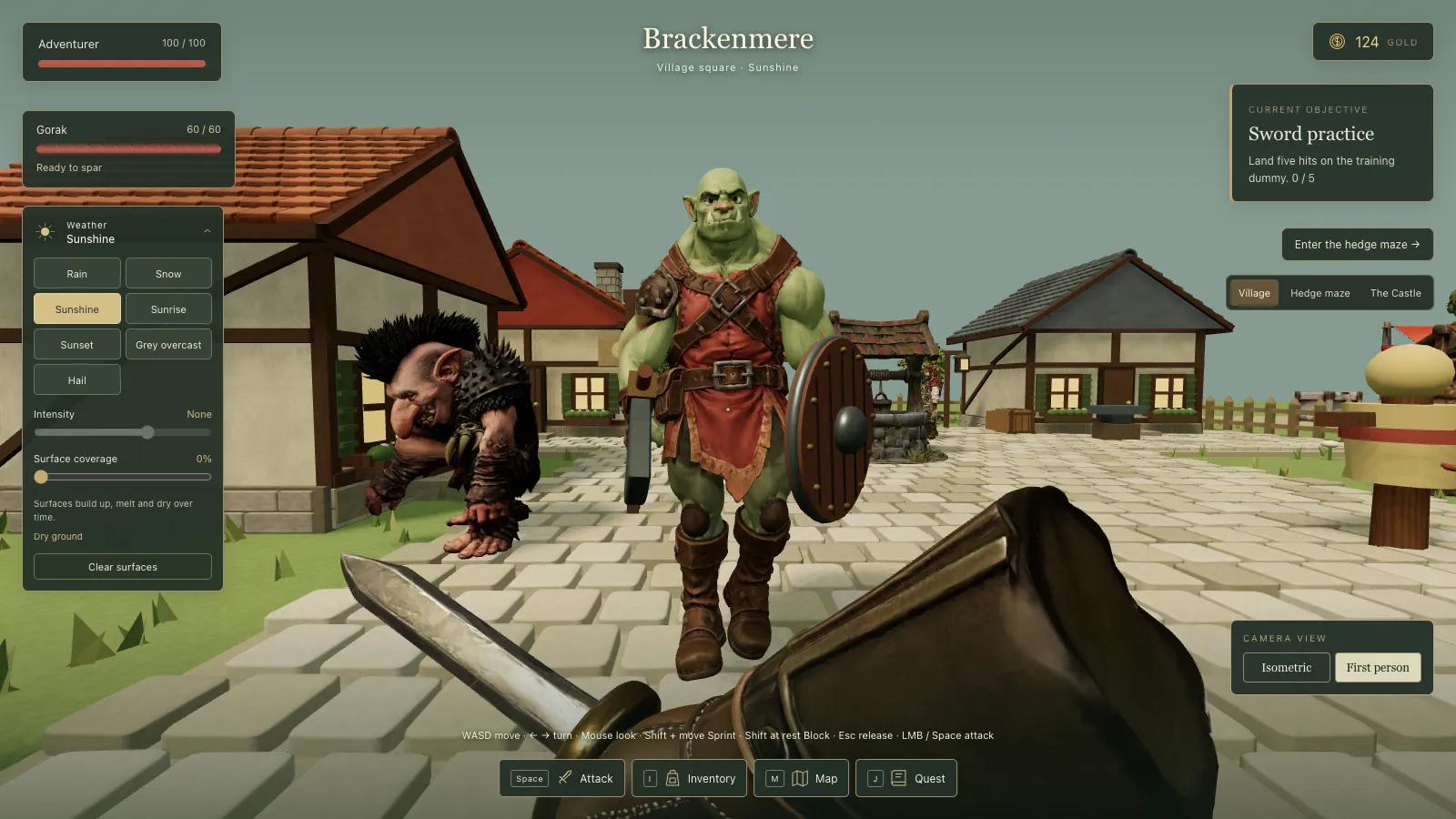
One morning I asked whether we could look through the hero's eyes in the maze. By the next morning first person ran through the whole game, with a sword you can see swing, a gloved fist made from my own reference picture and aim assist that looks up at tall monsters.

G02 6 min read

The hedge maze, a three-minute run

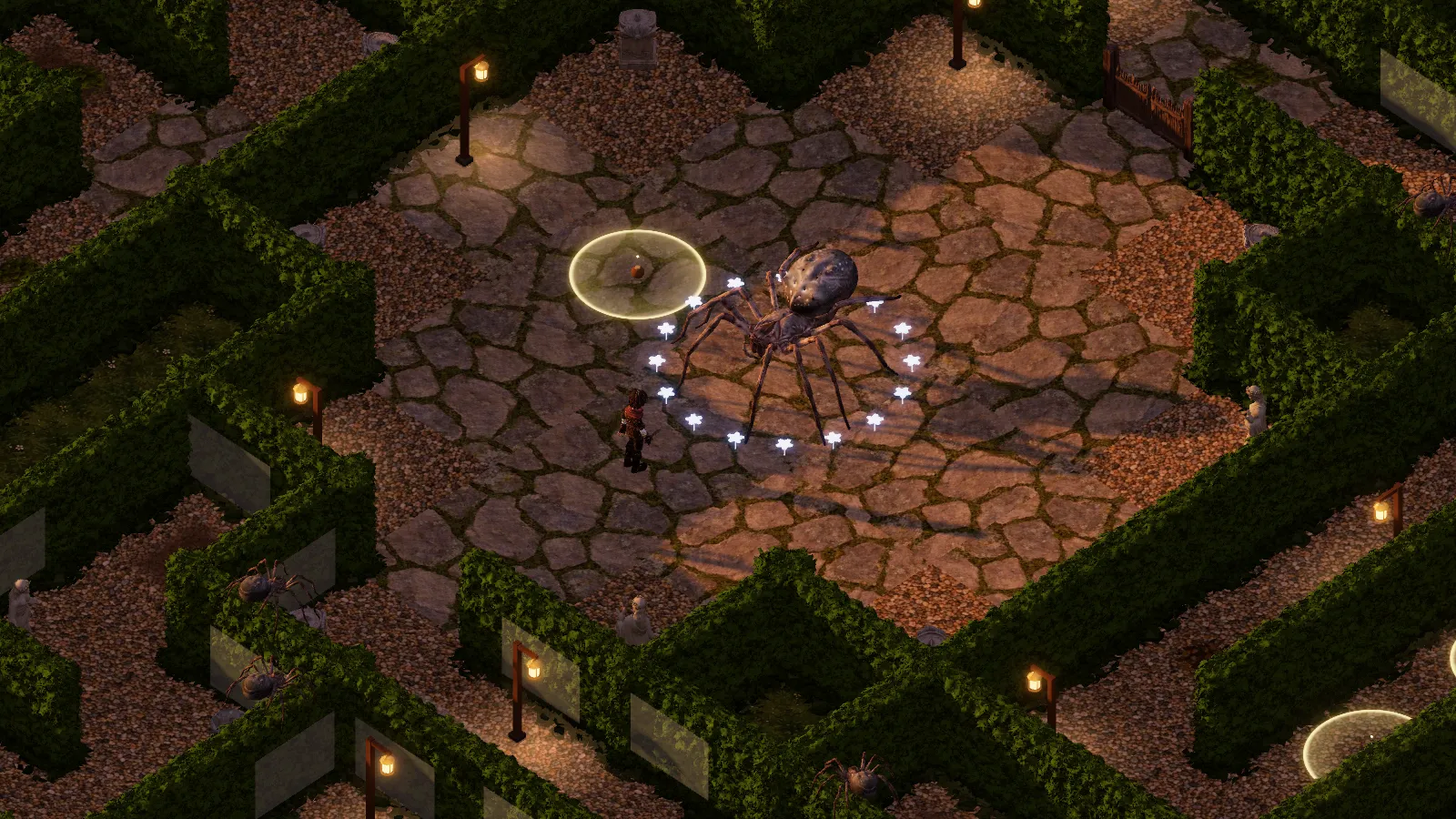
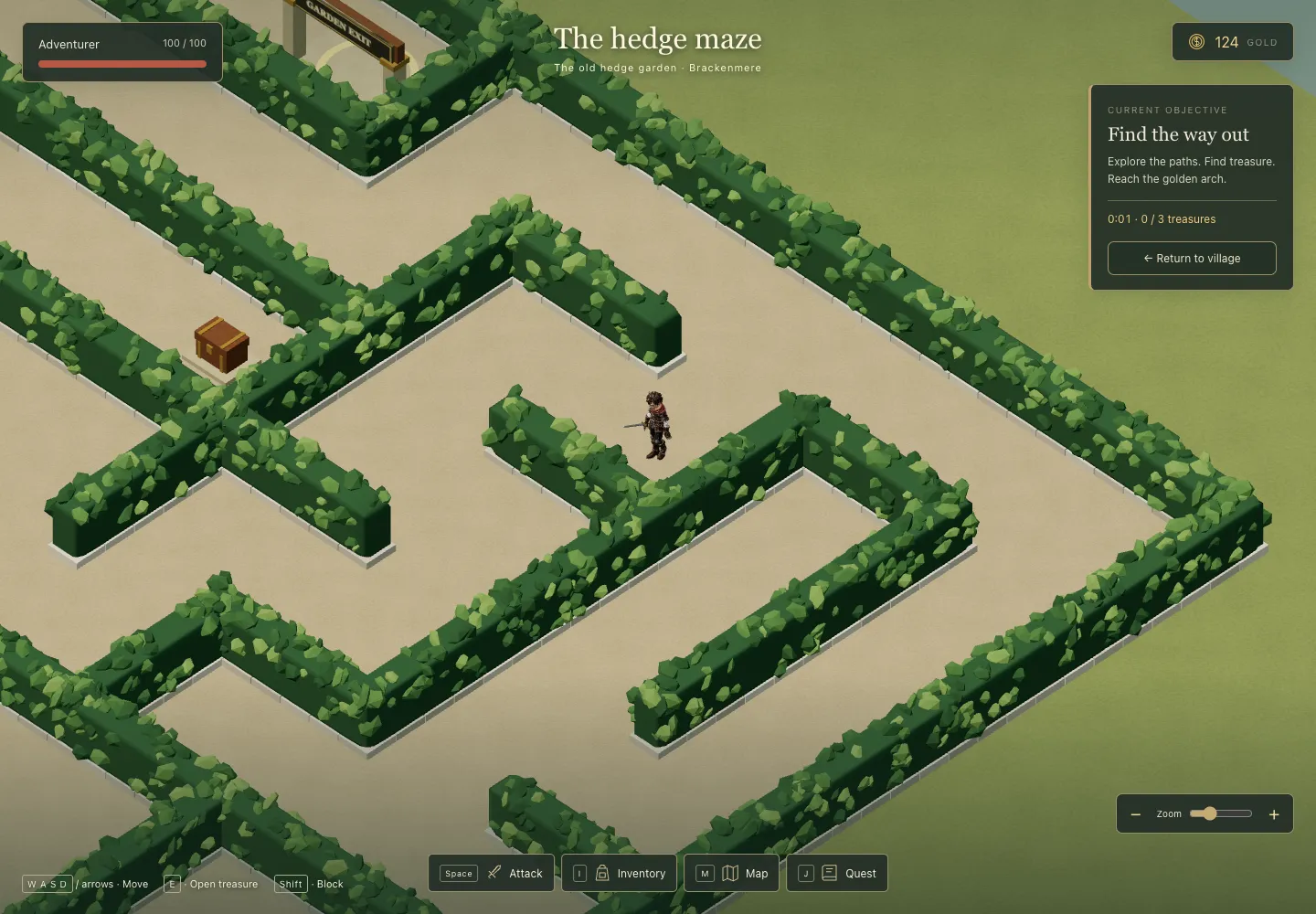
I asked for one maze that would take three or four minutes to get through, then walked away. Two days of playing it turned a sandy greybox into a spotlit hedge garden with painted paths and monsters that follow you.

G01 6 min read

Day one: a canvas greybox called Brackenmere

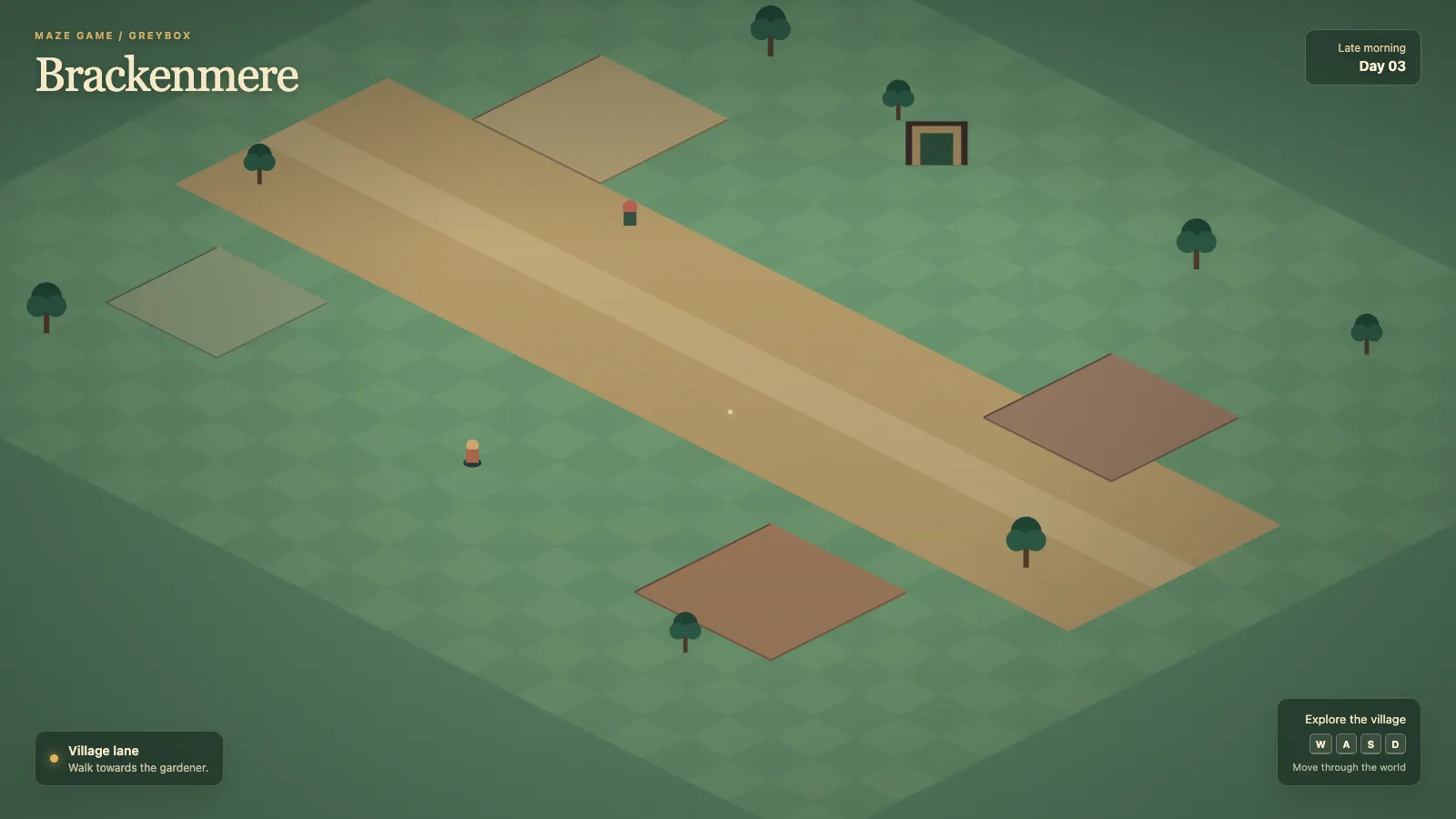
Brackenmere started on a Saturday afternoon as a 90-line canvas sketch with one gardener and an old gate. By midnight it was a Three.js village with a sword, a rigged hero, three monsters, people you could talk to and a house with real roof tiles.