"Through the eyes of the person"
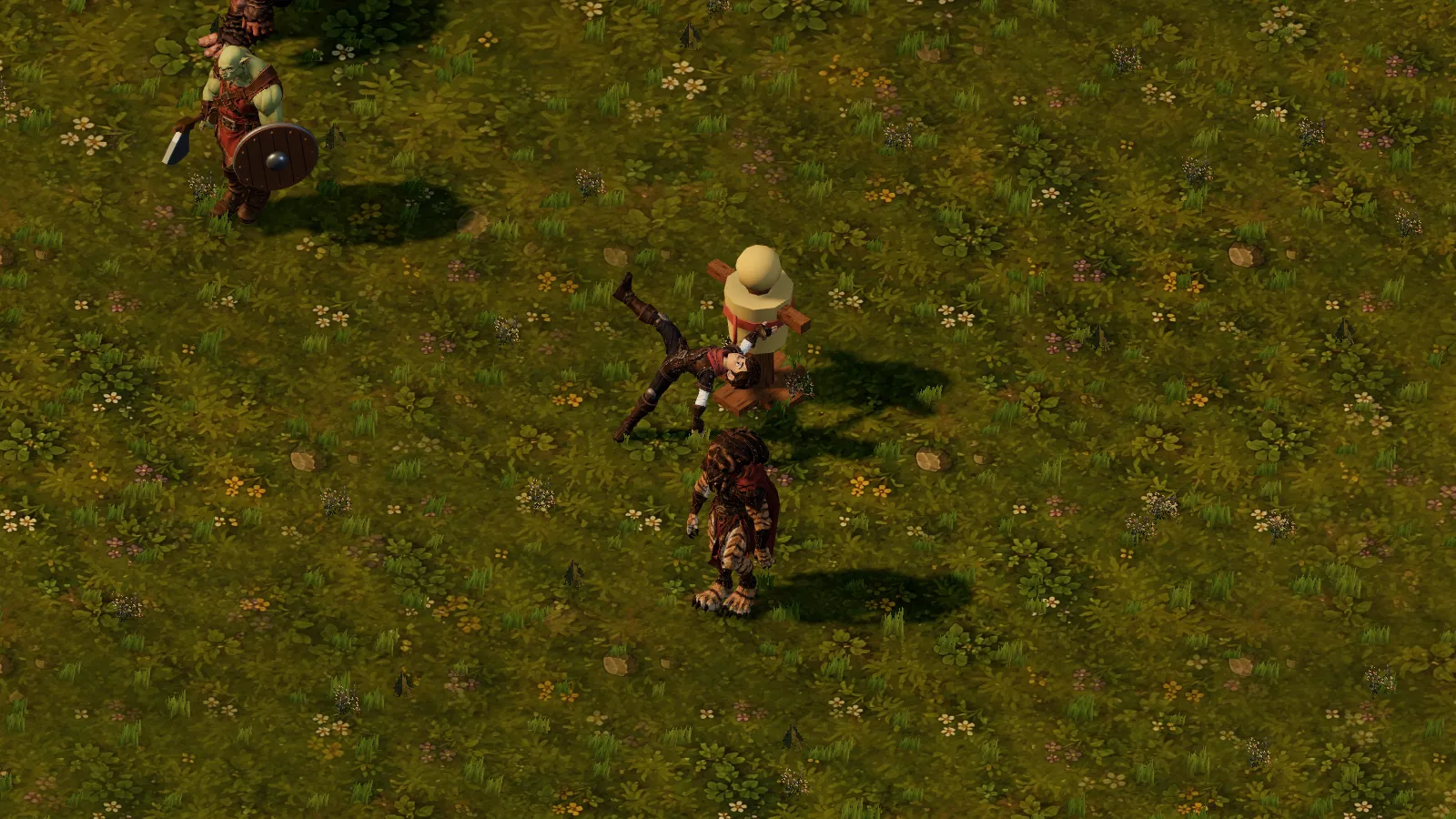
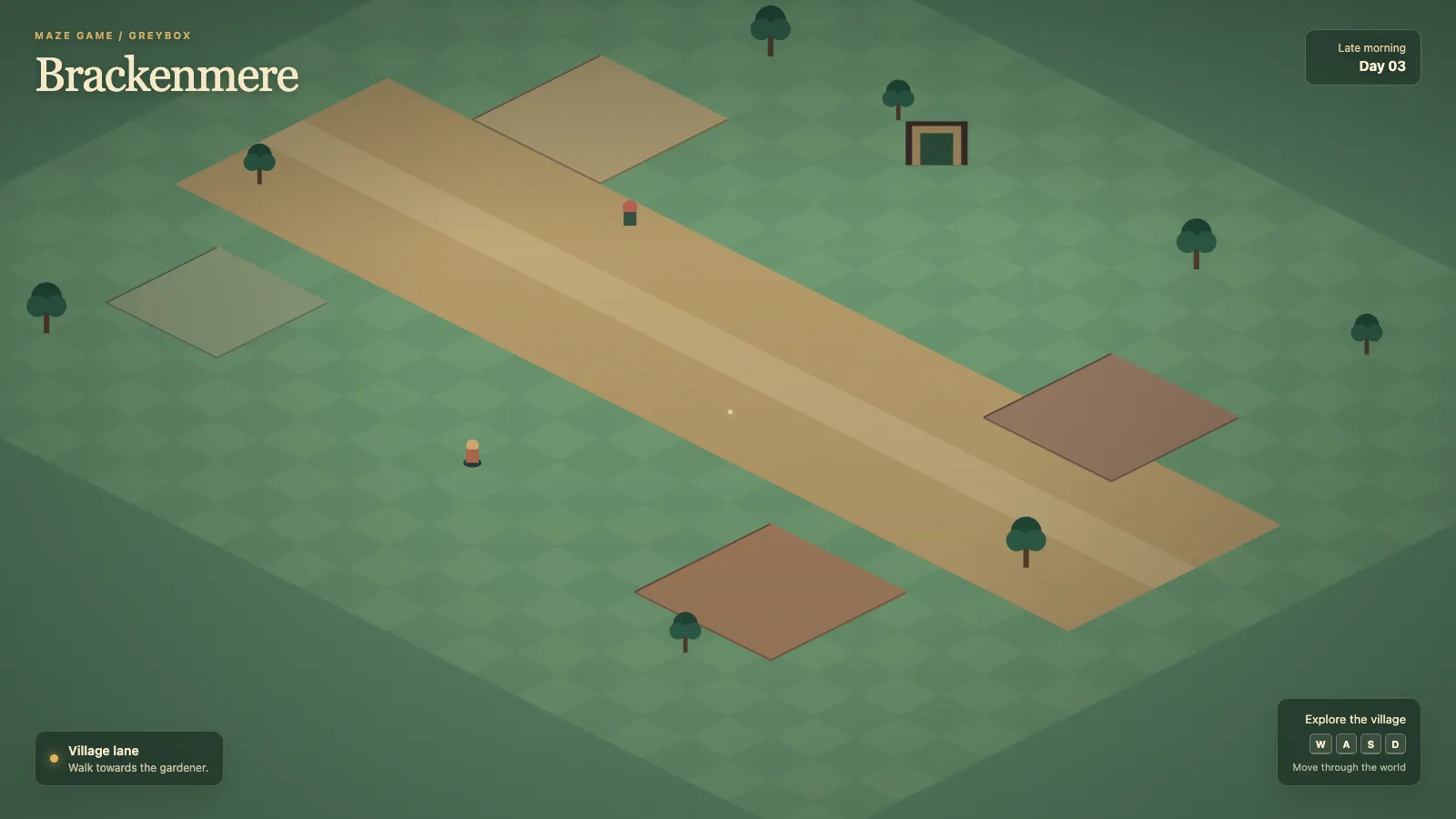
By the Tuesday morning the hedge maze had a lantern of light around the hero and hedges that hid whatever was round the corner. Looking down at it from the corner, I wondered what it felt like inside. "Is it possible to look through the eyes of the person when doing a maze? I think everything is 3D in there? Can we do a very small prototype (new worktree) to see."
Everything was 3D, so a second camera at head height was cheap to try. The agent built it in a throwaway worktree, with main untouched, and handed it to me to play.
My first note was about the controls, not the view: "I think if you hit the left or right arrow keys, you should turn the eye, not side-step." Then I was sold, and immediately worried about cost. "Okay, let's put this as an option of camera view now throughout the game... Obviously does this work performance-wise? I'm just wondering, when we're in the isometric view, we've obviously simplified and only seen certain elements of models... Is there going to be any performance issues here if we do this?"
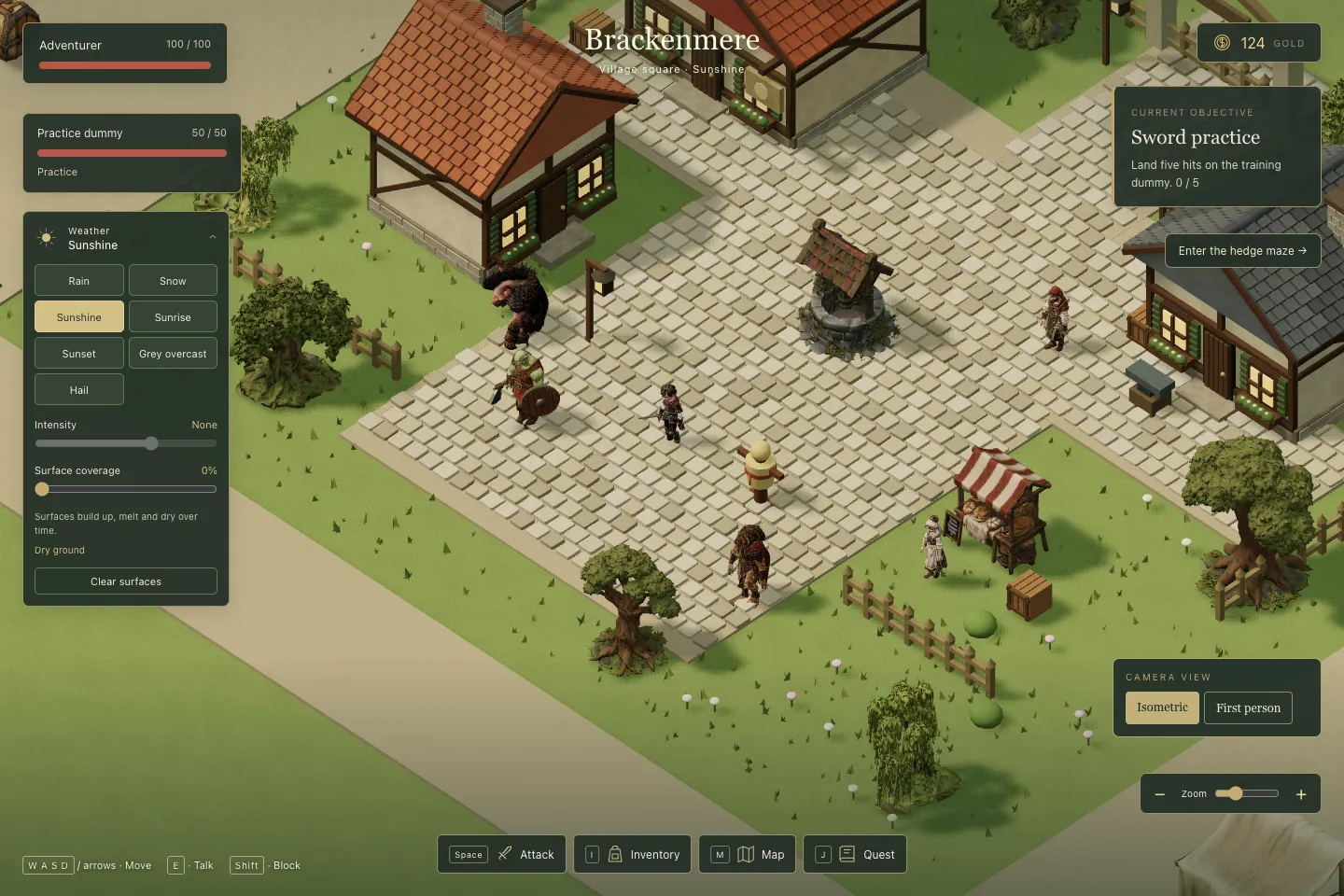 The selector mockup I approved that morning: a Camera View card, isometric still the default.
Nothing had been simplified for isometric: the same models served both cameras. I replied "approve this design mockup", and the choice went into the town and the maze, remembered between visits.
Under the hood At the village spawn, isometric drew 150 draw calls; first person drew 62 to 126 depending on where you looked. In the maze, eye level could see more hedge than the view from above: up to 8.2 million triangles against 4.8 million.
Measuring frame time was messier. The agent kept losing the mouse during its test and asked whether I was using the computer. I was. "Yes, finish with performance marked partial." Both views held about 60 frames a second at the spawn; everything else was recorded as not verified rather than guessed.
What eye level gave away
A second camera turned out to be an audit of every assumption made for the view from above. By late morning I had a list.
The maze sign was a floating label, which is fine from above and nonsense at eye level: "It's always in my screen if I'm looking at it, even if there's a building in the way. That should be part of the world, I guess." It became a real wooden sign at the gate, hidden by buildings like anything else.
The villagers had never needed to face you. "If I walk up to someone, can they turn towards you and stop walking if there's an option to talk to them?... right now they could have the back to you." Now they do.
Then the big one: "Let's work on first person view now. When I swing the sword I don't really see the sword being swung. Can we make this a lot more realistic and make battles in FP view more engaging / more visually correct."
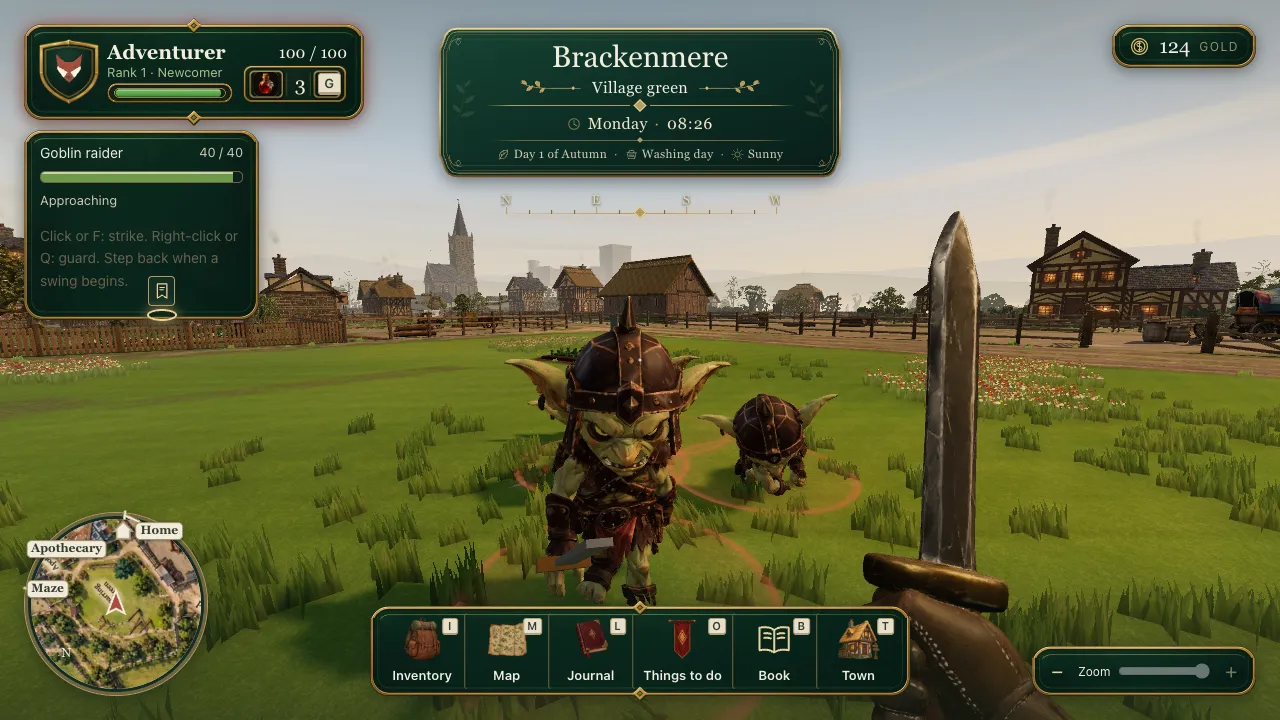
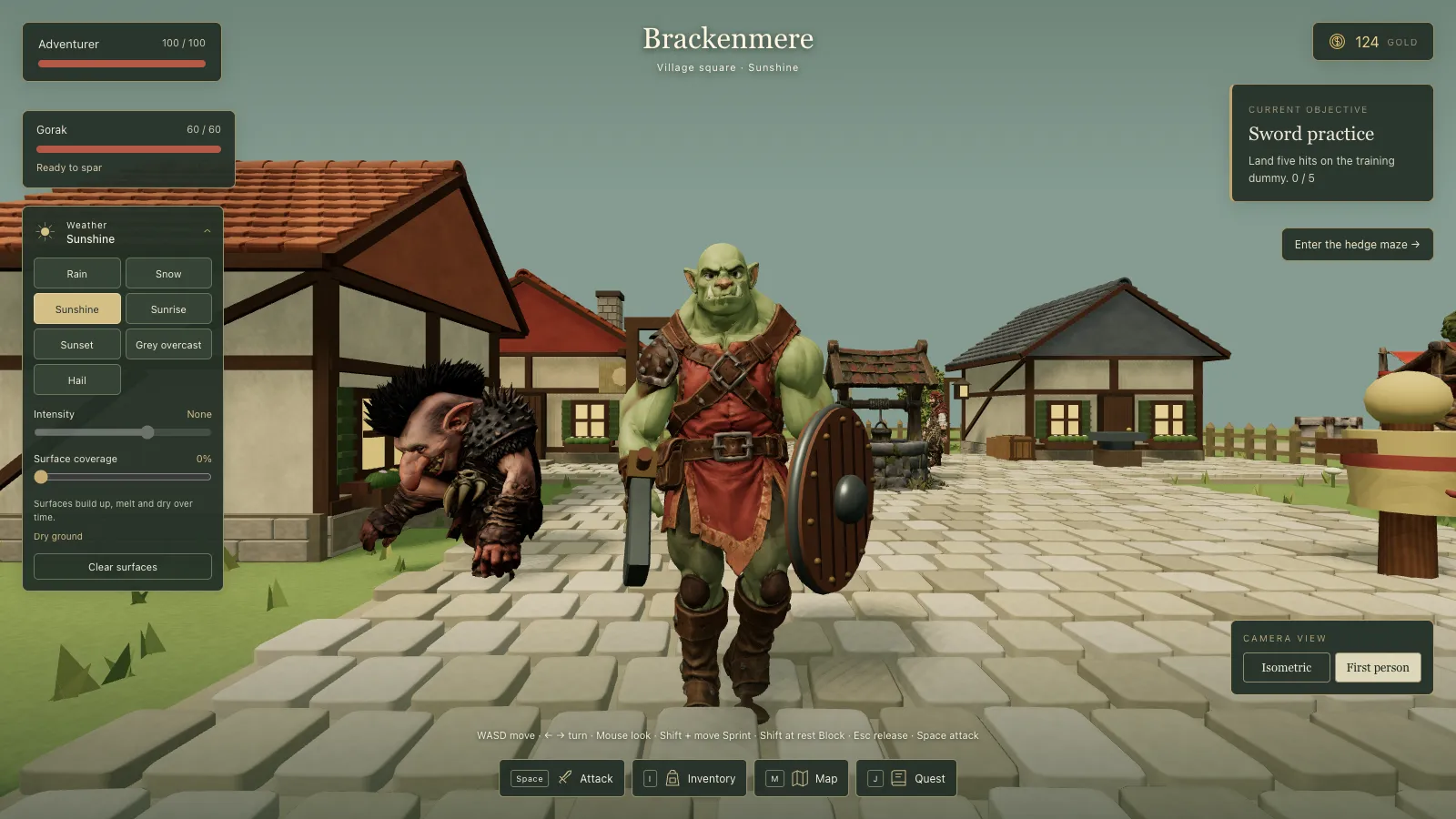 First person before the sword pass: you could fight Gorak, but you could not see what you were fighting with.
First person hid the whole hero so the camera would not sit inside his head, and the sword was in his hand. The fix was a separate little scene drawn over the world: a glove, a bracer and the sword, posed for each attack so the blade arrives as the hit lands. Damage stayed exactly where it was; only the picture changed.
Testing it in a real browser found one more isometric assumption: attacks ignored where you were looking up or down, so you could hit an orc while staring at the sky. Now they check the real direction of your eyes.
Under the hood The camera choice touched 29 files and about 1,450 lines. The test suite went from 120 to 140 that day, and every change came with runtime checks marked PASS or FAIL, including one that caught the sky-swing.
That afternoon I sent two Meshy swords: "can we use one of them for the hero rather than what we've got currently? And can we make sure we store the other one somewhere in our folder structure for use later on?" One went into the hero's hand; the other was optimised and set aside for later.
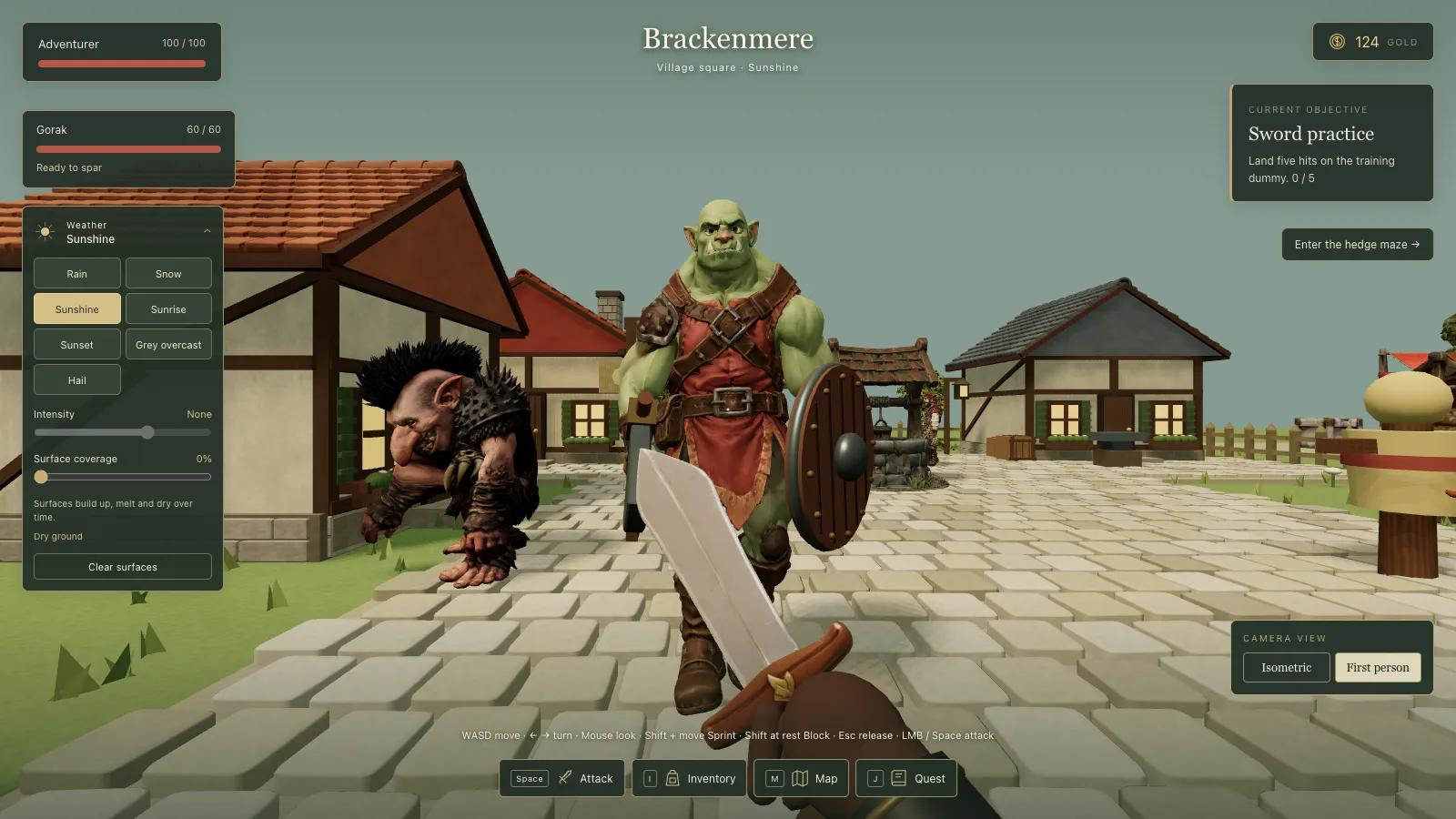 Mid-swing with my Meshy sword. You could finally see it, but the hand was a brown block.
"The hand is all wrong"
That evening I wrote my overnight punch list (most of it was about the castle). Two items were first person: "The hand is all wrong. Do you need a meshy.ai or something similar or can we just do better here based on what I have for the character already?" And: "When I walk or run, in first person view, the hand wobbles really quickly up and down and looks all wrong."
The agent replaced the wobble with a footstep rhythm, slower for walking and quicker for a sprint.
I was not really away from the keyboard. Notes kept arriving while it worked. "Can we make the sword a bit 'grittier' and slightly darker?" Then: "I will keep on giving you things as I think of them. Don't prioritise them though, just add them to the queue and work on them when it feels sensible." The next one fixed something I had noticed in every fight: "When I attack monsters, in first person view, can we auto look at the monster. For instance when the goblin attacks I naturally am looking over its head."
For the hand, the agent tried the cheap route first: the hero's own rigged arm, cut down to a forearm and glove. His model had no finger bones, so the fingers could not curl round the grip. I saw an early version and said "Looks weird, keep on going." Two minutes later I sent a picture of the gloved fist I wanted: "Could you take this? I don't mind if we use a slightly different model." The agent turned that picture into a model with Meshy, and the arm experiment was dropped.
Under the hood The fist cost about 33 Meshy credits: a background clean-up, then image to 3D. It came back at 20,000 triangles in a 1.2 MB file, with the old procedural glove kept as the fallback if it fails to load.
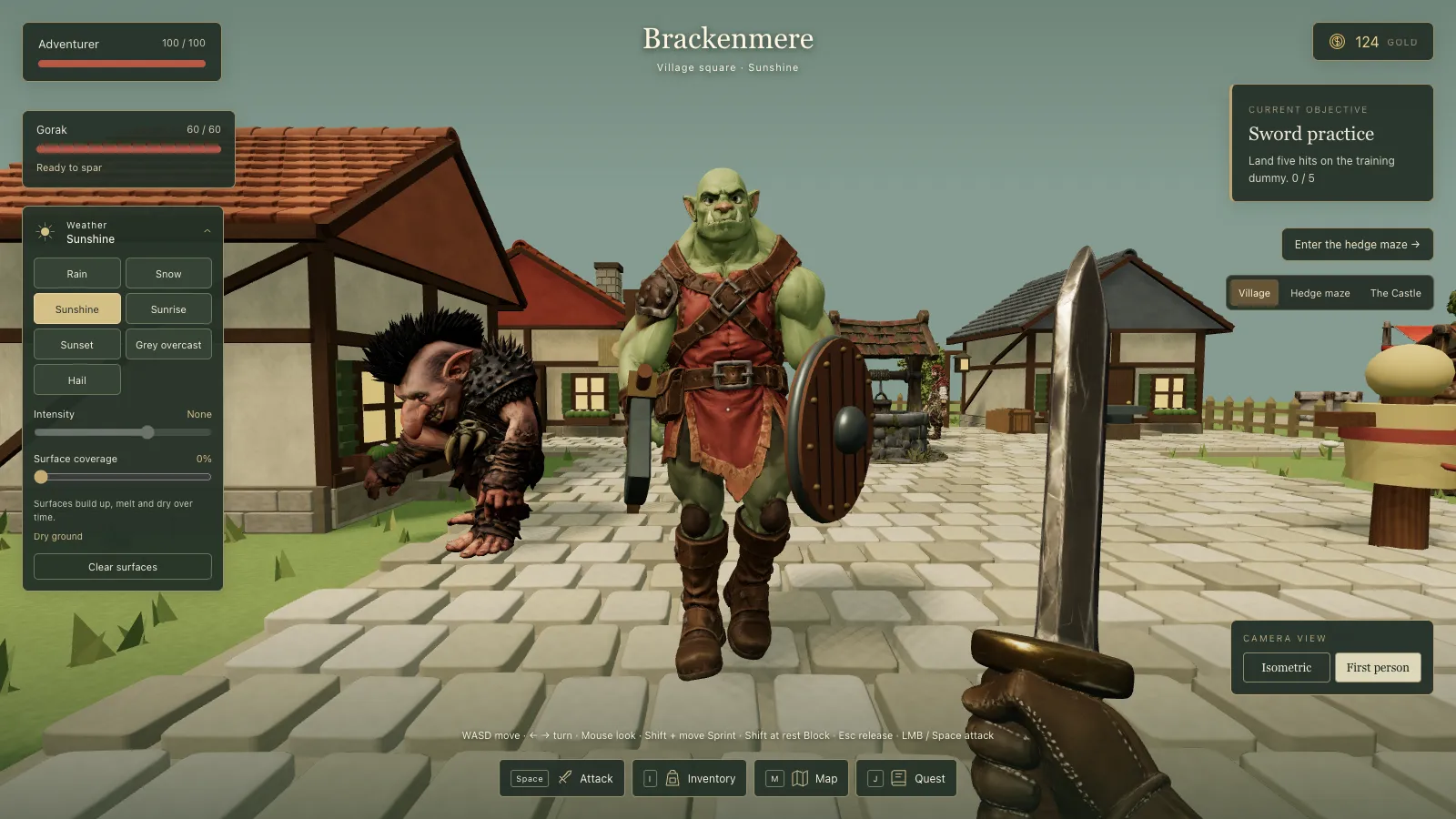 By the end of the night: the gloved fist from my picture and a darker, grittier sword.
Aim assist went in the same night, easing the view onto the monster you are fighting. The next morning I found its limit: "Also on larger monsters / characters, it needs to look up a little." Minutes later it aimed at the head and chest of tall monsters instead of their belts.
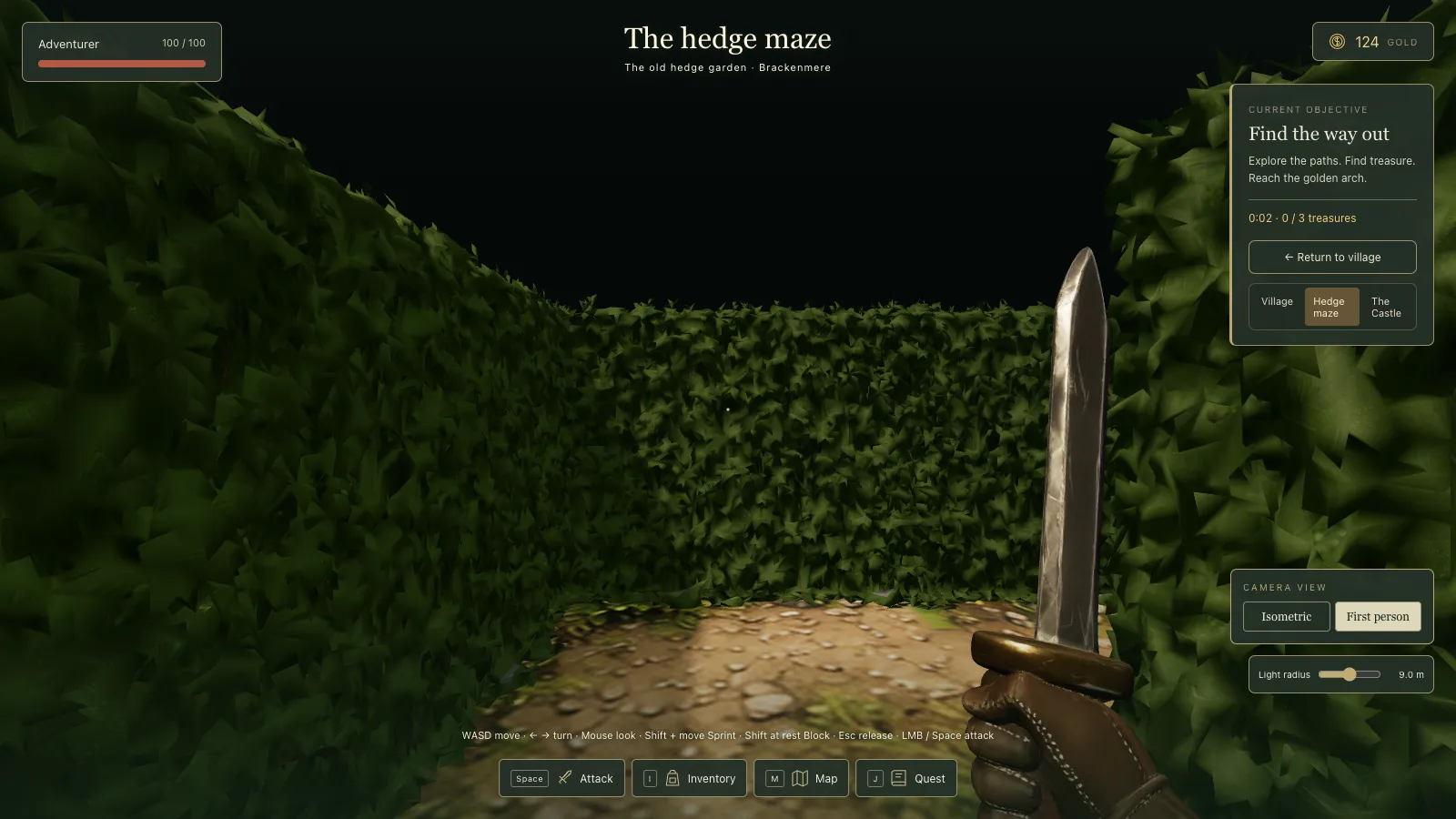 The maze from inside, which is where the question started.
What I took from it
- Prototype a hunch in a throwaway worktree. Main never saw it until I said yes.
- A second camera audits the first. Labels, facing, aim and hidden hands were all invisible from above.
- Presentation is not authority. The sword you see is drawn separately; the combat underneath did not change.
- When the agent is stuck, give it a picture. One reference beat an evening of rig tweaks.
- "Partial" is a fine result. Writing down what was not measured beats pretending.