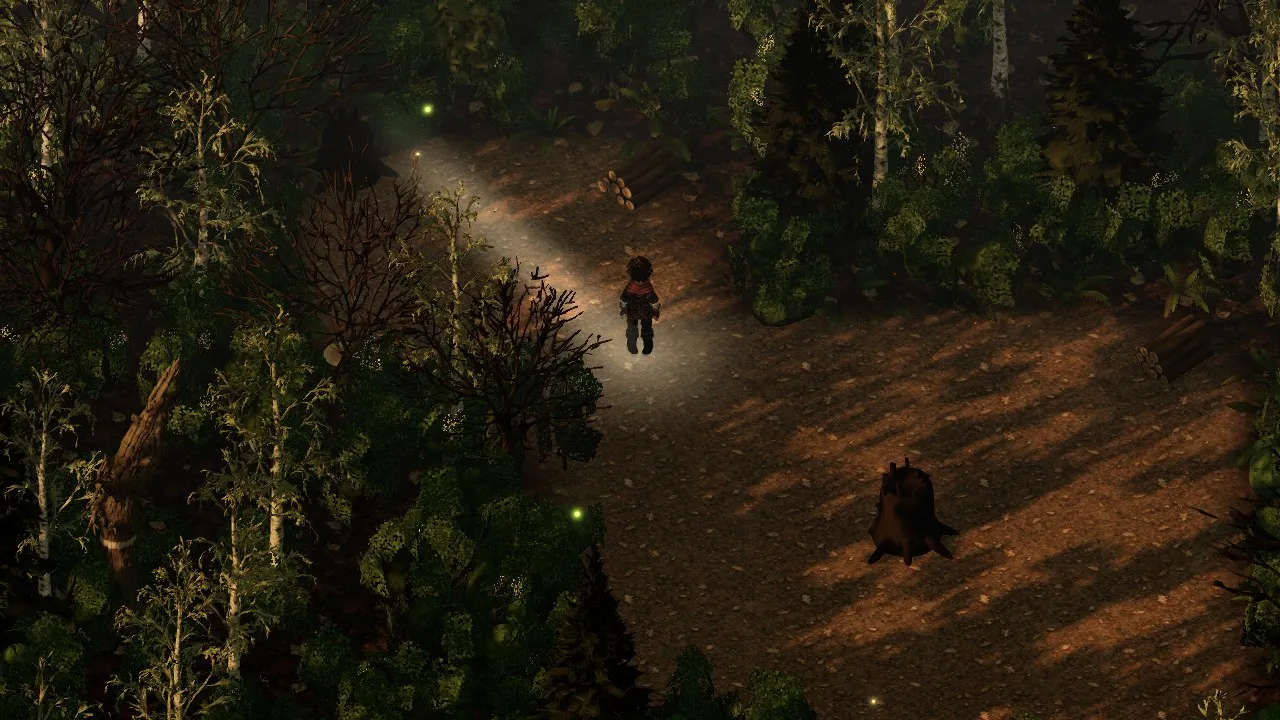
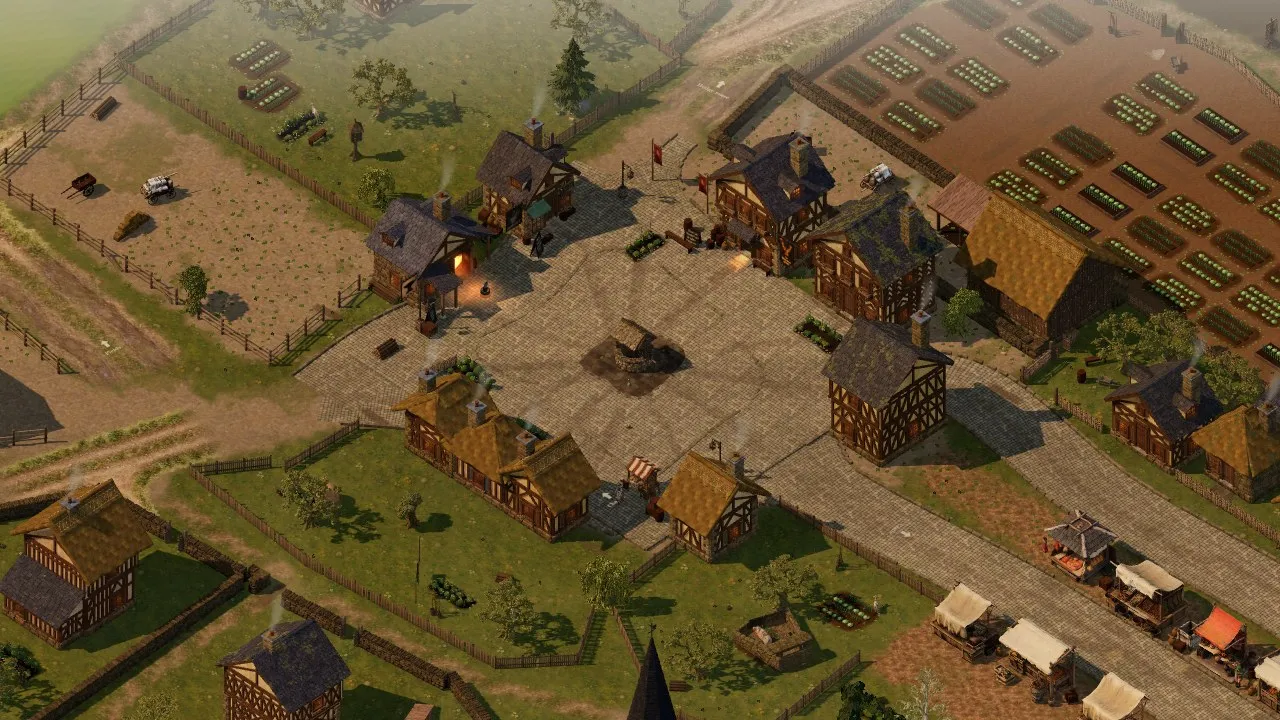
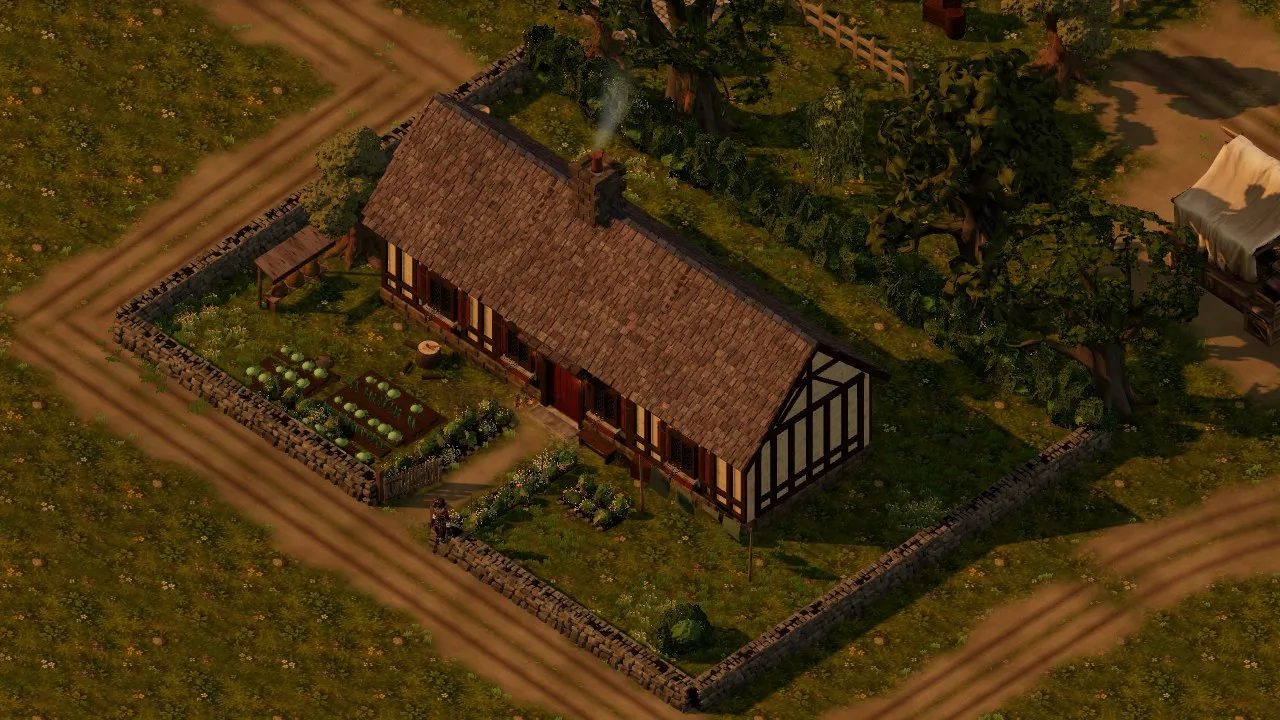
The old gate leads somewhere
Day one ended with a village and an old gate that went nowhere. The next morning I set three agents going in their own worktrees, one on weather, one on animation and one on the thing the whole game was supposed to be about. My brief for that one was short: "I want you to create a single maze that is about 3-4 minutes play time to get through, so we can test the feel of it. Do some simple designs, maybe a hedge maze to get us started on it, where players can explore, find monsters, find treasure along the way and get out."
Then I walked away. "I am away from keyboard so any questions go with recommendations, do not mockup designs for approval so I won't be here."
Specified by feel, not by size
I never said how big the maze should be, only how long it should take. The agent turned that into a spec: a fixed, seeded hedge maze with three monsters, three optional chests and an exit arch, where the shortest walk at normal speed takes two to two and a half minutes, and the detours and fights push a first run towards three or four.
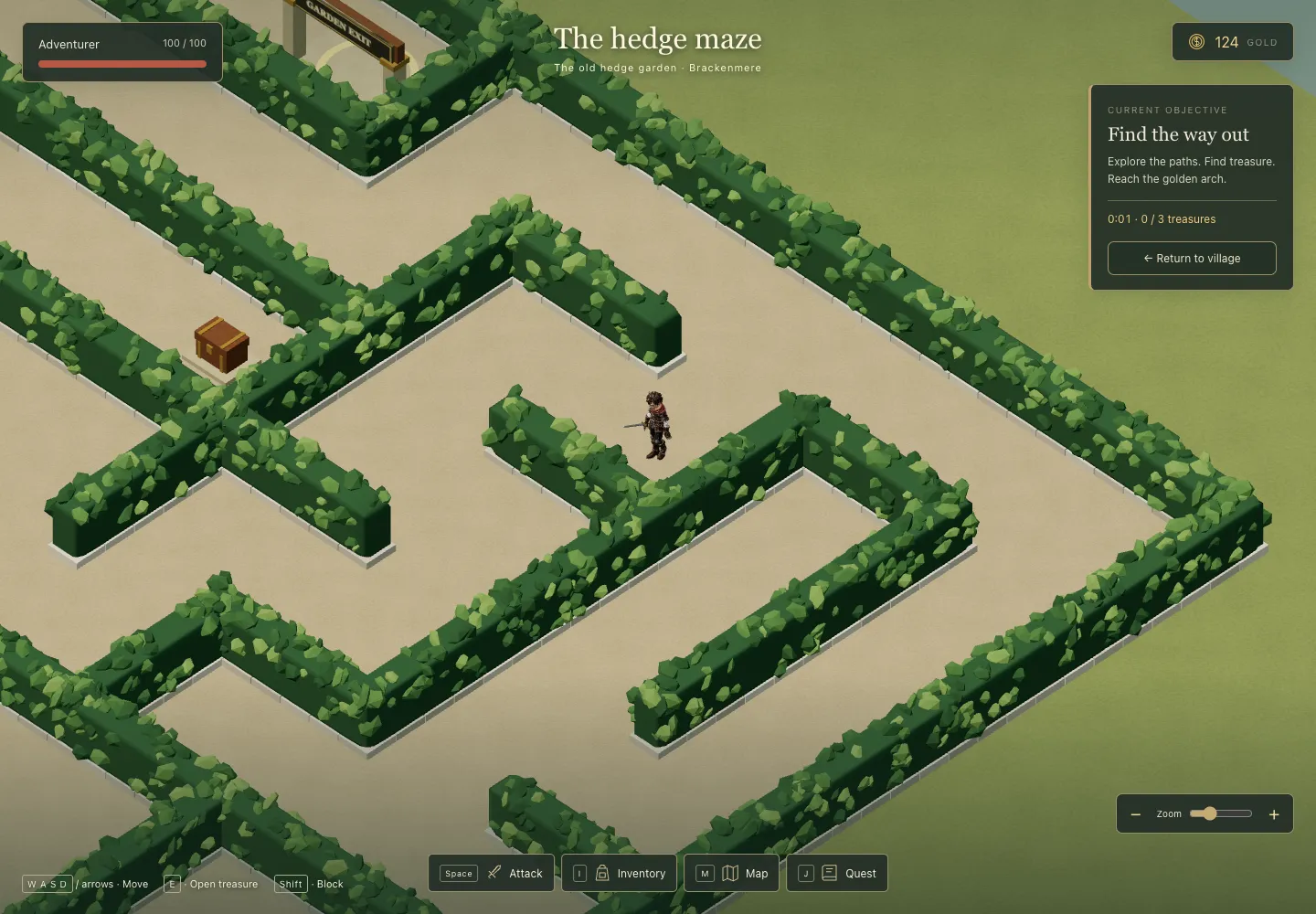 The first hedge maze, from the agent's own verification run. Procedural hedges, one chest, and the exit arch already in view.
Because I was away, the agent logged every decision it took for me with a line of reasoning: a fixed seed so runs could be compared, optional treasure so exploring stayed the point.
Under the hood The verifier walked the whole solution with real keyboard input and real collisions: a 522-unit route, 137 seconds at walking speed, 175 seconds with the three fights. It noted that this "proves navigability, not measured human first-run duration". The three to four minutes stayed a target for me to judge.
"Yes, an entrance in the world"
The maze lived at its own URL, which is not how a game works. "Let's tie the current maze into our practice area, so I can be on [the village] and go and find the maze." The agent suggested a marked entrance where you walk up and press E. "Yes, an entrance in the world." The garden gate from day one finally had a sign on it.
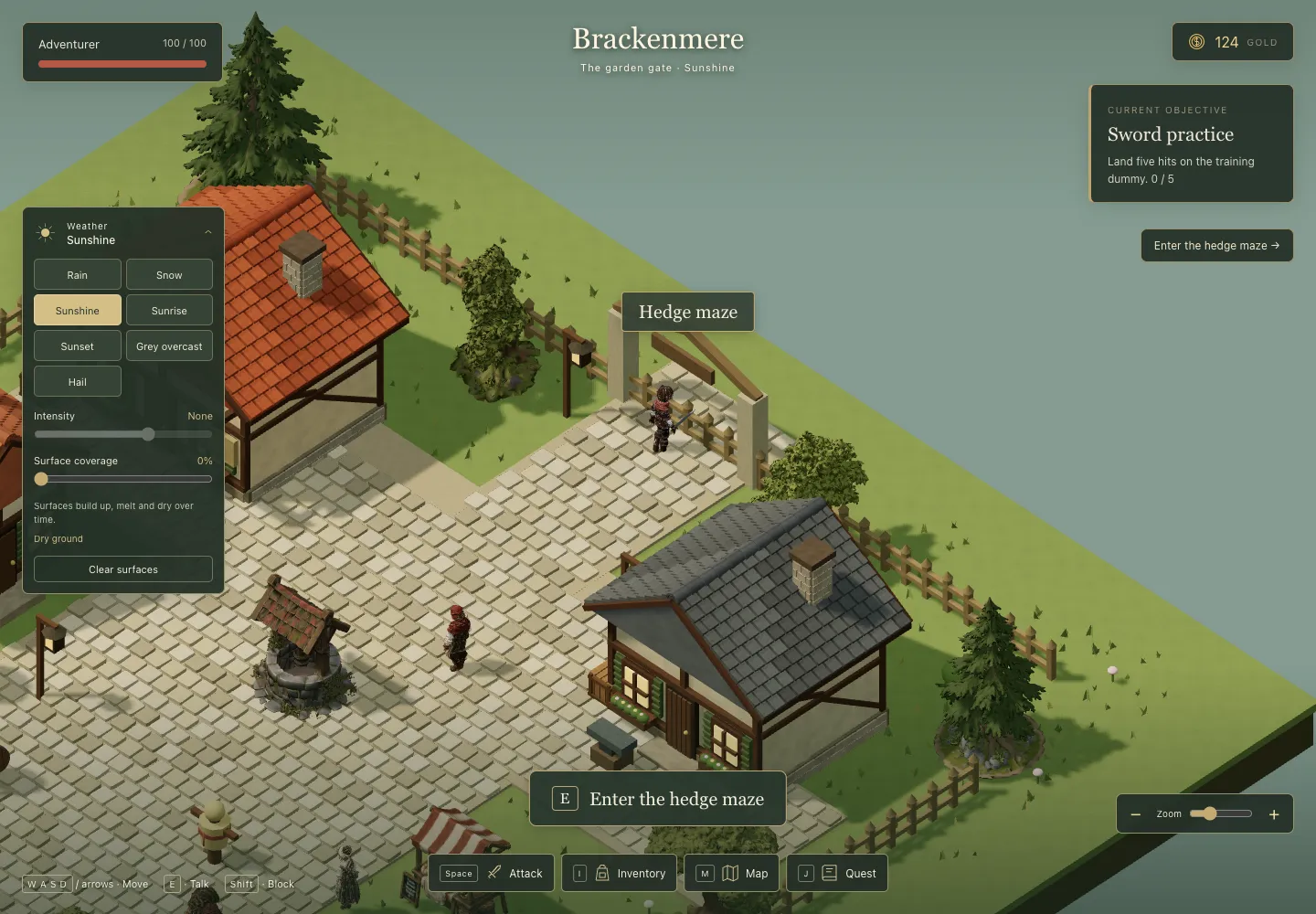 The old gate becomes the way in. The weather panel on the left was the morning's other worktree, merged alongside it.
"You can see everything"
Then I played it, and my first note was the real problem. "You can see everything. I want it so that you can only see the bits that the character would visually be able to see. I don't know how hard this is from a computational point of view, but it'd be good if you can only kind of not see the whole maze."
The rest of that message was a playtest in one breath. "The maze width is too wide. Can we make it a bit narrower between the hedges?" On speed: "Is there a way that I could maybe run quicker?... Maybe not shift because that's block, or maybe that does work because we're not attacking. Maybe shift will work." And on the monsters, who wandered back to their posts the moment you stepped away: "Basically, when they see me, they should start to move towards me and try and follow me. They may get lost if they lose sight of me, etc. But they don't just suddenly go back to where they started from."
A few minutes later I added coins: "when you kill a monster, can a couple of gold coins appear on the floor and they slowly disappear?" Then, once the visibility design was approved: "carry on. I am AFK now so auto approve everything and get building."
The pass that followed made the hedges block sight: unexplored ground went dark, seen corridors stayed as a dim memory, and monsters and chests only showed while the hero could see them. A lost monster now walks to where it last saw you, looks around, then gives up where it stands. My one correction from the first screen: "Is it possible to see the whole hedge... otherwise it looks a bit weird."
Hedges and grass of my own
Meanwhile, in another worktree, I handed over my own art: "Can you give the hedges some interest now, here's a 3D model for it", with a sheet of five grass tiles. "Let's see how that looks?" It looked like a garden.
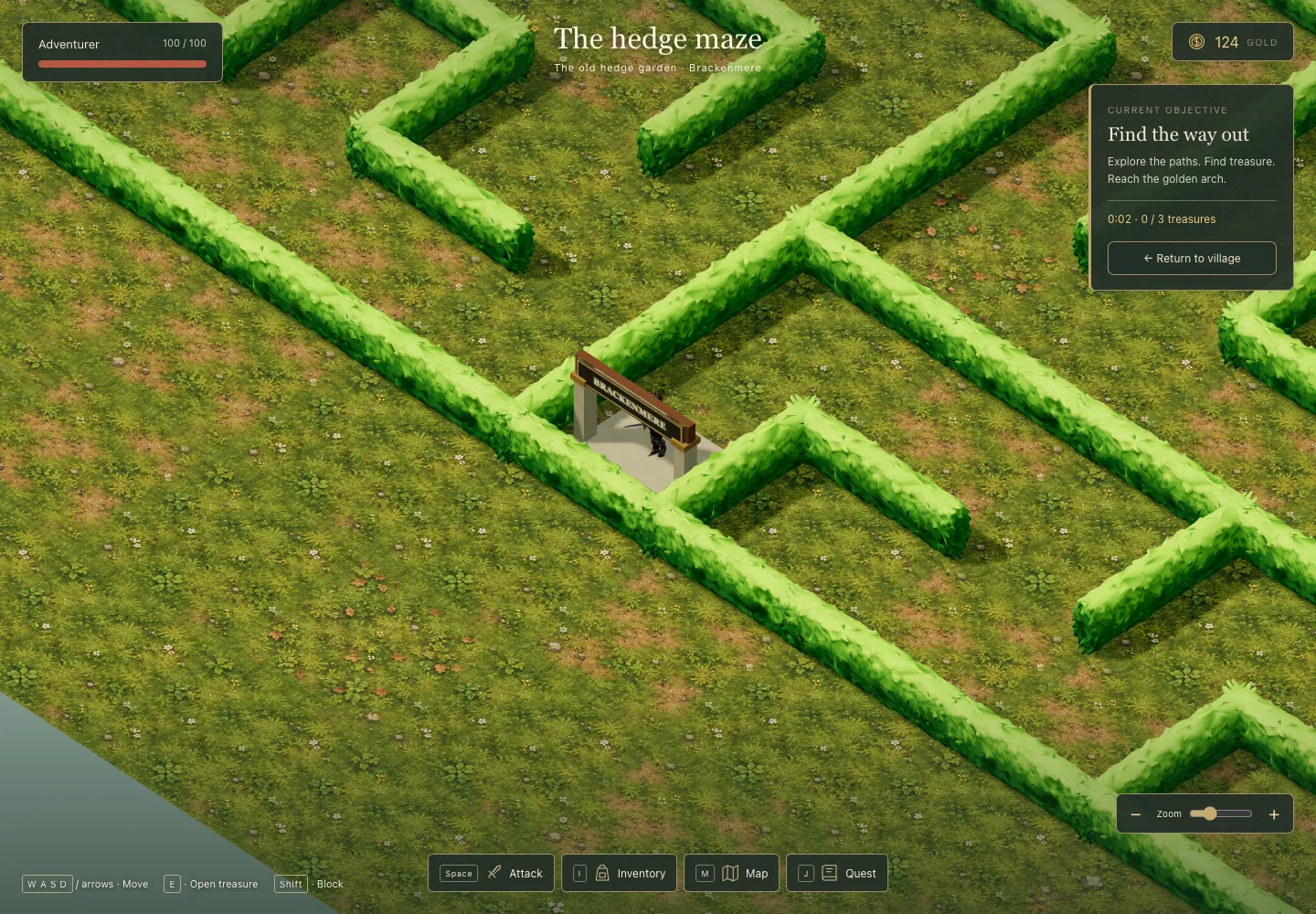 Later that day: my Meshy hedge and painted grass replace the blocky hedges and sand.
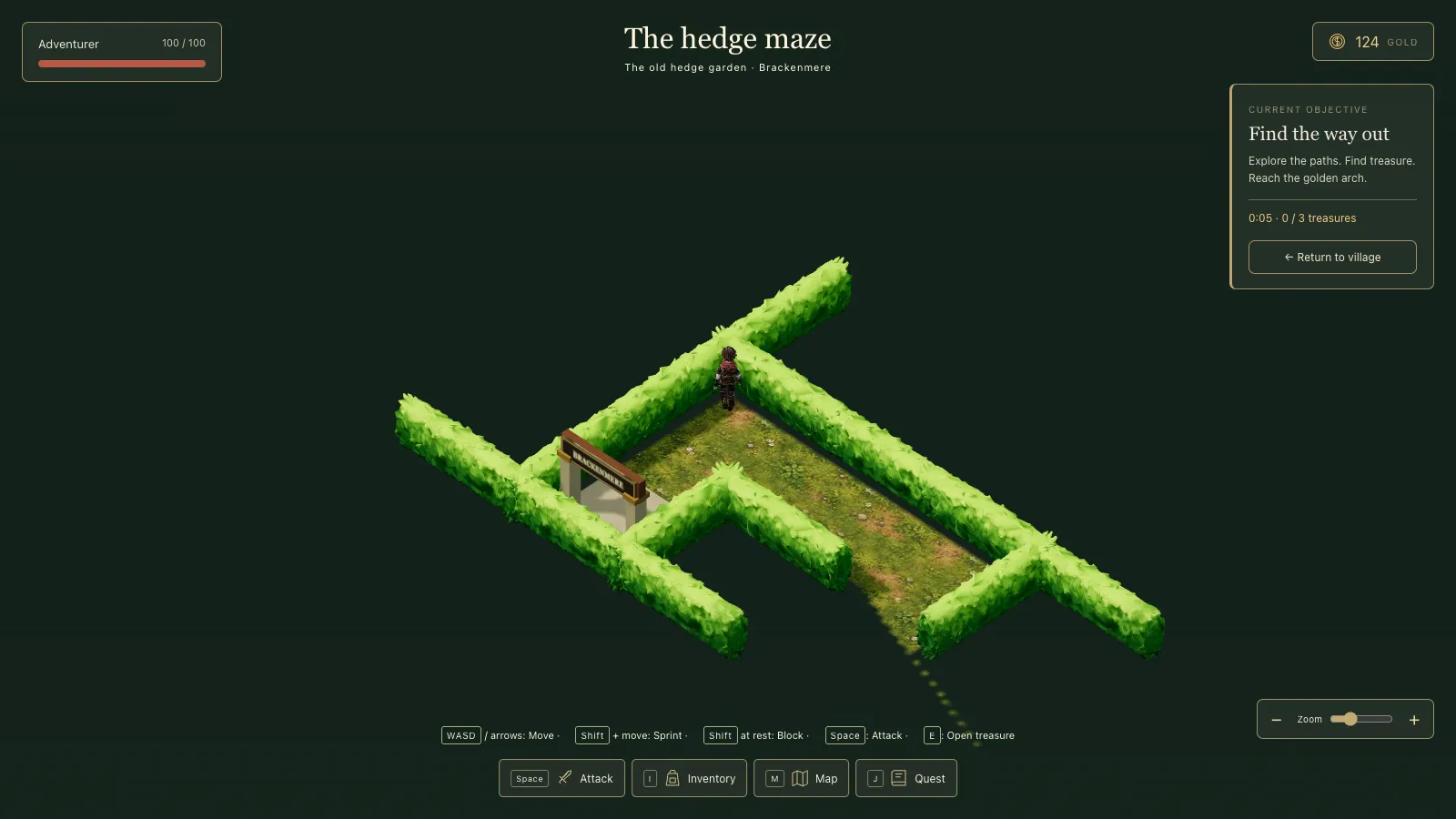 Sight blocked by hedges, re-captured from the merged build. Everything the hero cannot see is dark.
The black bit sweeps
I slept on it and did not like it. "We don't like the way that... you can only see what you can see, because the black bit kind of weirdly sweeps around the maze in a kind of jarring way." Every step changed the shape of the dark. I did not want to lose what worked, though: "keep what we have on the main branch, but let's use a new worktree."
What I asked for instead was simpler. "It's more like a spotlight over the top of the character. And can we kind of make it cloud out to nothingness rather than just a harsh blackness?... maybe have a little slider so we can adjust the radius of the circle so I can kind of play with it to see how it looks."
The agent mocked it up on the real maze. I picked a size ("about 9m, although keep that option in the game") and asked to try a white cloud too. Seeing both, I chose the dark one: "build the non cloud version, stay on worktree and let me play it to see how it feels. keep the radius on."
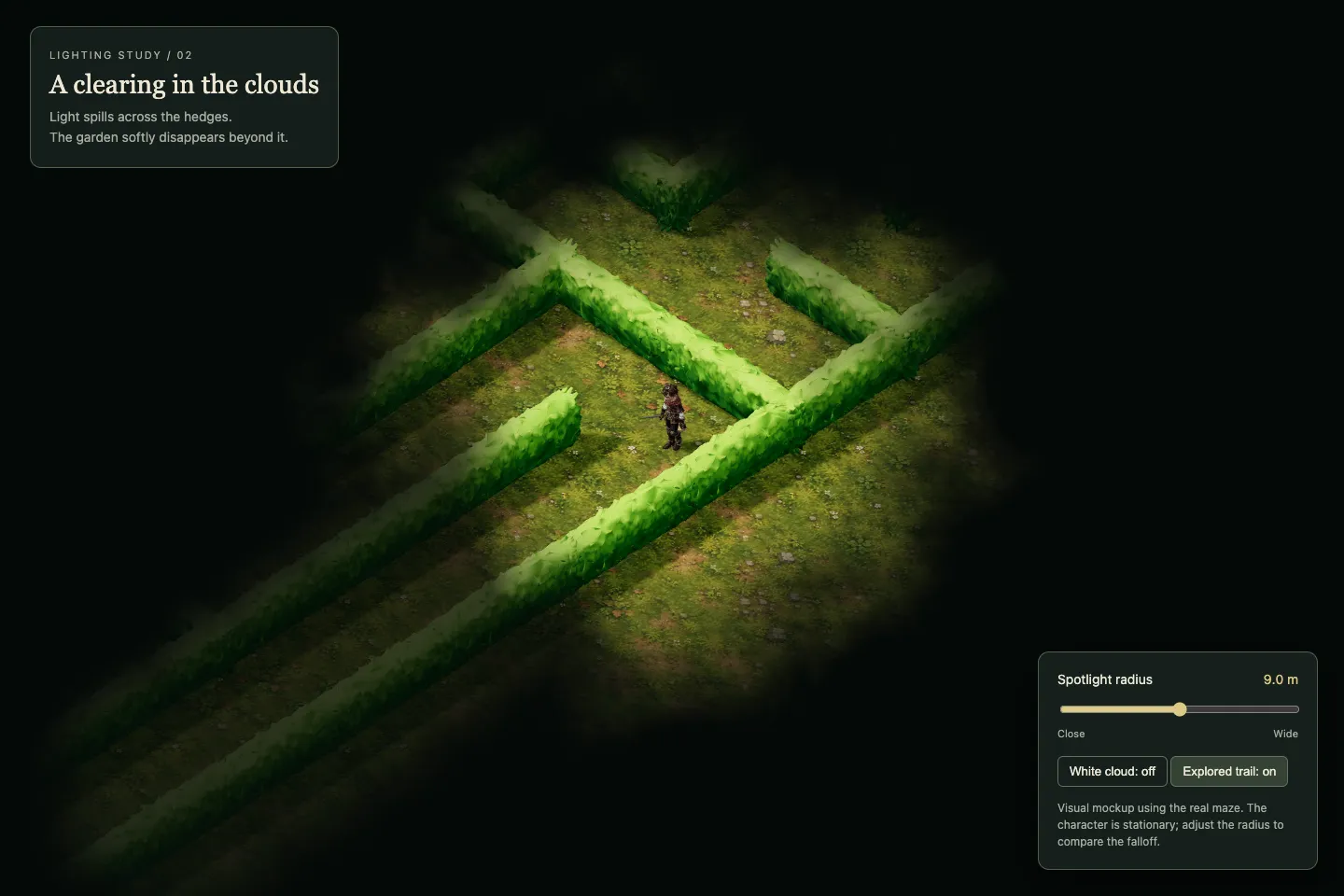 The spotlight mockup I chose from, made on a real capture of the maze.
After playing it I wanted one thing back from the old version: "looks good. A tweak... Monsters, chests etc. You can see the maze as is, this works well, but anything 'in' the maze isn't viewable till you can see it like before." So light and sight came apart: the spotlight shows the scenery around you, even over a hedge, but what is in the maze still needs a clear line of sight.
Painted paths, narrower again
That afternoon I gave it a painted sheet of path tiles: "can you take this image, slice up each 'square' (or rectangle) and use them as the 'grounds'." The agent cut it up and matched each straight, corner and crossing to the shape of the passage. I asked for the maze thinner again and, asked which part, said "narrower walking paths".
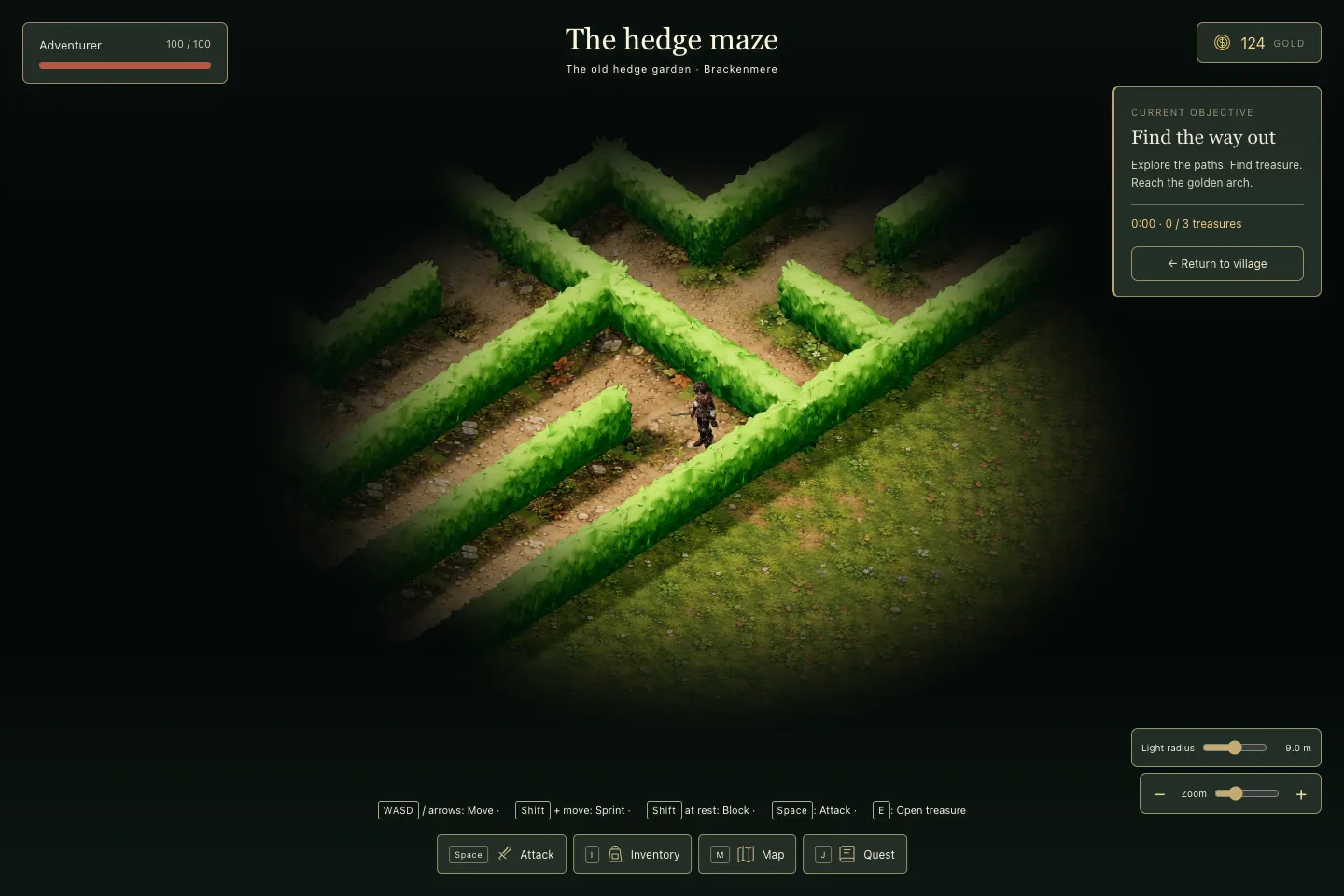 The preview I approved: painted paths, narrower corridors and the 9 m spotlight.
Under the hood The corridors narrowed twice in two days. Cells went from 4.5 to 3.6 to 3.0 metres apart with the hedges kept at 0.9 m, so the walking space shrank from 3.6 m to 2.1 m without changing the maze's layout.
A heap of everything
Within the hour I gave the agents four goblins, a spider, wagons, crates and market stalls for the maze and the square. "This main square is kinda like a heap of everything we've created so we can see how it looks and reacts etc."
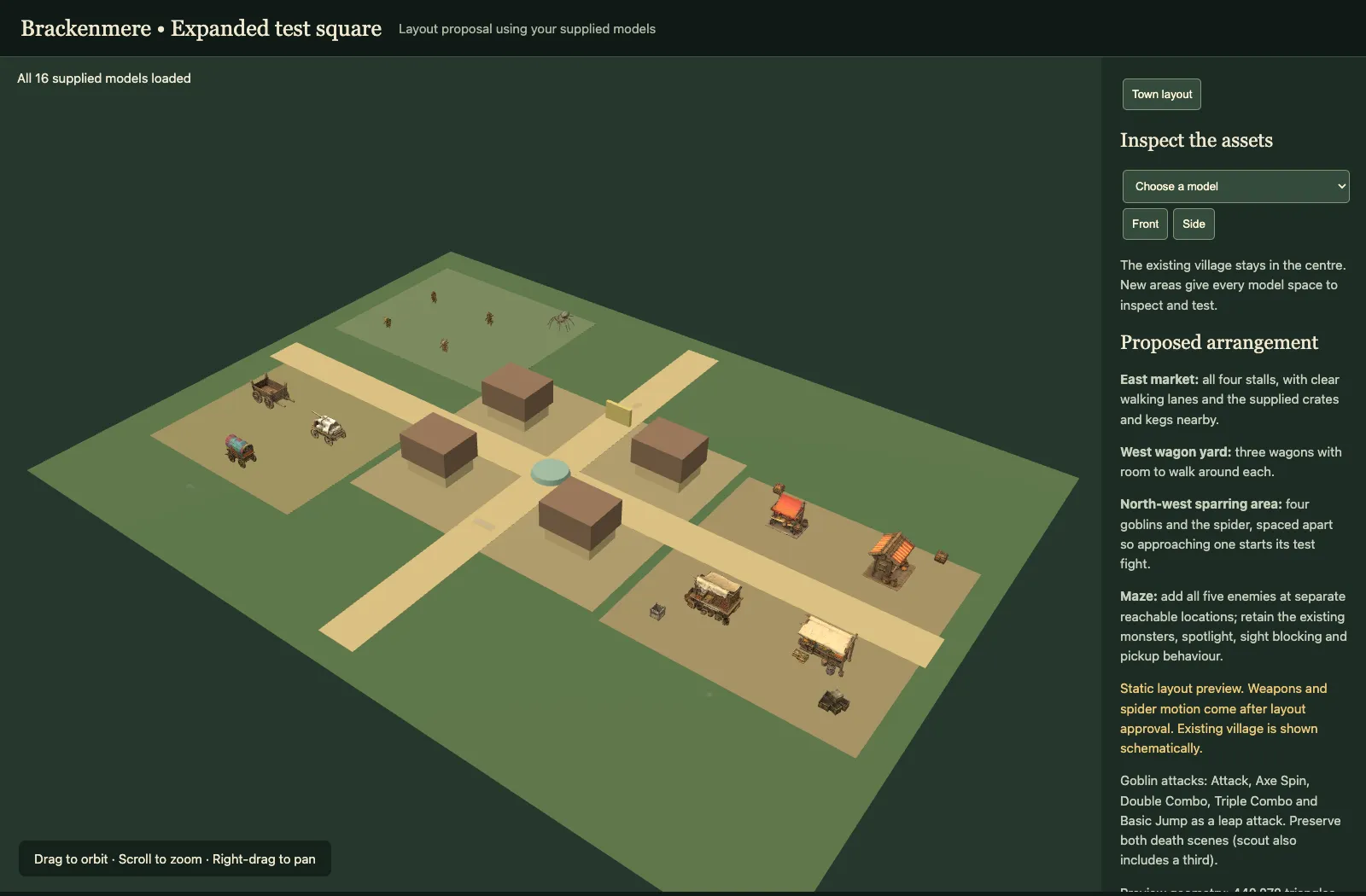 The test square's layout proposal. A sparring field, a wagon yard and a market around the first village.
What I took from it
- Specify by feel. Three to four minutes gave the agent a target it could measure.
- Play it before you trust it. My best feedback came the first time I walked through it.
- Try the alternative in a worktree. The spotlight replaced a working system only after I had played both.