The first version of Renown gave my kids a rank, a title and a Book of monsters, and kept my own rule that the hero's health never grows. A day later I shot up four levels without getting any stronger, and asked for levels that really mean something.
Brackenmere's design vision, written up from a long design interview in September, had one line about growth: "The hero's health does not grow with experience; protection comes from armour." On 17 October I dictated a message that overturned it first thing in the morning.
Where it ended up by lunchtime: a rank you can feel, announced in the middle of the screen.
Where it started: a rank and a Book
Two nights earlier I had asked the agents whether we had built "a fairly stale world without feeling". One of my own guesses was in brackets: "(character levels?)". The review agreed, with a caveat I should have paid more attention to: "Levels that only add +2% are hollow. Each step should unlock something you can see or do."
Overnight a Claude orchestrator built Renown and the Adventurer's Book, so that a child could say "I'm rank 6, I've met 9 of 15 monsters and my best castle time is 4:12". Deeds count once each: a quest, a new kind of monster beaten, a new place. Twenty ranks, each with a title, and a Book page for every monster you have met.
The Book's Monsters page. A monster you have not met yet is a dark silhouette with a question mark.
It was built cautiously on purpose. The review kept the vision's rule: "Renown grants backpack slots and looks, not health." Rank-ups were a thin ribbon, because a card that paused play "in the middle of a child's run is the wrong feel".
Under the hood
The fifteen painted monster plates cost US$0.83 through OpenAI. Backpack pockets from rank go through the same ledger the server replays, so a family's cloud save agrees with the game.
Four levels, really quickly
A day later I played it. This is what I sent:
"With the renown element, I think we want to look at that. Can you, firstly, let's start the backpack smaller, and then the renown gives you extra backpack spaces... how we could make renown a bigger part of it. So you're levelling up and it really means something."
I was not sure what "something" was yet: "I'm just trying to figure out what that means in terms of extra attack or extra defence or extra speed. Or maybe defence or something, like monsters' attacks don't do so much to you."
And the pacing was off: "I think I kind of levelled up four levels really quickly in the game." What I wanted was the shape every good game has: "the first level should be fairly quick, the second one quite a little bit longer but still quick, and then later levels take more and more to get higher up." I asked for some "research into game theory and how all that works", and for higher ranks to "open up certain elements, something new, do you do more damage, something like that". Then: "Do the research with the sub-agent and then carry out your recommendations", and I went AFK.
The vision changes
The plan opened with the reversal: Renown grows health, damage and defence, because "Nick asked for it in so many words". The vision was edited the same morning.
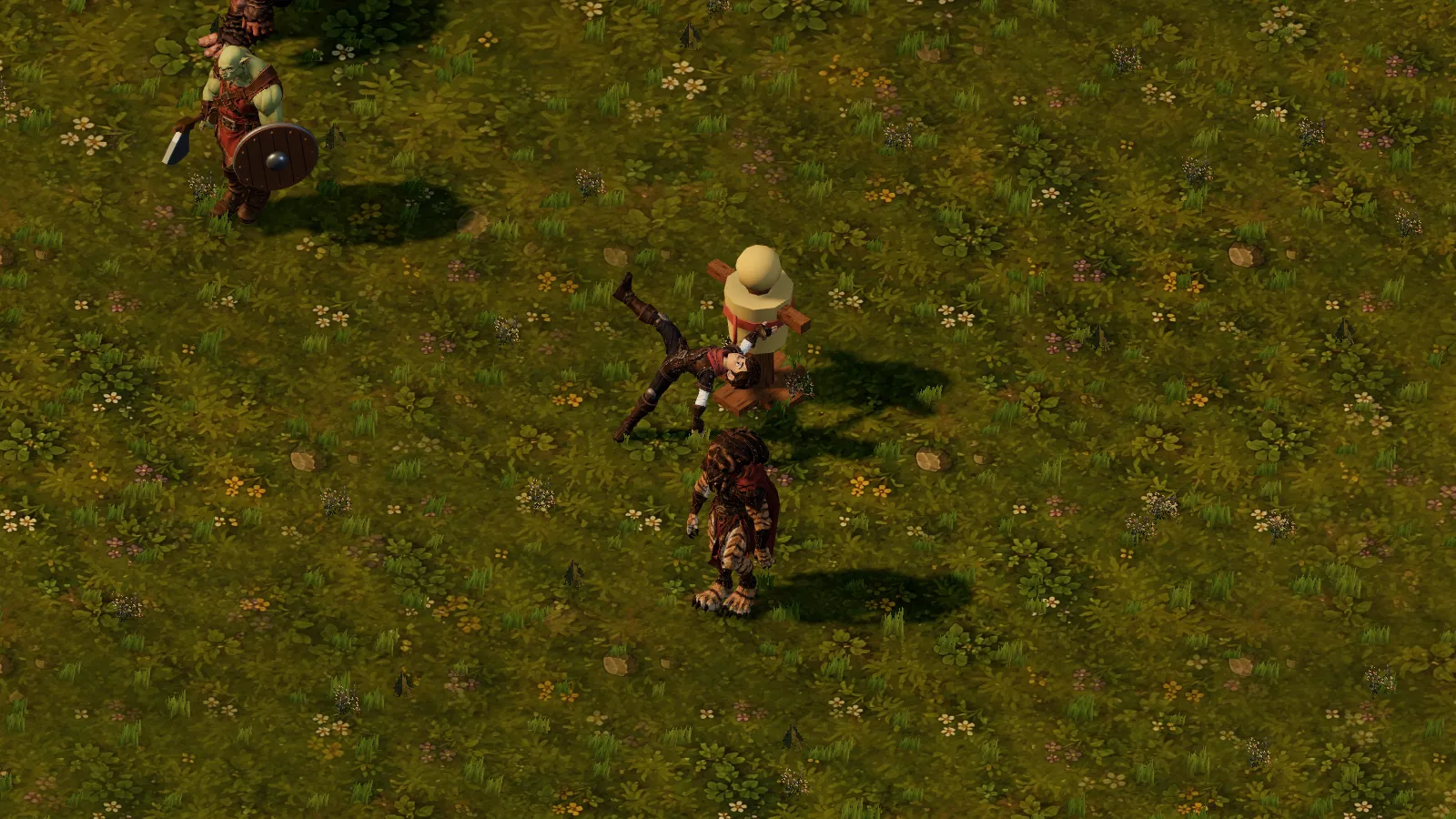
Every rank now gives something: backpack slots two at a time from a smaller start of 12, harder blows, lighter hits, more health, a little speed. The flashy moves from the previous day's combat round became rewards: Spin Attack at rank 4, Dropkick at 7, Chain Dash at 10.
The agents measured why I had shot up: a new hero reached rank 5 in about fifteen minutes, mostly from first kills, each worth the same. First kills now scale with the monster. And a rank you have been shown never goes down, nor does an existing hero lose a backpack slot.
Under the hood
At rank 20 blows are 25% harder, damage taken 20% lower, speed up 8%, health 140 instead of 100 and the backpack 26. None of it is saved: the bonus is worked out from the rank, and combat receives it as an option so it never reads gameplay code.
The agents' own check at rank 20 that morning: 140 health and 26 slots.
Congratulations, middle of the screen
Late that morning I looked at how a rank-up showed and the ribbon was not enough: "when you up level can we show a big congratulations middle of screen scroll or something. Showing the new level, what you get. A congratulations sounds etc. Something that shows and congratulates the user."
So the ribbon gave way to the very card the first round had talked itself out of: the crest on a medal, confetti, each reward listed and a "Hooray!" button. It waits for a fight to end before it opens. I said "push", then asked for a second opinion: "can you run an independent review of the renown structure, the levels, the imagery and the rewards that the user gets, how it shows etc. I authorise you to spend up to $5 OpenAI to help with the look and level badges etc."
What the review found
It found a real bug. When two ranks arrived together, say during a boss fight, the card only showed the top one. A child could reach rank 4 and never be told about Spin Attack.
Before the review: a jump from nothing to rank 4 shows rank 4's gifts only.
After: the same jump on one card that tells everything you gained on the way.
The second finding was the one from my brackets two nights before. About a quarter of the ranks changed no number a child would ever see, because small percentages round away on small blows.
Under the hood
The starting sword hits for 10. At +5% it hits for 11; at +10% it still hits for 11. A 5% defence step changed no monster blow of 10 or under. The fix kept every total and moved the bonuses into fewer, bigger steps that always change a number.
It also read the titles as a child would. Of "Moor-Strider" it said simply: "there is no moor." I picked four suggestions: the rebalance, a real reward for rank 18, kid-friendly titles, and a Book that shows what the next rank gives. Twelve painted pictures (crest wreaths, a medal, gift pictures) cost about 75 cents of the five dollars.
The Book now leads with what you get next.
Still too quick
That afternoon we played the hedge maze and the Charwood, and I sent another list. Item m: "The renown is too quick to up level. We just went to the hedge maze and Charwood and I got to level 4 out of 20. That's a really quick progression. It should definitely not be that quick."
Item n was the same problem in gold: "I must have got at least 2-300 gold just from the chests and killing monsters, but the quest is worth 200." Both were measured and cut: that trip now lands at rank 2, and run gold dropped to a third so a quest is clearly the big reward.
Under the hood
That trip earned 150 to 355 points, rank 4 to 6 on the morning's curve. Rank 2 now comes at 100 and rank 3 at 380, so the campaign up to Lantern Night lands around rank 8 or 9. A Charwood run had paid about 433 gold; it now pays about 85.
The smaller backpack showed up that evening too: "If my backpack is full, we should hint about going into the backpack and dropping some items or something." Within the hour a full backpack said exactly that.
What I took from it
The cautious version kept my rule, as the agents should. But a rule written in September, before anyone had played the game, was worth less than ten minutes of watching a rank go by and feeling nothing. And "+5%" reads like a reward on paper while changing nothing on screen; it took an independent review to show that.
In Brackenmere you now earn renown for the things you do, and climbing a rank really means something. Each new rank makes the hero a bit stronger, gives more room in the backpack, and sometimes unlocks a new move. When you go up, a big congratulations card fills the middle of the screen.
Where it ended up: a rank you can feel, announced in the middle of the screen.
The first version: a rank and a Book
I had wondered whether the world felt a bit flat, and whether levels might help. Overnight, my AI helpers built Renown and the Adventurer's Book. You earn renown once for each new thing: a quest, a new kind of monster beaten, a new place found. There are twenty ranks, each with a title, and the Book has a page for every monster you have met.
The Book's monster pages. One you haven't met yet is a dark shape with a question mark.
But it was built carefully, to follow a rule I had written back in September: the hero never gets tougher from experience, only from armour. So ranks only gave backpack space and looks, and going up a rank was a thin ribbon at the edge of the screen.
Four levels, really quickly
Then I played it. I went up four ranks really quickly, and none of them felt like anything. I wanted levelling up to mean something: hit harder, take less damage, something new. And I wanted the first rank to come quickly and each one after to take longer, the way good games do.
So I changed my own rule. Now every rank gives you something: more backpack space (from a smaller start), harder blows, lighter hits, more health, a little more speed. The cool moves from the new fighting became rewards too: Spin Attack, Dropkick and Chain Dash unlock as you rise.
At the top rank: much more health and a much bigger backpack.
Congratulations, middle of the screen
The thin ribbon wasn't enough. I asked for a big congratulations in the middle of the screen, with a sound. Now there's a medal, confetti, a list of what you got and a "Hooray!" button. It waits until a fight is over before it pops up.
A second pair of eyes
I asked a separate helper to review the whole thing. It found a real problem. If you jumped two ranks at once, say in a boss fight, the card only told you about the top one. A child could unlock Spin Attack and never be told.
Before: jumping to rank 4 only showed rank 4's gifts.
After: one card tells you everything you gained on the way.
It also found that about a quarter of the ranks changed nothing you could actually see, because the boosts were too small to show. So the boosts were gathered into fewer, bigger steps that always make a difference. Some rank titles got friendlier too. Of "Moor-Strider" the review simply said: "there is no moor." And the Book now shows what your next rank will give you.
The Book now leads with what you get next.
Still too quick
That afternoon we played two mazes and I was already at rank 4 of 20. Far too quick. Gold was the same: I picked up more from chests than the quest paid. Both were slowed right down, so a quest is clearly the big reward. And now, when your backpack is full, the game hints that you can drop a few things.
What I learned
The careful first version followed my rule, as it should. But a rule I wrote before anyone had played the game was worth less than ten minutes of watching a rank go by and feeling nothing. And a small boost can look like a reward on paper while changing nothing on screen. It took a second pair of eyes to show me that.
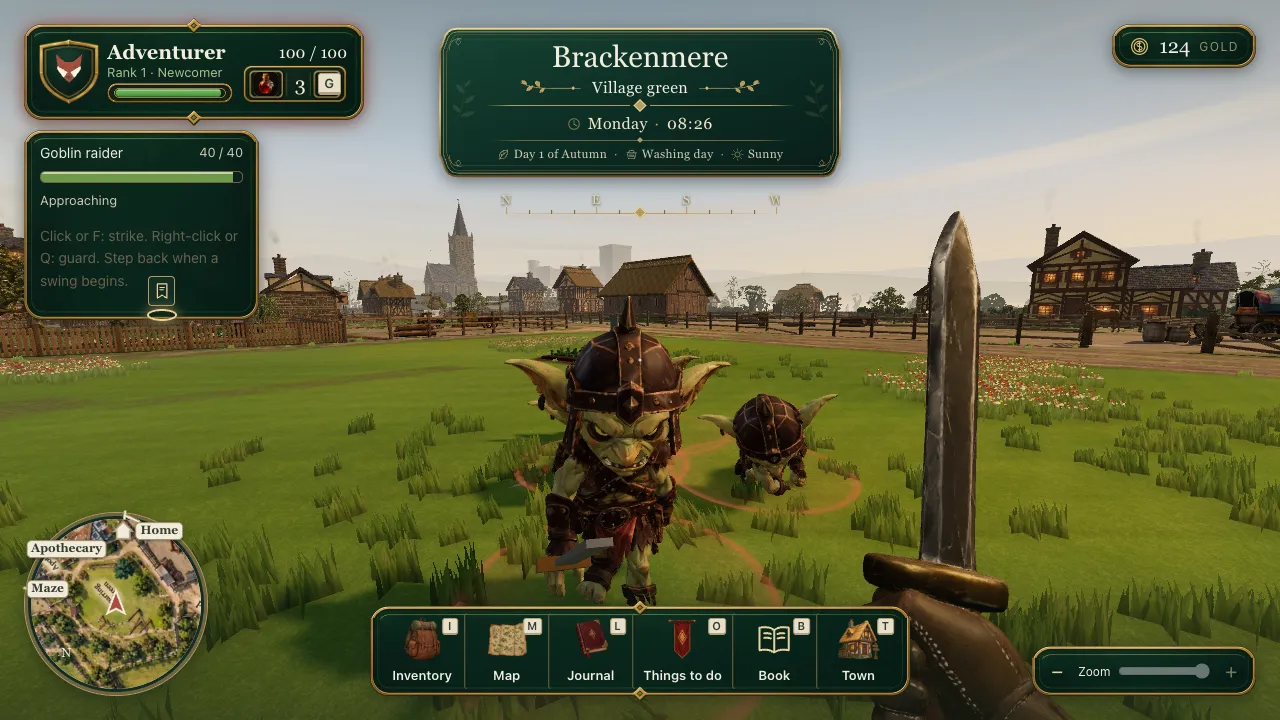
My son voted for goblins running into the village, so the game's one safe place got a fight. The first raid worked in the tests and meant nothing to a player; it took my own walk on the green, a few dictated paragraphs and a day of fixes to make it a raid you notice, can win and can never really lose.
My kids played Brackenmere's first quest and got lost. Three fixes went in that night; two days later AI reviewers proposed cutting the game down, and I chose to keep all of it and rework the opening, pacing, controls and rewards instead.
On 6 October I asked for "slicker moves" and reversed one of the game's own rules: hold Space, press a fresh direction, and the hero throws a named sword move or a two-direction finisher, while a tap still just swings. The same day Space became one button for everything, and the next day the monsters stopped standing still.
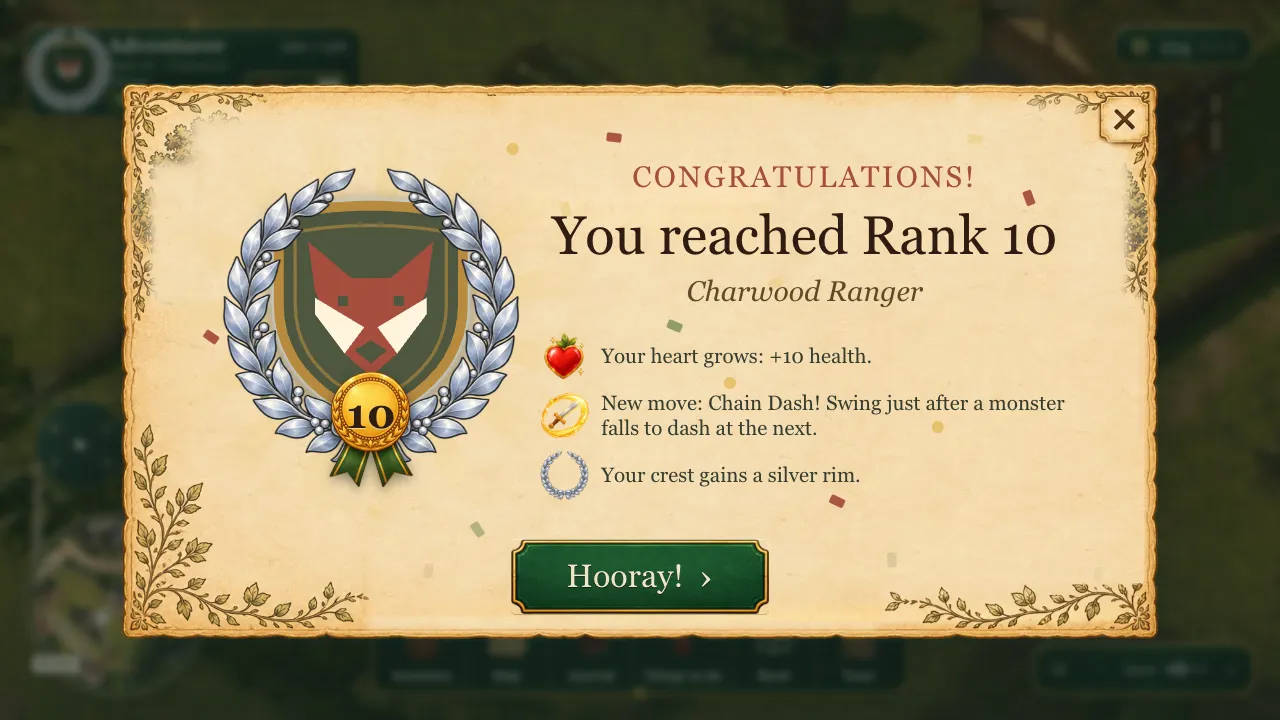 Where it ended up by lunchtime: a rank you can feel, announced in the middle of the screen.
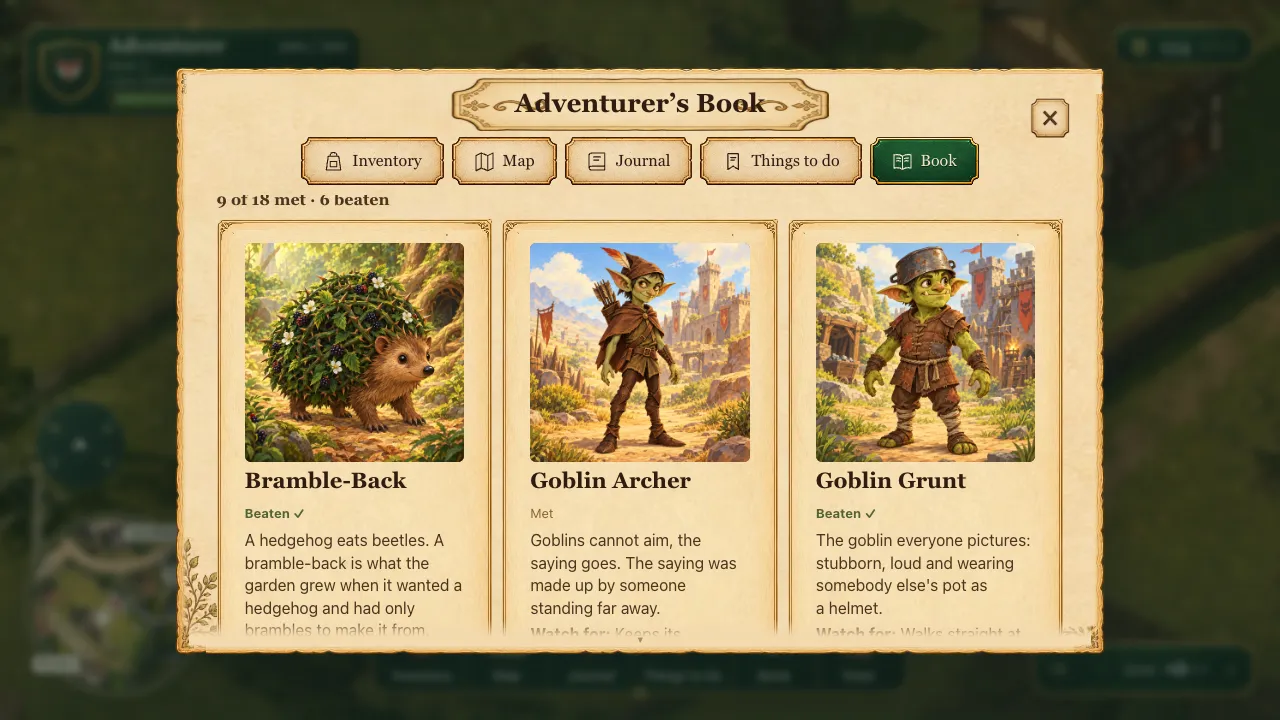 The Book's Monsters page. A monster you have not met yet is a dark silhouette with a question mark.
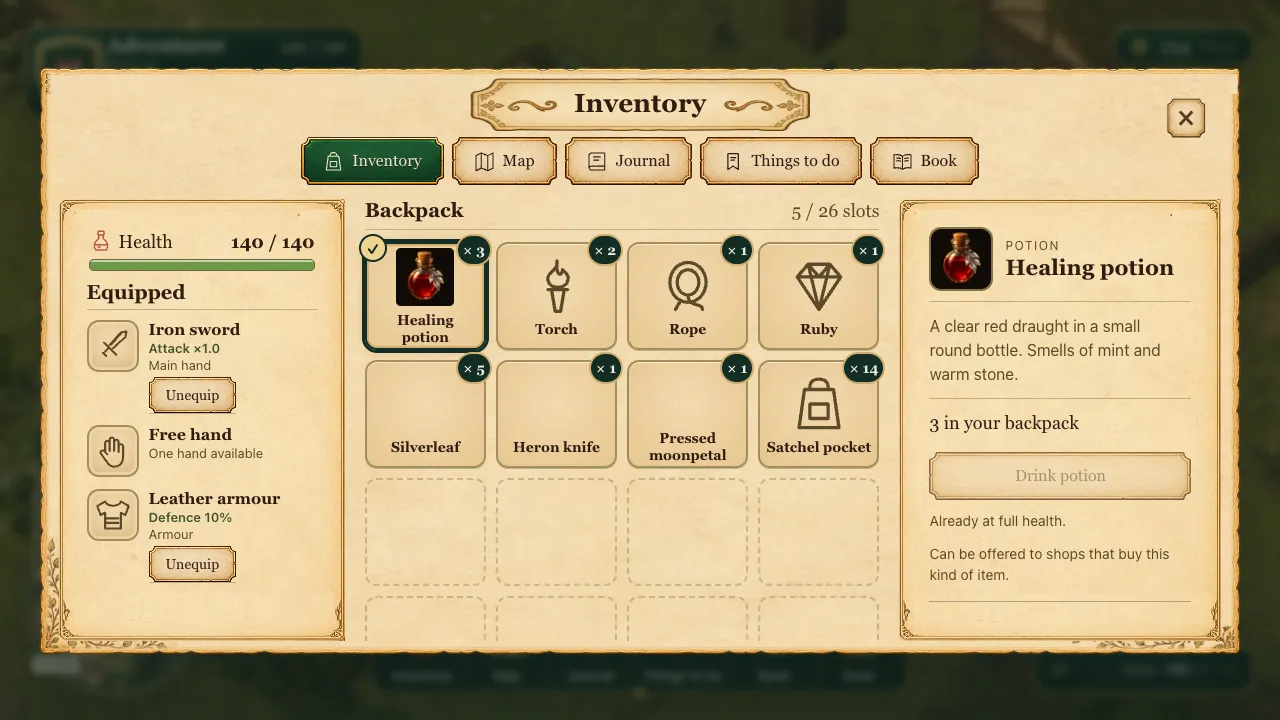 The agents' own check at rank 20 that morning: 140 health and 26 slots.
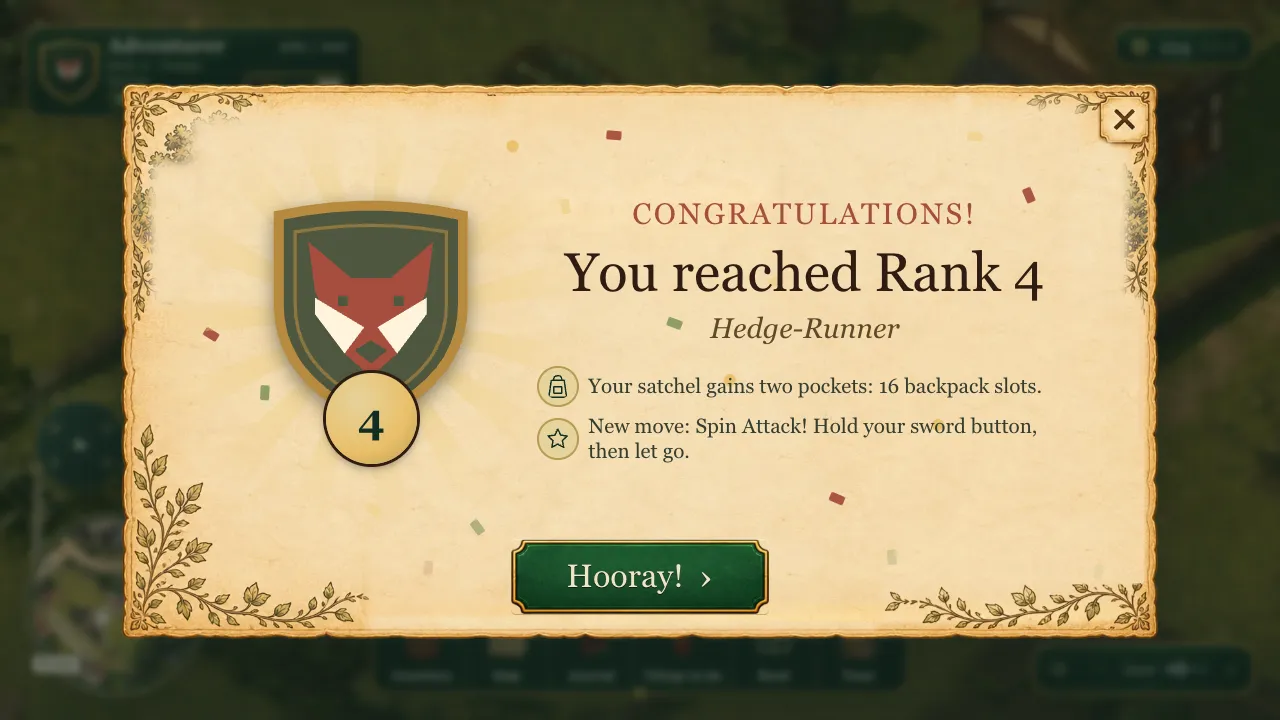 Before the review: a jump from nothing to rank 4 shows rank 4's gifts only.
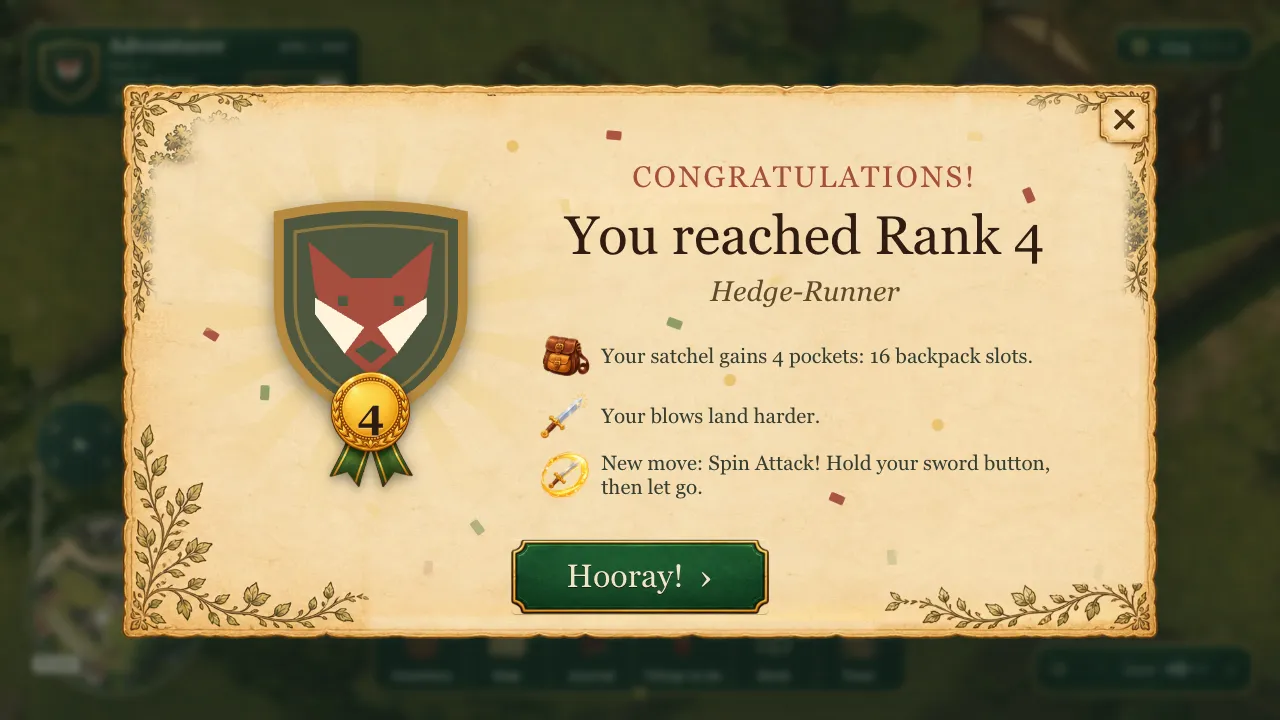 After: the same jump on one card that tells everything you gained on the way.
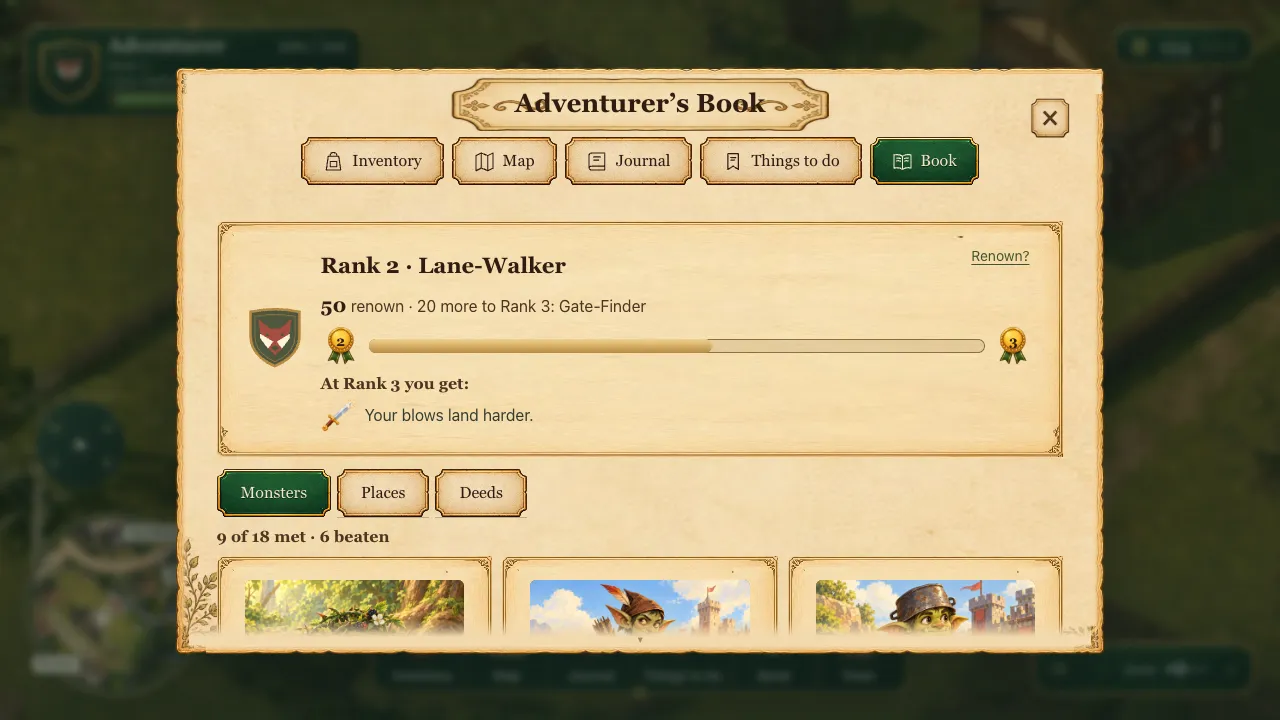 The Book now leads with what you get next.