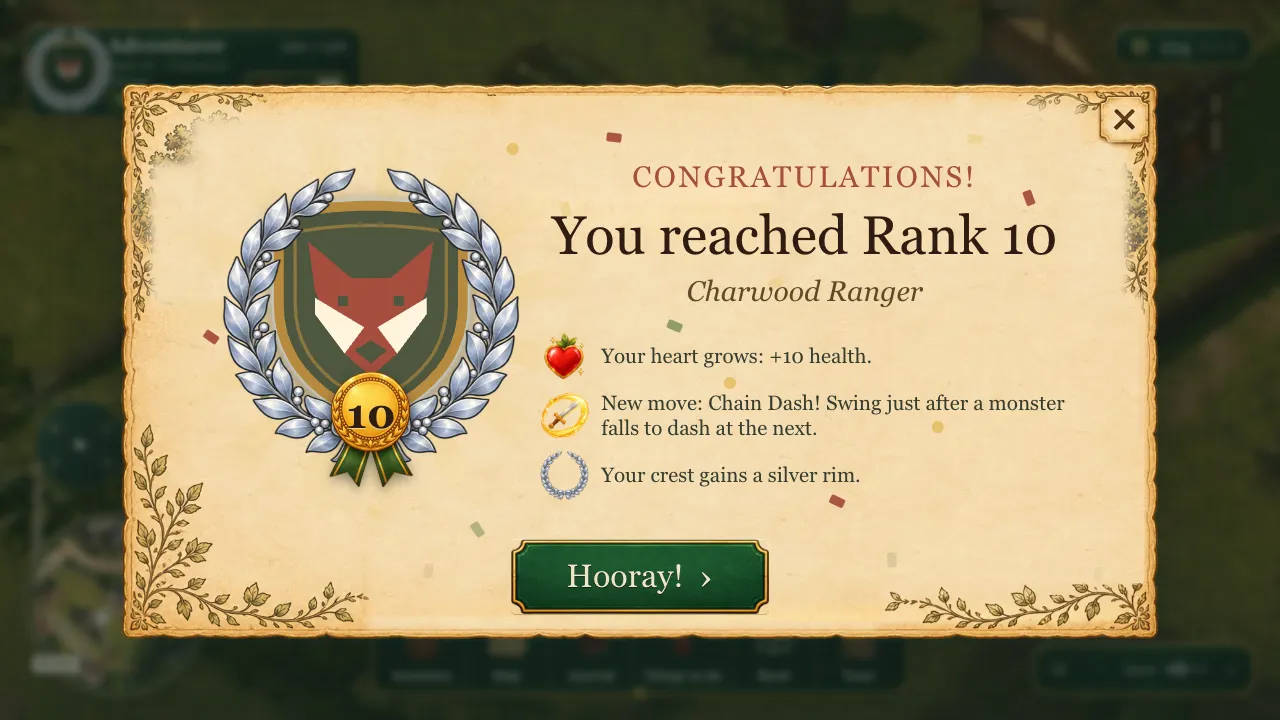
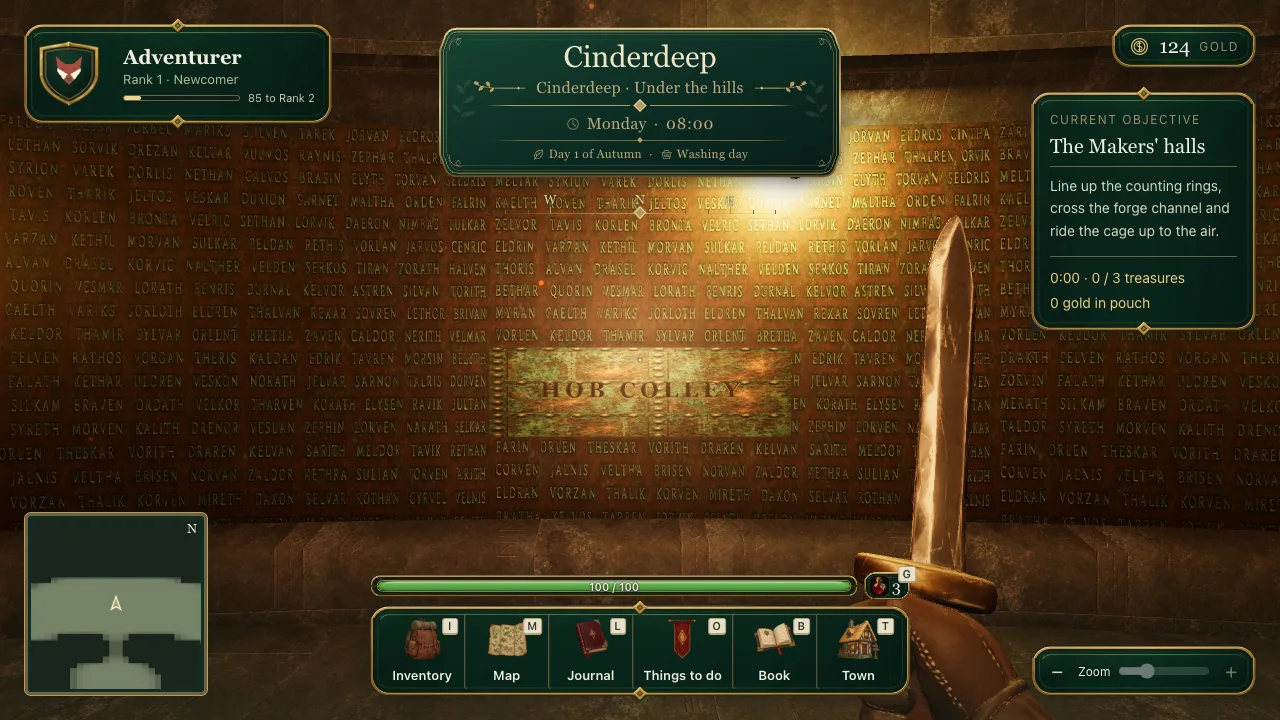
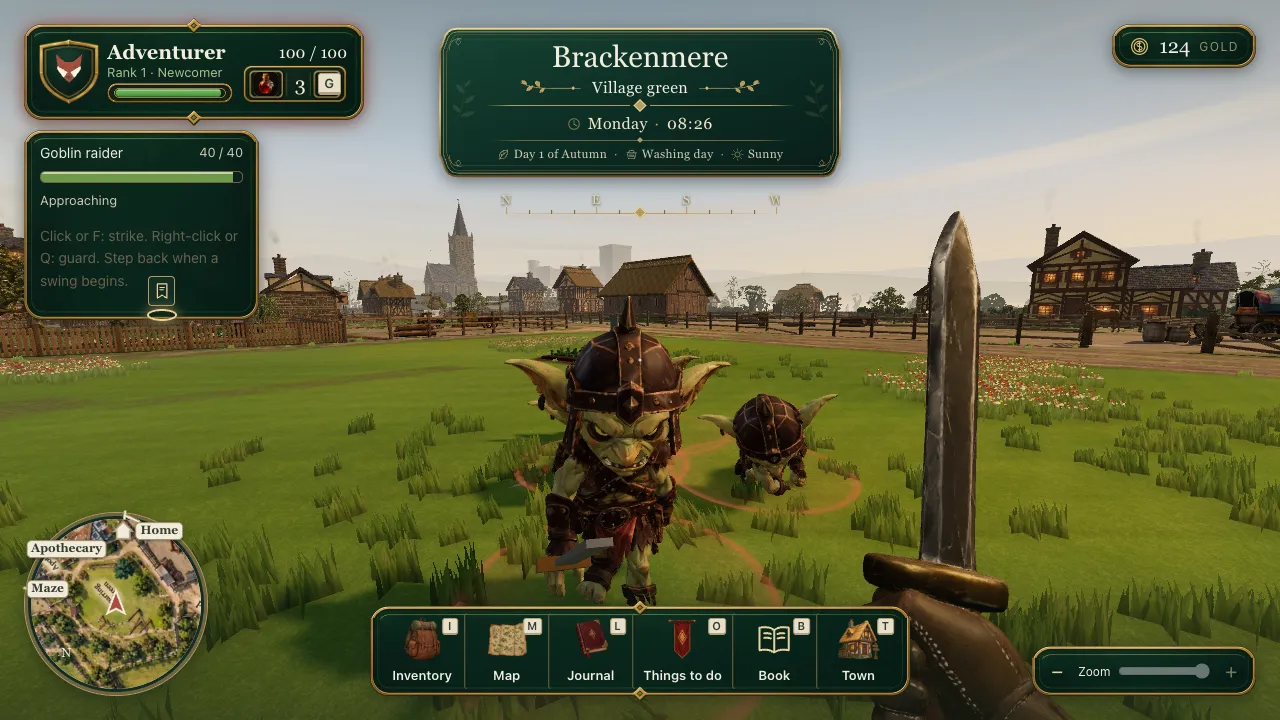
On the evening of 9 October my kids watched the new storybook intro, then played the first quest: Mother Agnes needs moonpetal to brew a fever draught for Tilly's father. I typed up what happened as soon as they had finished.
"It's hard to know what you should do. After they went to the Apothecary, they didn't really know where to get the moonstone flower, and then they didn't really know how to get water, and couldn't find Tilly anywhere. There was no hint where she was."
And the line I kept coming back to: "they got a bit lost, didn't know how to get places, weren't too sure how to do the next part of quests, and control was a little difficult. They loved it, but this was their feedback."
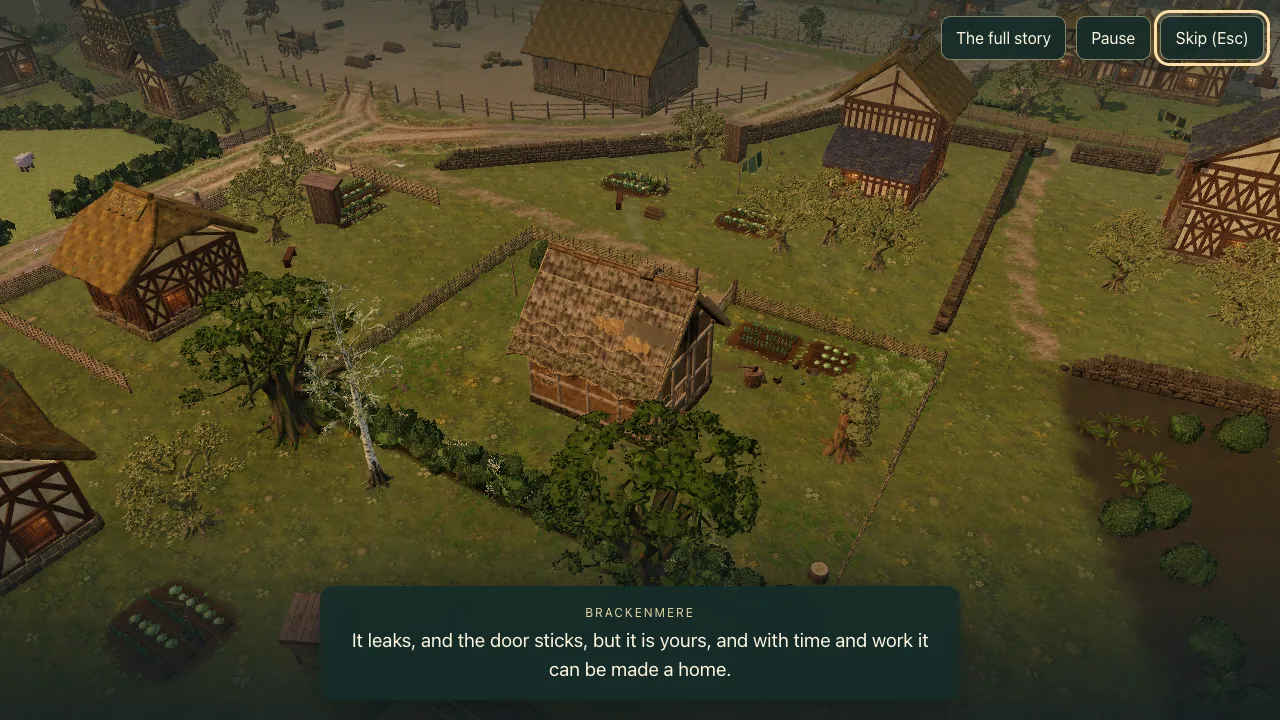 Two days later a new hero starts with a narrated flight over their own home.
What the tests never noticed
The agents had tested that quest many times, and every test knew where the flowers were. My kids did not. The quest never said that brewing the draught needed a flask of water. Accepting it played a sound and nothing else.
So the evening's note became a punch list. Talking to people "should give options to help you find your goal, very prescriptive. Like they could ask 'Have you seen Tilly' etc because that's part of the quest". Accepting a quest should bring "some pause, a big screen shows that says 'New quest ...' that then lays out the steps and where to go". The map was "too small by default, and too complicated to understand exactly." And the vault the agents had built that morning was wrong: "Jumping is nice, but it shouldn't be an action that happens when you get to something you can jump over. A jump key should be used".
I answered four questions (the card always pauses, jumping gets its own key, the village gets a small rotating corner map, one worktree per piece) and handed it over: "approve all, I'm AFK so take these through to completion now".
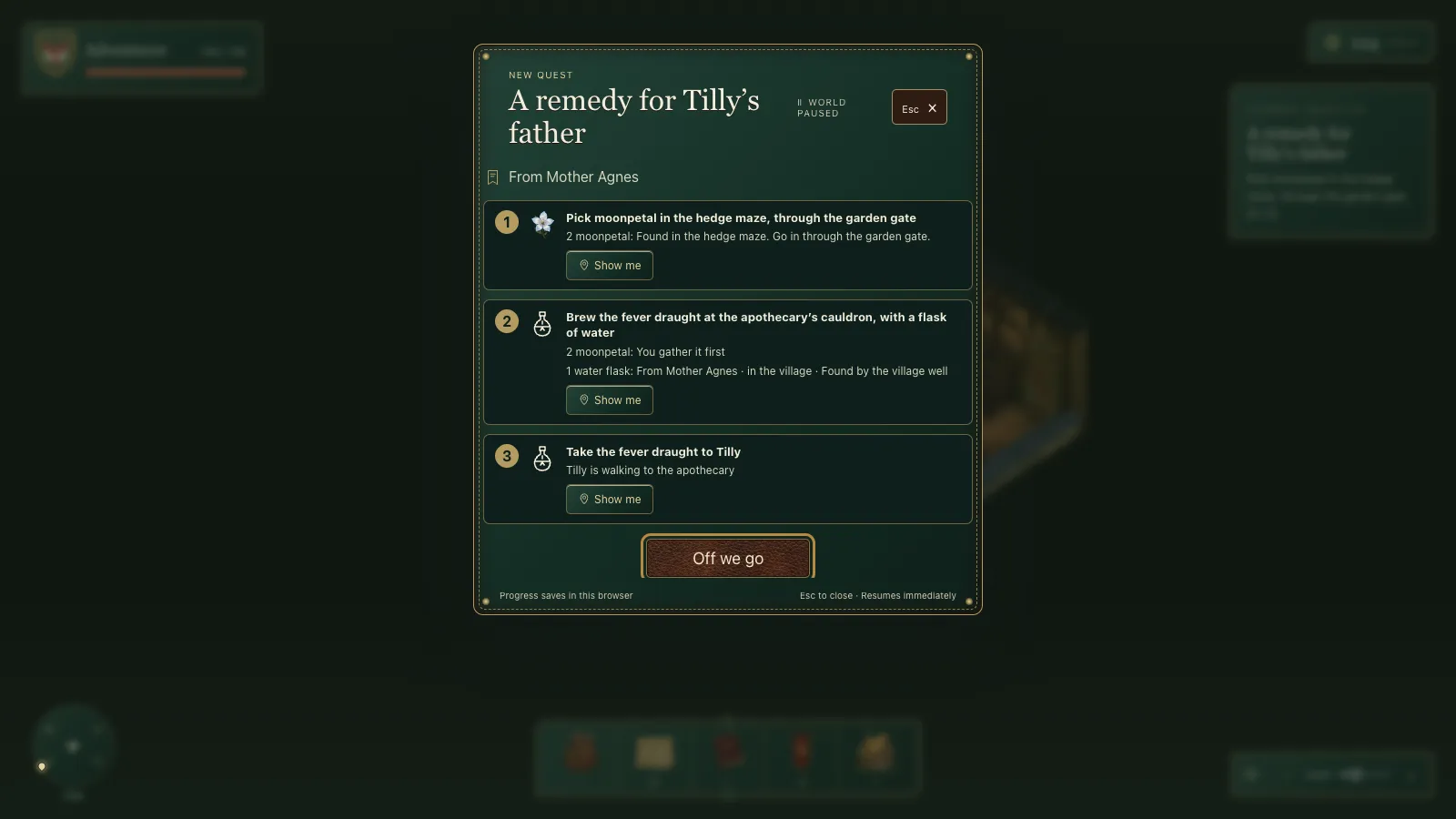 The New quest card pauses the world. The water flask is finally named, with both places to get one.
By the time I came back there was a New quest card, "Have you seen Tilly?" at the top of every conversation, a big draggable map with an arrow for the way you face, J to jump, fingerposts at the main junctions and a five-step coach for the first morning.
Under the hood Three Claude owners in their own worktrees, one review each. The first merged under an hour after I said go, the third twenty minutes later.
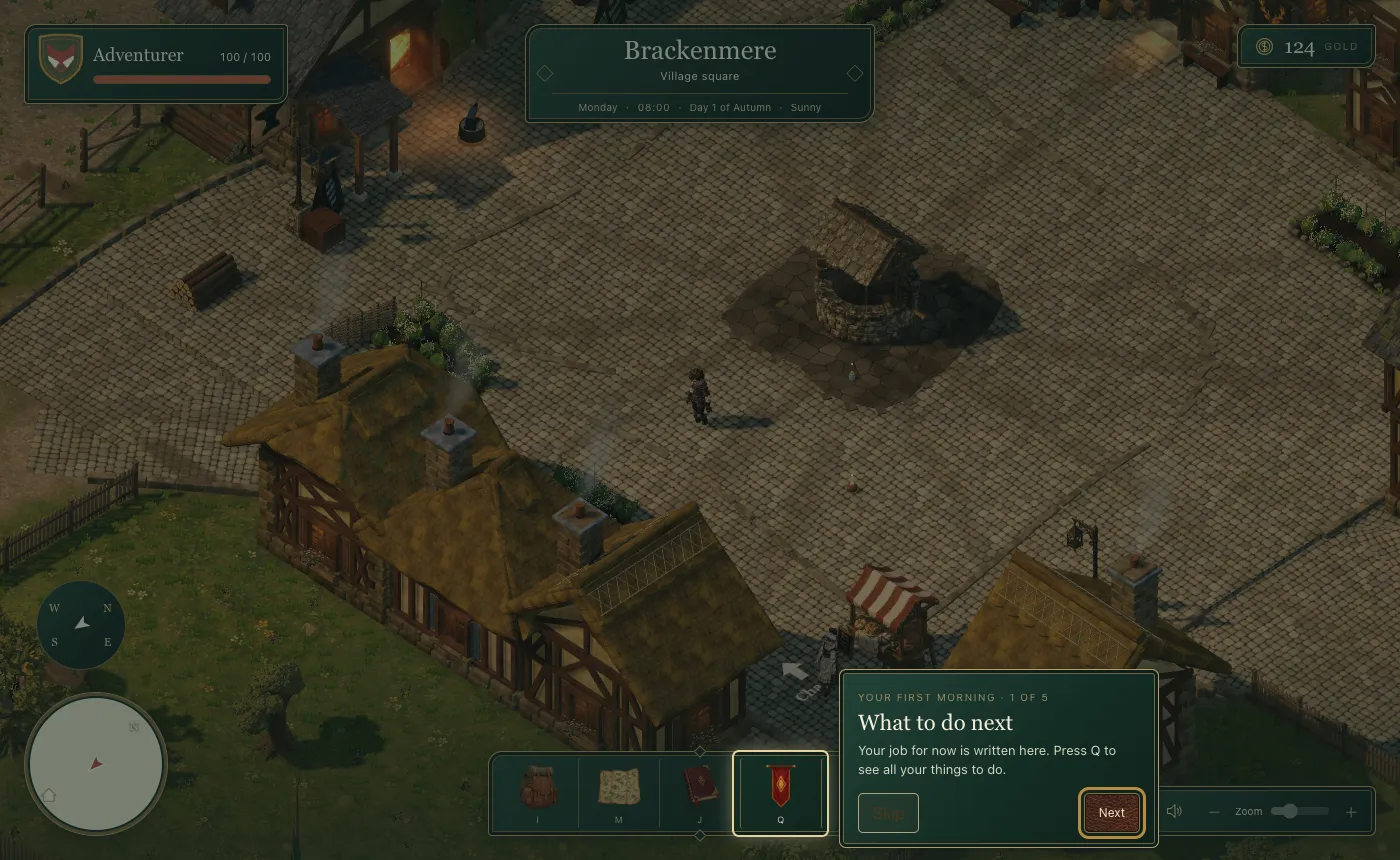 The first-morning coach from 9 October. Two days later the arrival flight replaced it.
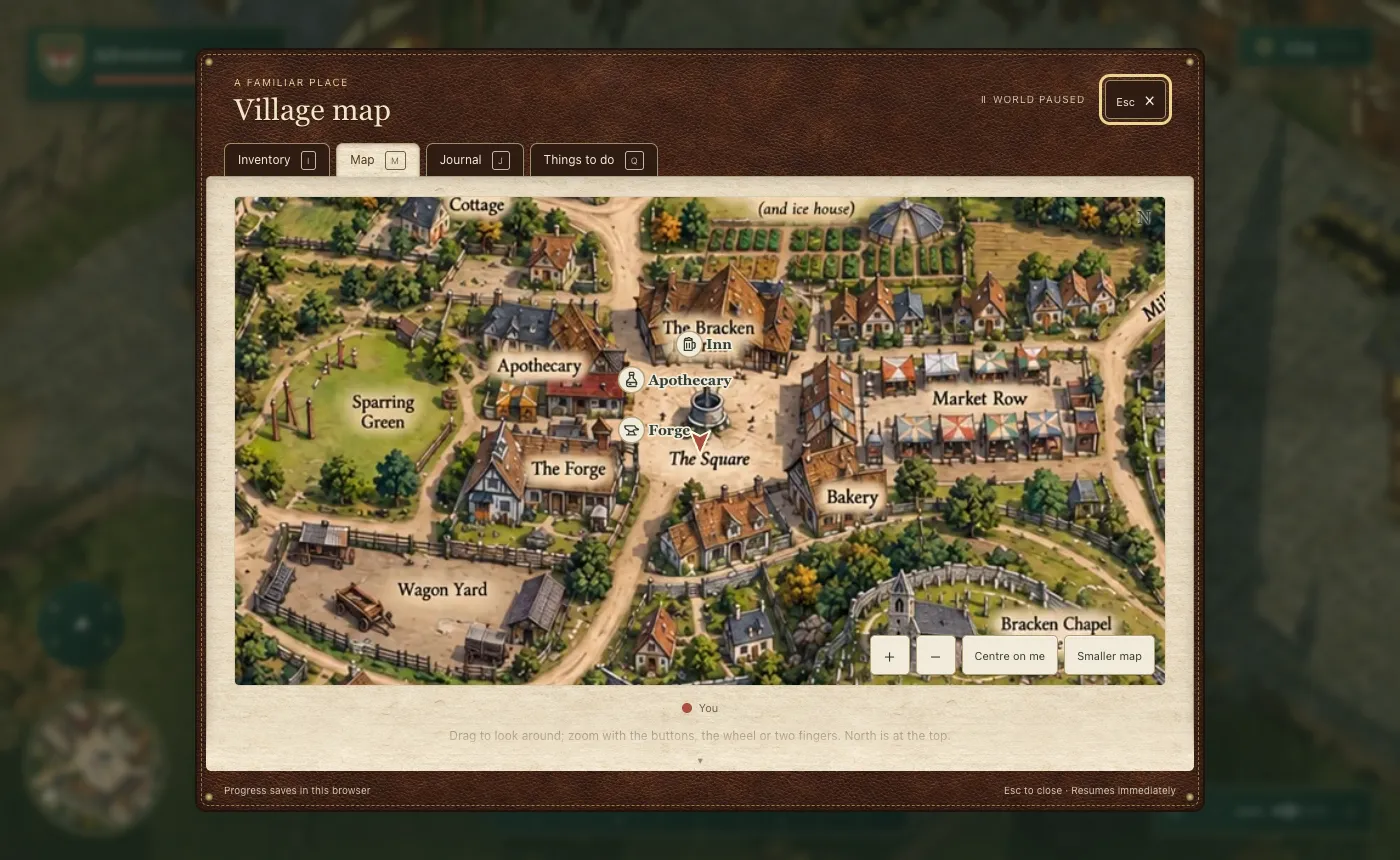 The new map: bigger, draggable, with the hero's facing arrow on the square.
Asking what a child would feel
Those fixes answered my kids' questions, not why the game felt like wandering. The next evening I set two independent Codex reviewers (on a model called Astra) loose on it: "At the moment it feels very open, slightly confusing. People kind of wander around but aren't exactly sure what they should be doing. I'm thinking maybe one really directed campaign with all lots of sub campaigns forking off it". I did not want to lead them: "These are my words and directions, but I want the agents to not be prescripted by this".
In another window I asked: "If I was to put this game online to play testers tomorrow... give me 20 critiques you think they'd come back with". Its headline: "There's a lovely world here, but I'm not yet sure what keeps me playing." I pasted it into the orchestrator: "Fold these in as well, let's come up with a real concrete direction to change this game from side bit of fun, to commercial game".
Both reviewers found that bringing the flowers home counted as abandoning the run, losing the gold picked up on the way. The orchestrator proposed five new chapters and a four to six hour story, deliberately narrowing what Brackenmere was meant to be.
Keep everything
The next morning I checked first: "Is this weighted accordingly, i.e. you've taken the 2 Astra agents with equal measure as the critique?" Then I made the call. "Let's rework this. I don't want to lose any of Brackenmere, or its work done so far on that. This feels a lot more like a rework of the campaigns, the pacing, the controls and the rewards etc."
The plan recorded the smaller release as "superseded by Nick's preservation decision", with an honest caveat: neither review was a child playtest, so they "justify the rework but do not certify its eventual pacing or appeal."
What I took whole was the orchestrator's first recommendation: make the remedy a complete episode. Meet Tilly, prepare with Agnes, take a short garden trip, come back to success, brew, see Tilly's relief, get a small reward and a next invitation.
A flight over the village
Then my own idea: "Brackenmere can feel a little overwhelming when you get dropped into it. How about a fly over of the town, introducing the player to the layout, showing them their home". And: "I also wondering about starting outside their home instead of the square". I gave the agents a way out, "we can go low quality for the flyover, pause the time of the day so we aren't re-computing flyovers, and not have characters in it", but only "if performance is an issue". It was not, so the flight runs at the player's own quality.
The flight reuses the narrator's recorded welcome over home, the square and the apothecary, then lands the hero outside their gate. New heroes also get more familiar controls: Space jumps and E talks. J still jumps too, and the old layout stays as an option.
Under the hood The rework touched 72 files. An agent walked the whole episode with real keys, from the gate to the roof repair, in about two minutes of game time: a lower bound, not the fifteen to twenty-five minutes a child might take.
Playing it myself
Late that morning I asked to "load it up, let me play". My punch list: "ok that's great, however the cut to the maze, can we not just move the camera over to it." For the corner map: "Can we add some words around the edge that rotate with it, maybe 'Home' and 'Maze' and 'Apothecary' to start. Maybe they'll be contextual to the quest? Might not work, but might be good." Also "highlight in some way the houses we are talking about in the quest", a "'crown' or 'quest' icon" on Agnes's quest replies, and "Can we voice this up for Tilly".
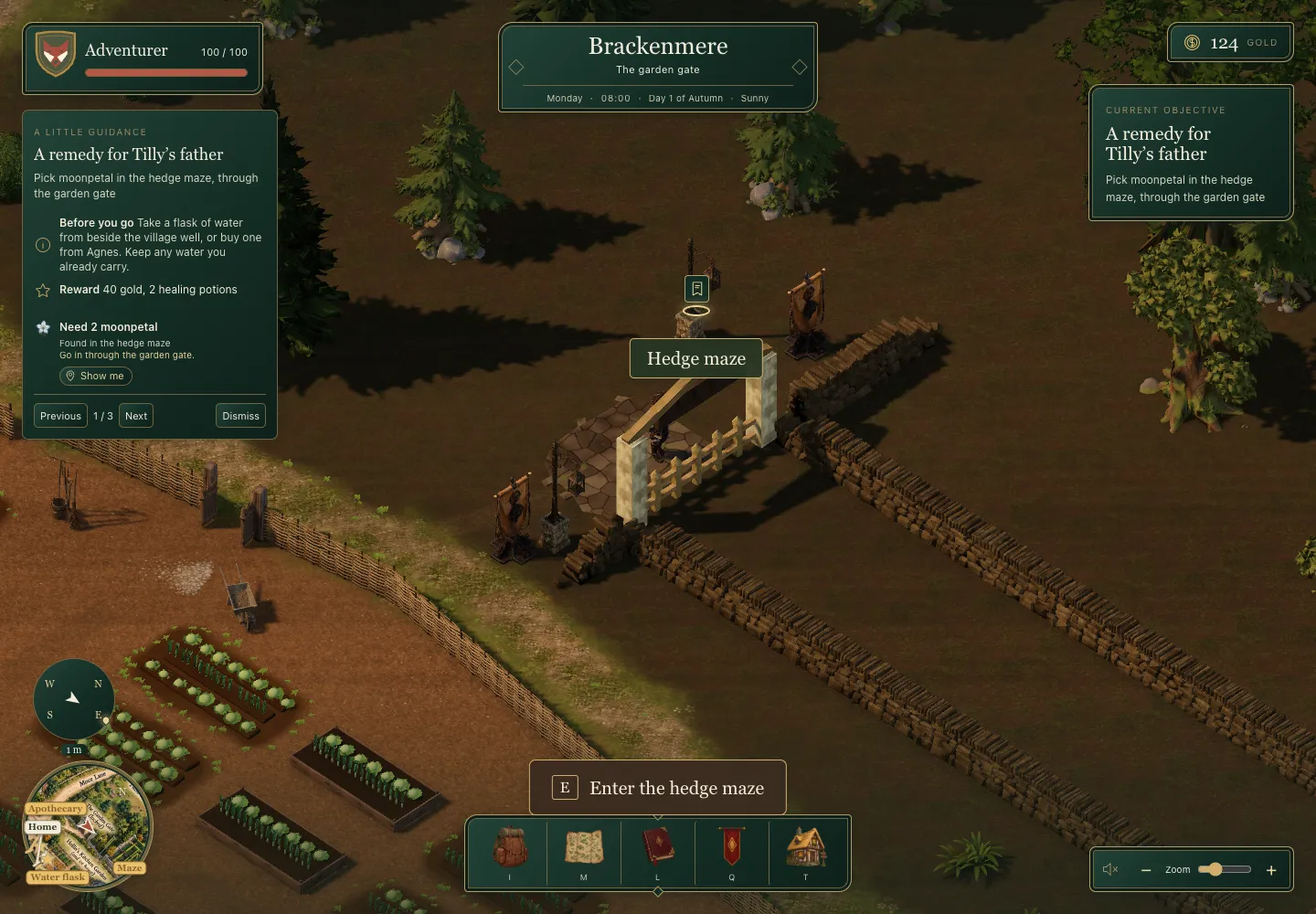 The destination pennant over the garden gate, and the corner map's rim labels.
Four of the five were in by lunchtime: one continuous flight, labels that travel round the map's rim, a gold pennant over the place you are heading, and a quest mark beside the replies that matter.
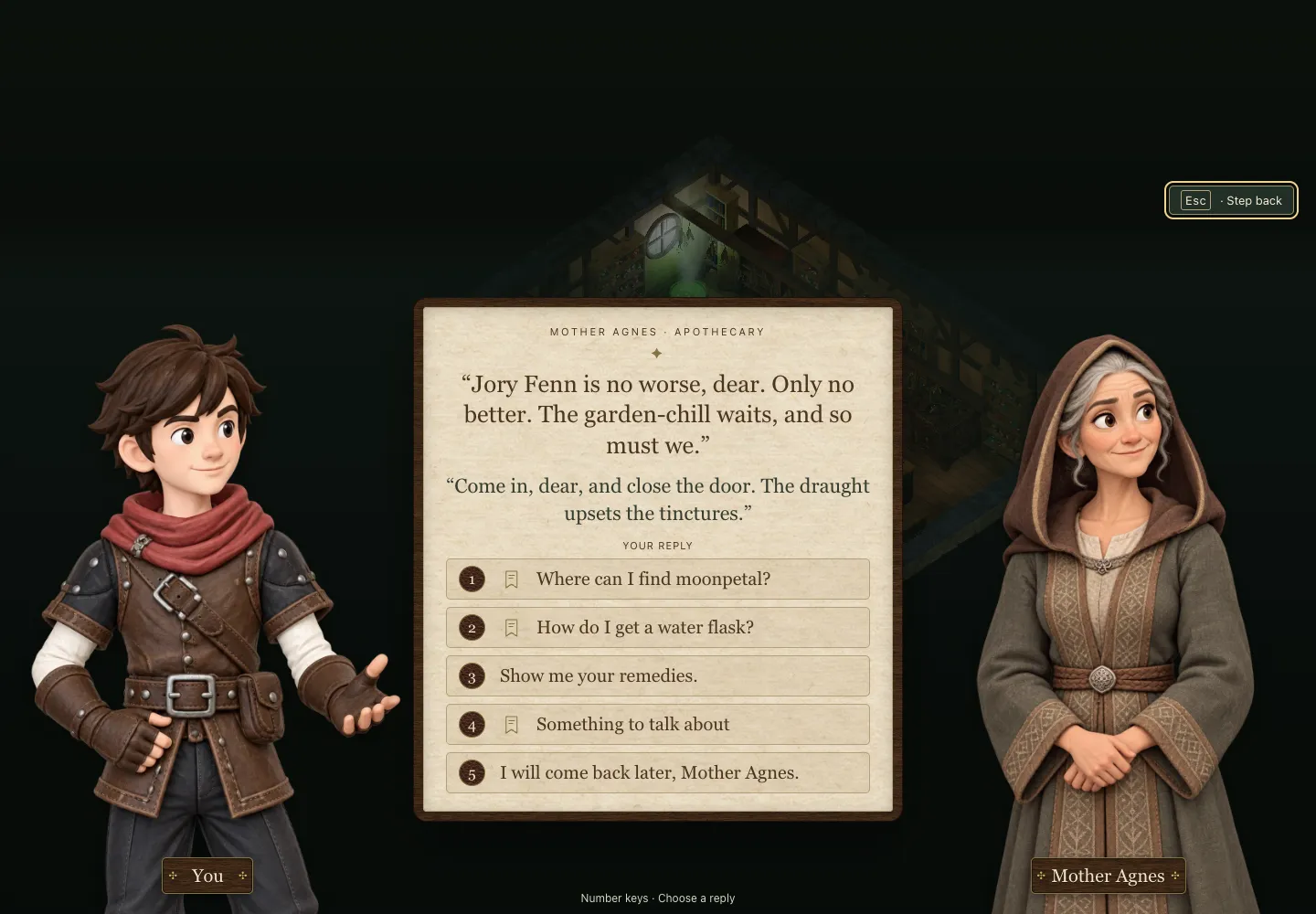 Quest replies carry a small mark, so a child can tell which answer moves the story on.
Tilly's voice did not happen. I approved the spend, but the ElevenLabs account had used up its monthly allowance of new voices, so her line shipped as text.
Then: "Merge everything into main or master, commit and push there."
What I took from it
My kids found in one evening what weeks of tests had not, because every test already knew the answers. The AI reviews were good evidence that something was wrong and a poor guide to the cure: the sensible-sounding cut would have thrown away a village when what was missing was the path through it.