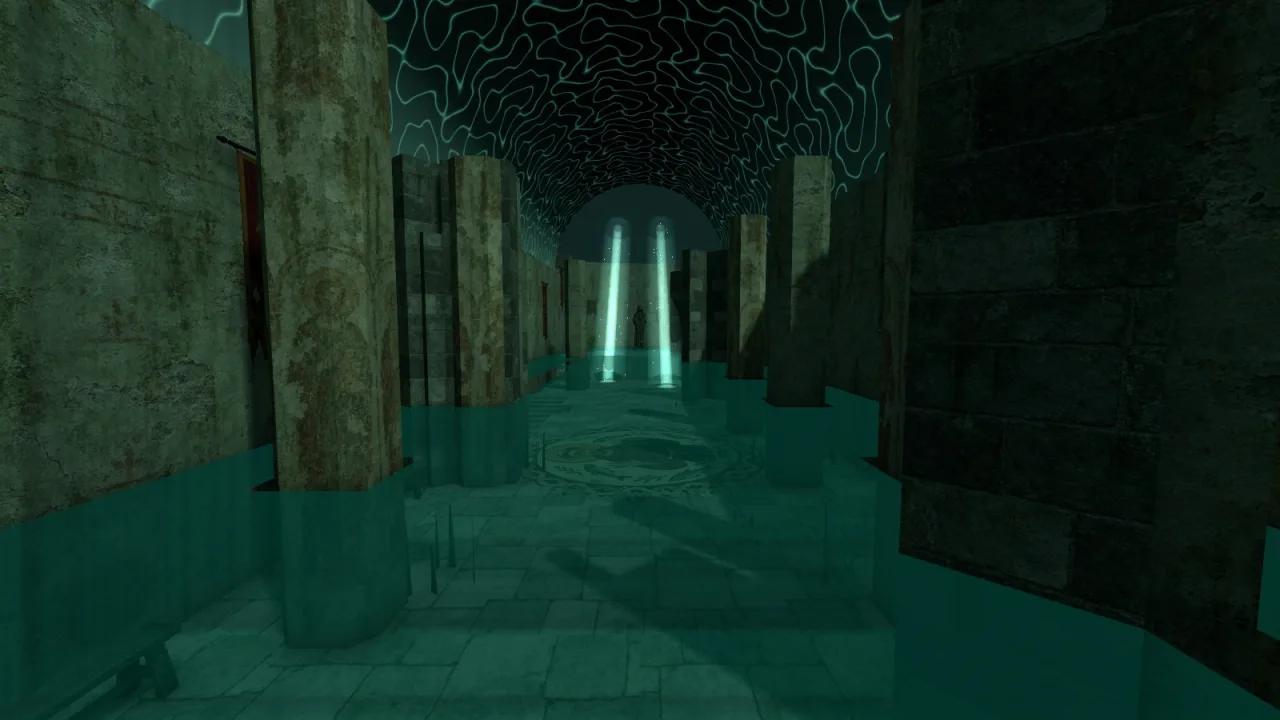
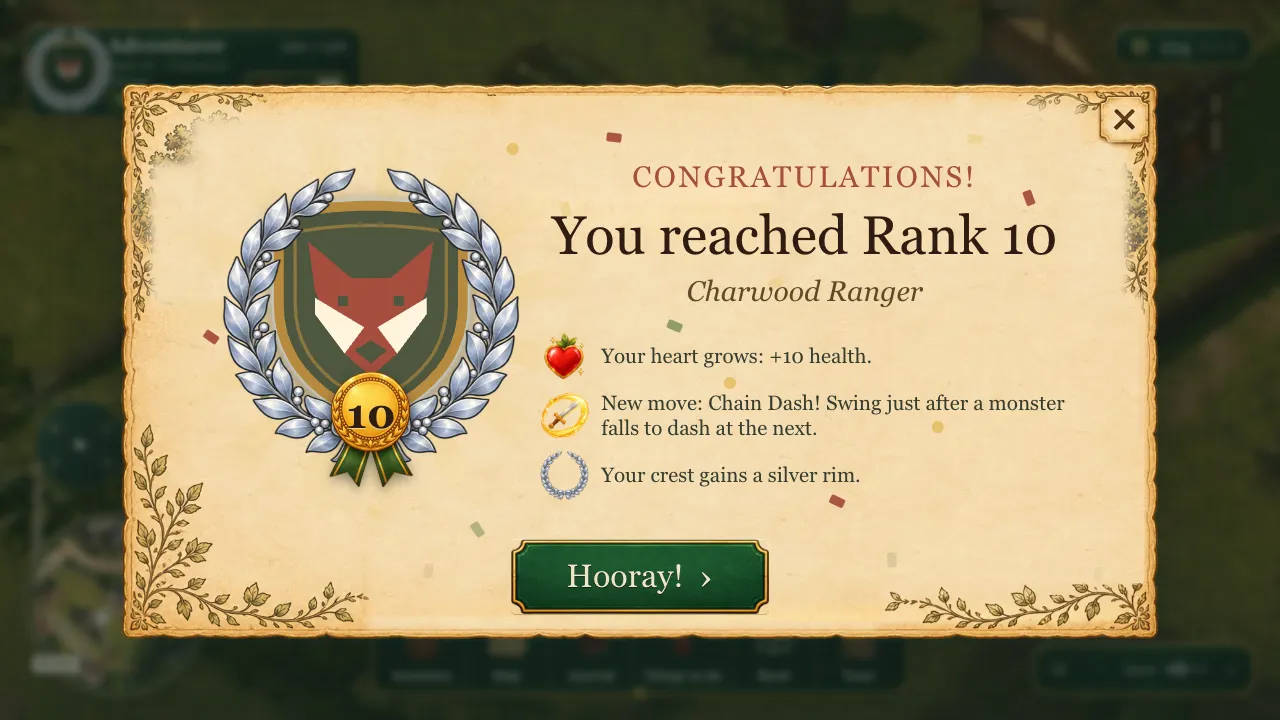
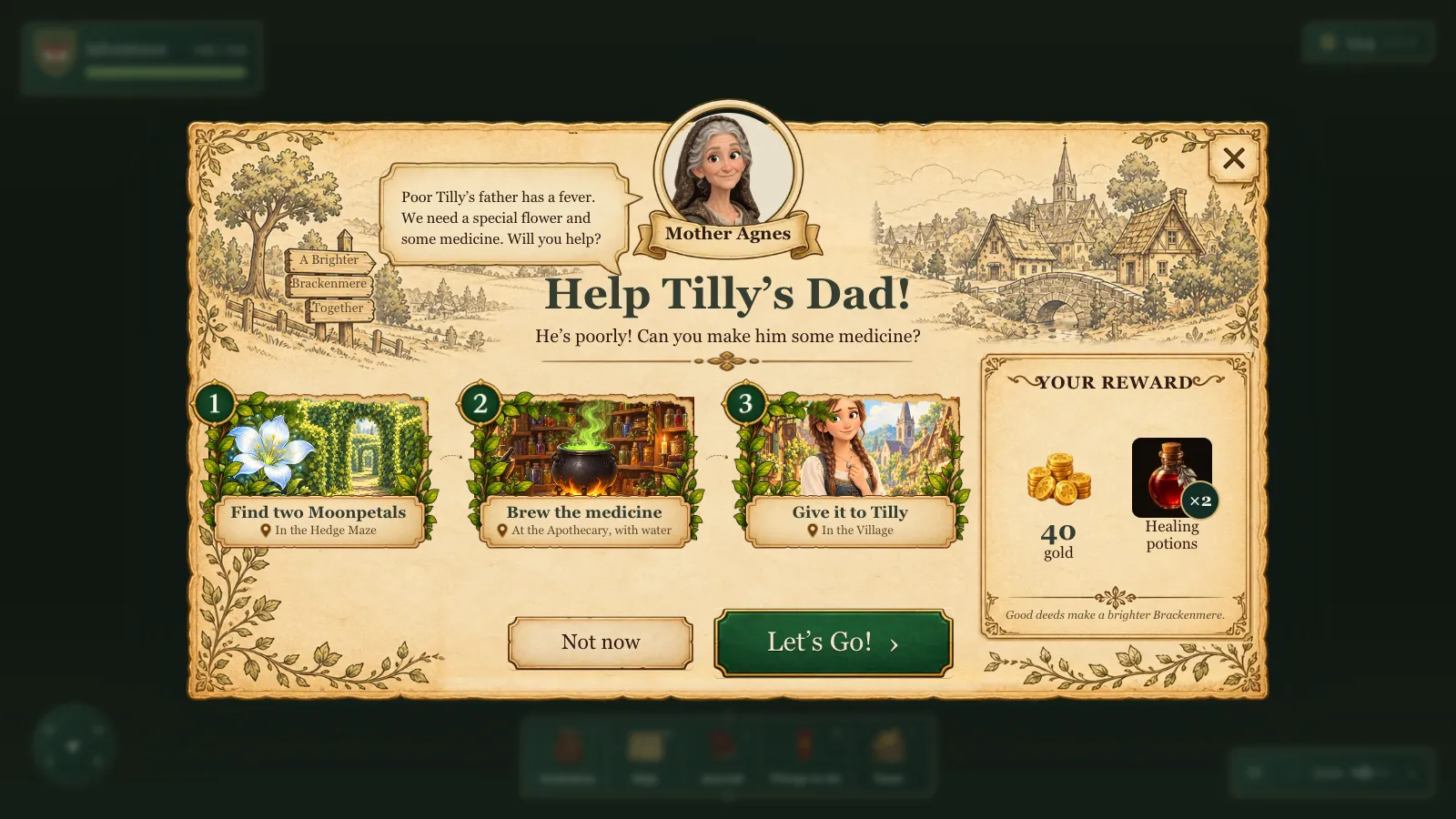
Until 9 October, a new player of Brackenmere simply appeared in the square, with no idea who they were or why they had come. If the seed said rain, it rained. The game had a whole history in its lore pages, and a player saw none of it.
That morning, with the village finally laid out and walked, I turned to the first minute.
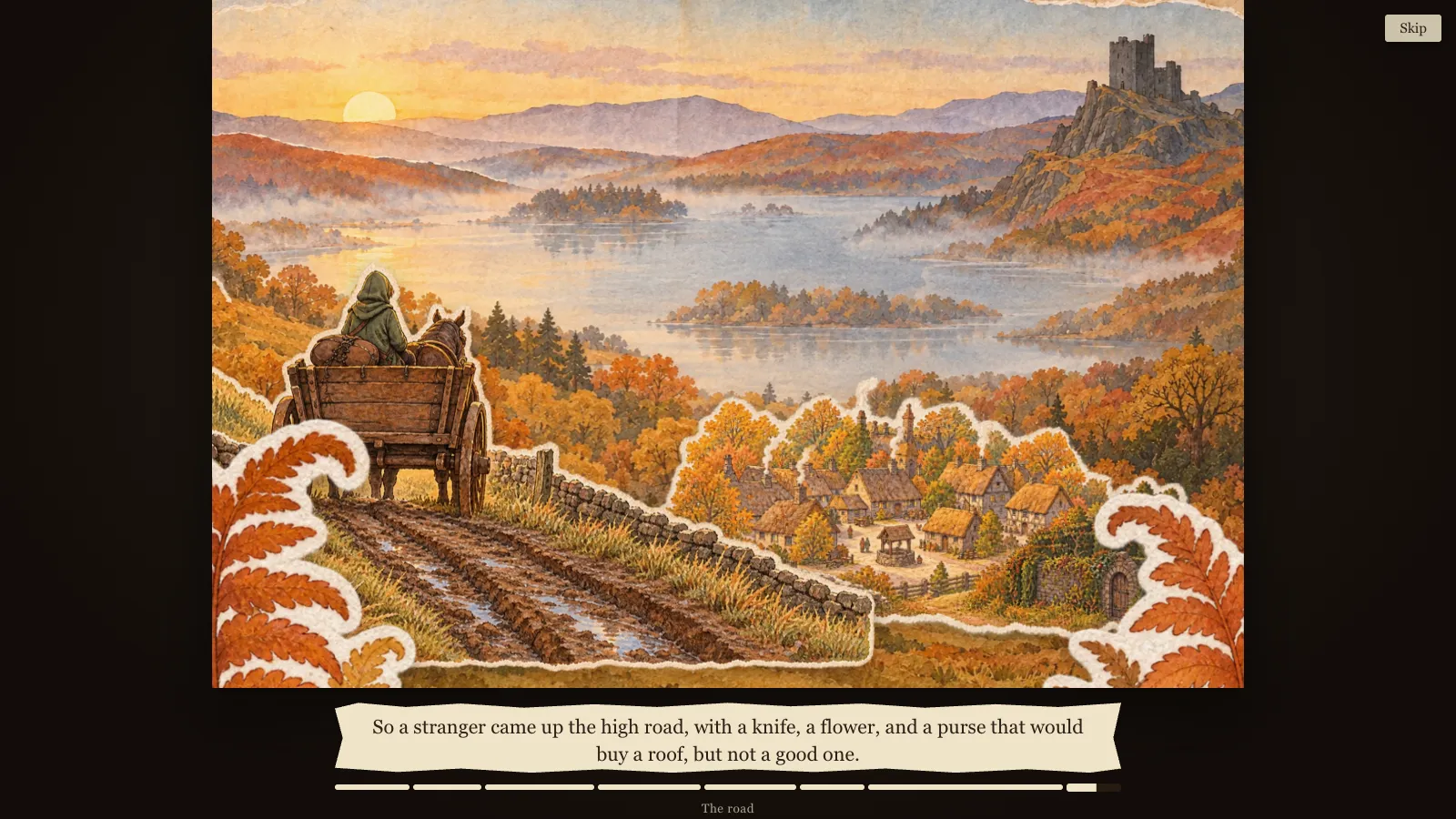 The last page of the storybook: a stranger comes up the high road.
Paper, not film
"I want to look at an intro to the game now. Something lightweight... give the backstory, before the user is dropped into Brackenmere at a sensible time of day." "I don't need full animation, more 'layered' approach, with a story teller, characters coming in and going from the scene. I am envisaging something akin to the look as though scenes are made from paper and fold out of view, come in, move out as a new scene comes in."
Then the reference: "I like the 'lore' like they lay out in Lord of the Rings, talking over scenes, but the scenes wouldn't be movie like, as I don't have time or money to spend animating a whole backstory."
The agent and I wrote eight pages, from the first people cutting notches in the barrow stones to a stranger on a wagon at dawn, told by an old storyteller, with Grandfer Fen, the old man who raised the hero, speaking for himself on one page. When the script came back I sent one word: "Happy".
Before anything was built I asked for one picture. "I'd like to see a single still image of what you are envisaging for the look feel here. Can you do one OpenAI image gen (happy to pay for it)". It became the reference for every other page.
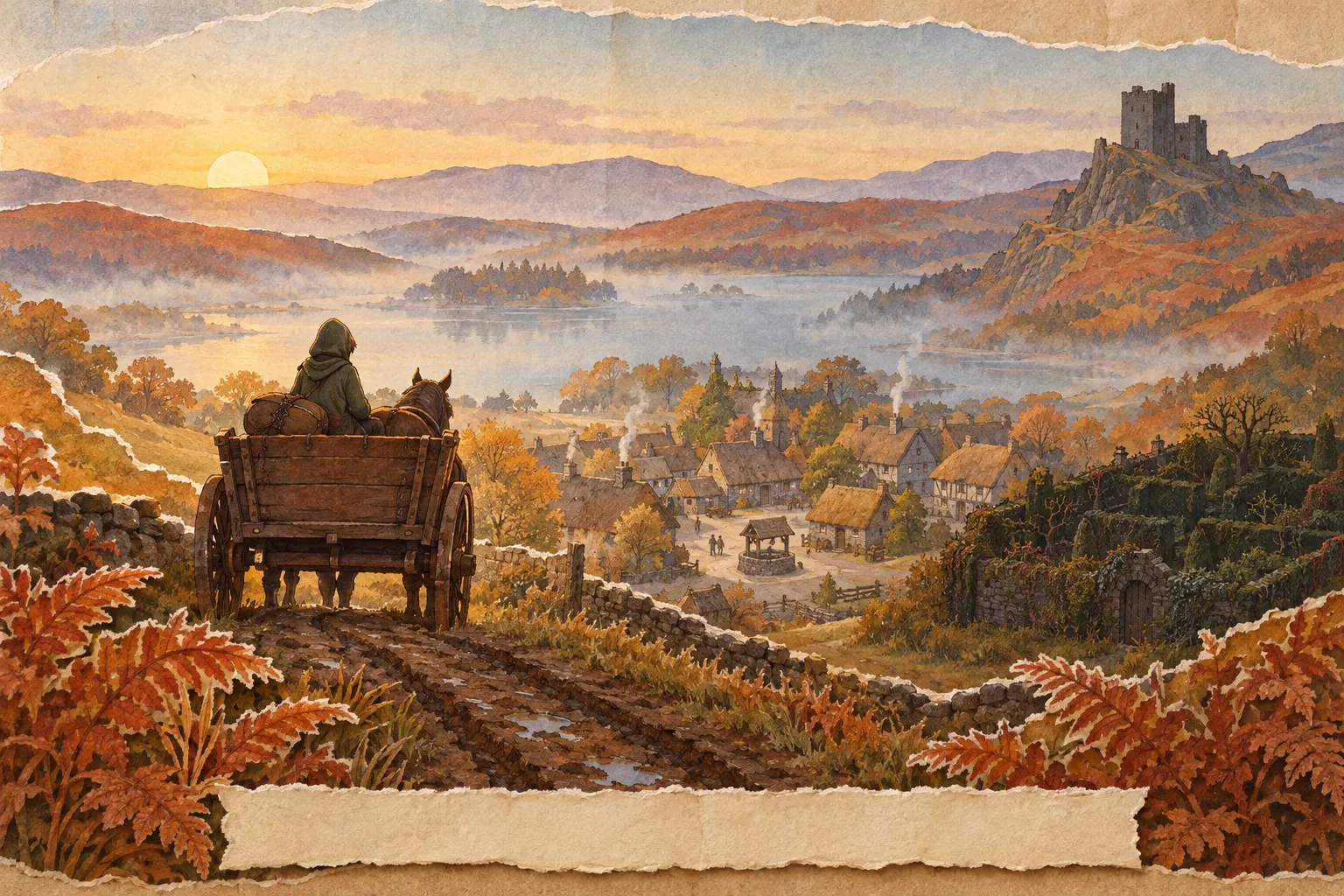 The one still I paid for before building: scene 8 as the agent imagined it. Compare the finished page above.
Building a pop-up book
The intro is a plain web page, not 3D: a painted back with cut-out figures at their own depths, drifting while the narrator speaks. Pages leave with a fold, a page turn, an iris closing on a lantern, or hedges growing over everything. Behind it, the village loads, so when the story ends the game is ready.
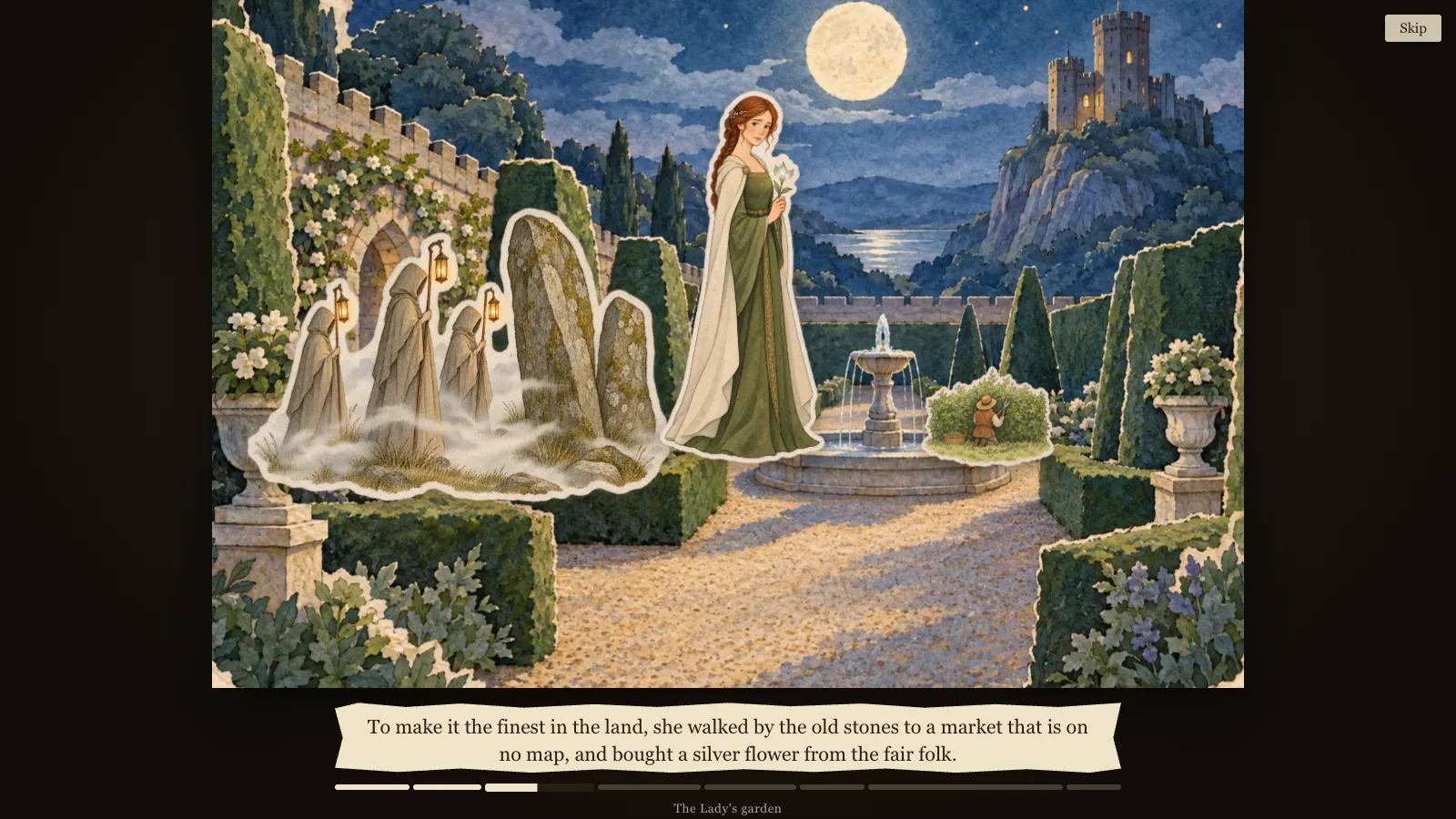 The Lady's garden, with the caption strip and the chapter bar below.
Under the hood 41 of the 80 OpenAI pictures I allowed were paid for, and 39 shipped. The narration was 2,301 characters of ElevenLabs speech, 188 seconds once pauses were opened at the ends of sentences, because the v4 model ignored the speed setting.
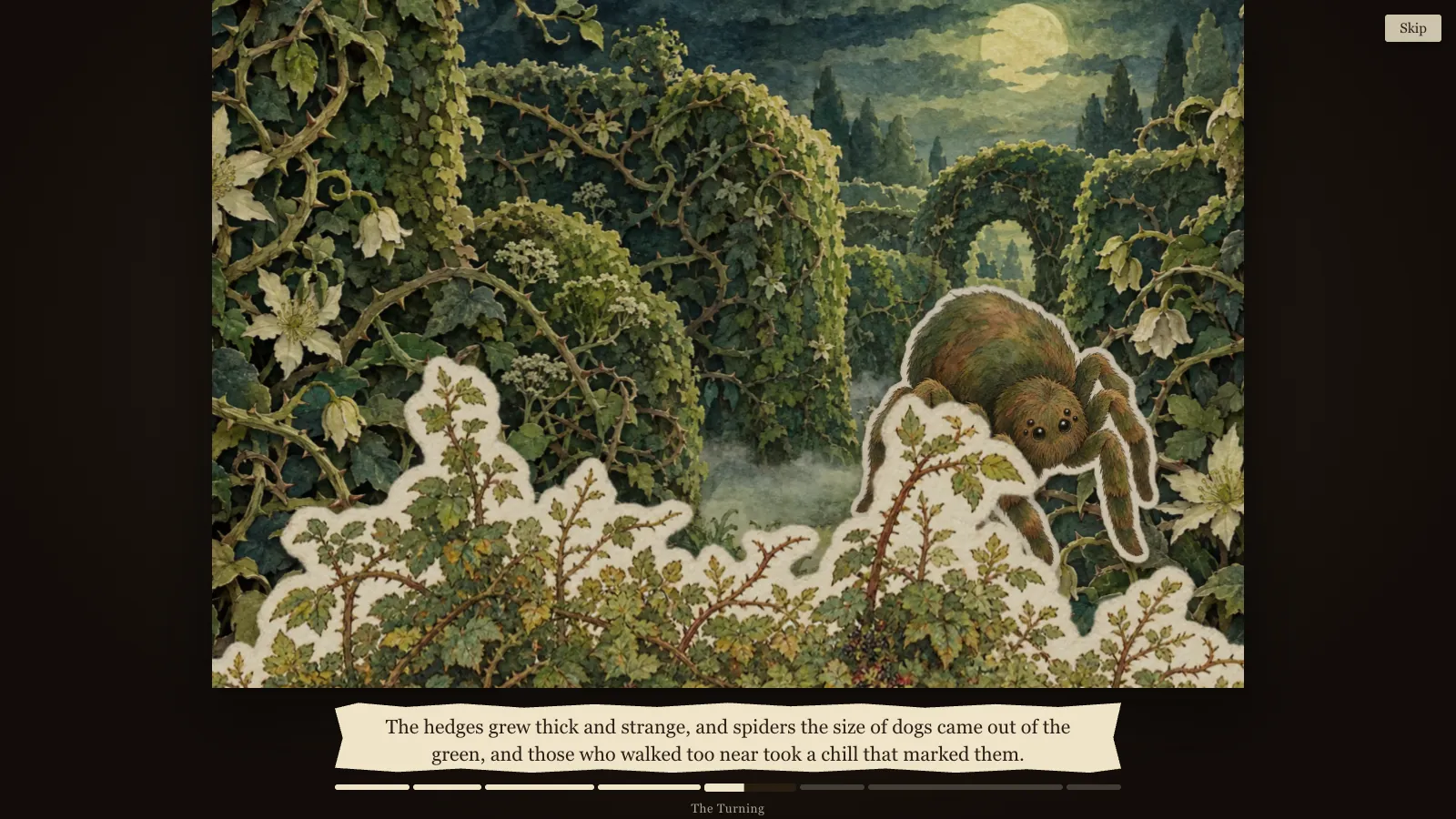 The Turning. Spiders the size of dogs, drawn to be storybook rather than frightening.
Listening to it
My first run-throughs were not a success: "I have loaded it up, it's been 15 seconds and I can only hear birds. Do I need to start it somehow?" Chrome had been holding the sound back before a click, and the page that asks for one never appeared.
Then the narration: "audio is cutting short at times. The price was a promise. Her... then cut. This happens a lot. The text is ahead of the audio as well." The captions had kept their own clock. Now each line's audio is the clock while it plays.
Under the hood Measured headless against a real-time audio clock, the captions landed within a tenth of a second of the clip after the fix.
Not every complaint was the code. Of a judder I decided: "this is fine, it's only because I'm hitting my machine hard with work."
Watching it over and over, I wanted two more things: "When a screen folds down, can it fade as it goes", and: "Can we add chapters to this intro, so I can skip to a specific chapter, like a mini horizontal timeline or something". Both went in within the hour.
Music I could not source: "this is very specific... Not sure how exactly to source this kind of sequence or feel." ElevenLabs composed a score timed to the pages instead, so it follows you between chapters.
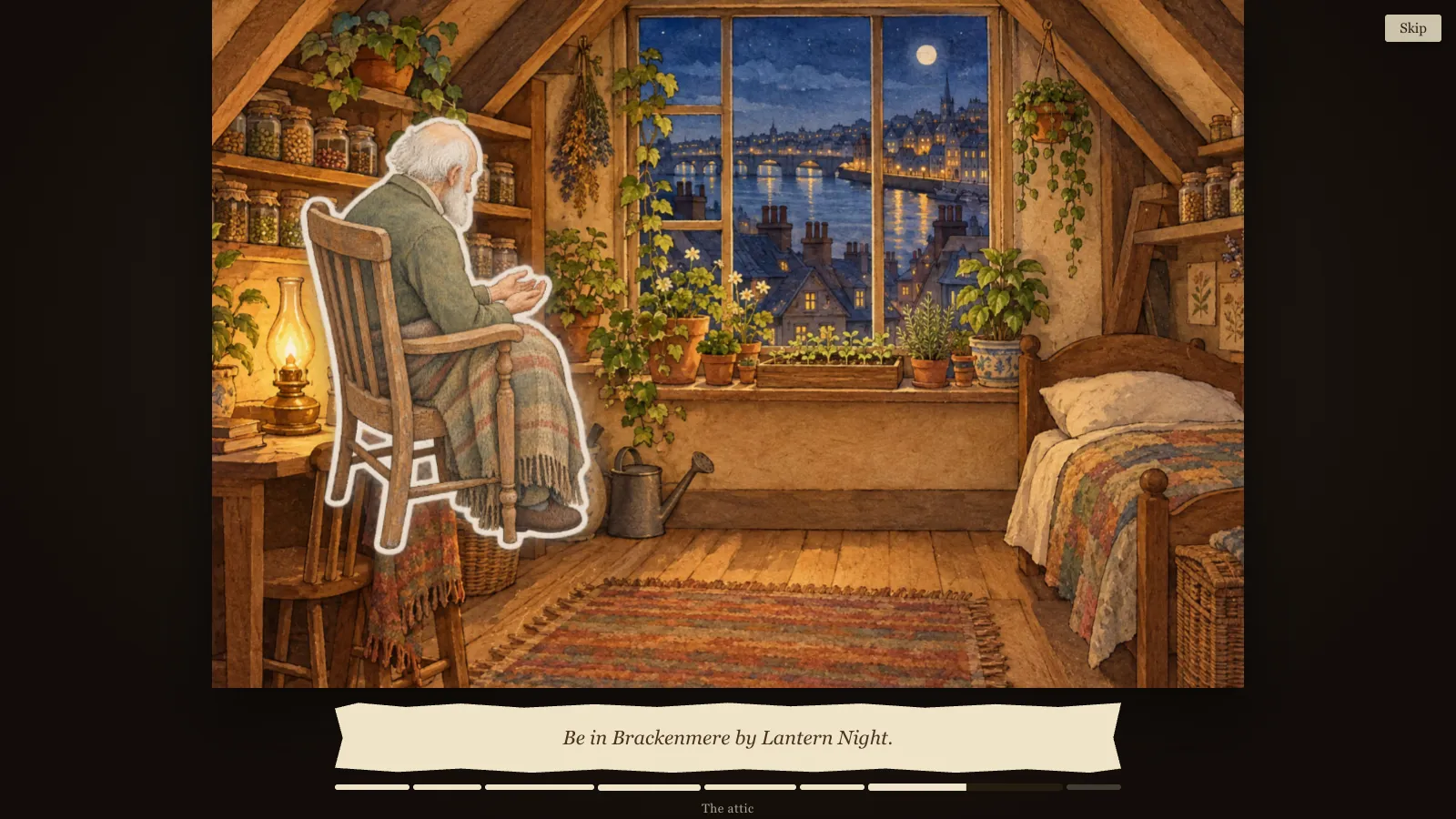 The attic, where Grandfer Fen speaks for himself.
A story with a gap in it
Halfway through the day I spotted a problem the agents had not: "The story says cut a root, leave a flower etc, but this has nothing to do with the story that you start with? Is this something else later on?" The prologue sends the hero on an errand for Lantern Night, months away, then drops them in a square with no word of it.
So I asked for a bridge. "I'm wondering about after the intro is finished and we kind of fade to Brackenmere, whether we have a bit of a welcome to Brackenmere... Like, you've bought a house, you can do it up... The cutting the root will come later. For now, you know, people in the village need your help. Why not start by talking to Mother Agnes and see what she requires?" And how it should feel: "spoken word but maybe less imagery. I wonder whether the text is on the screen appearing as the words are spoken would be quite nice over like a scroll on the page."
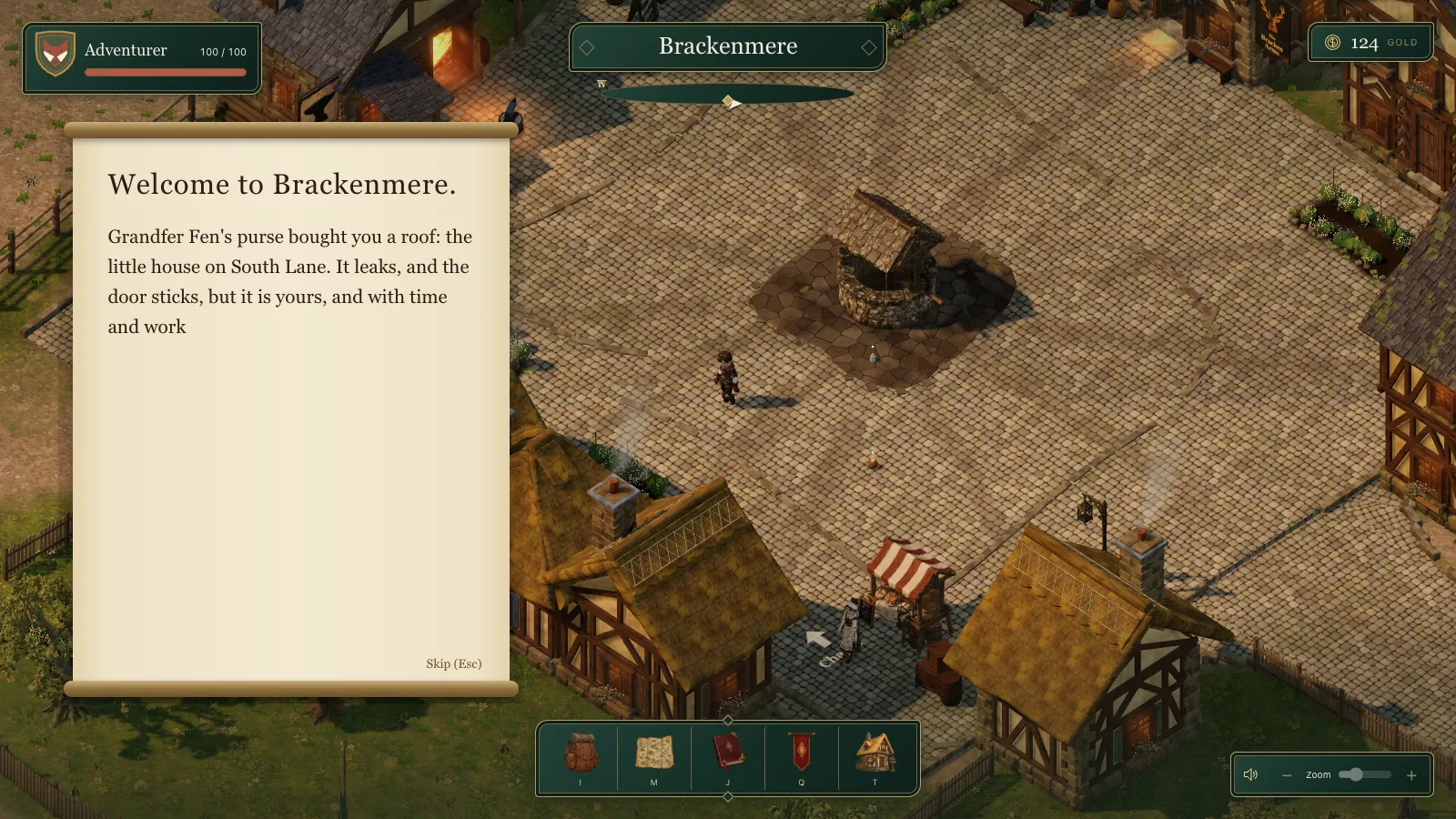 The welcome, inked on a scroll word by word as the narrator says it, over the held village.
The narrator now speaks four short paragraphs over the paused village, ending at the apothecary, and then play begins.
A fine first morning
"Something else I want to do is start the game after users watch the intro. So it's all about the intro now. Start the game at 8 AM and also let's pin a fairly nice autumnal day to start the game with."
The eight o'clock start already held. The weather did not: on the default seed, day one opened in rain. Now the first day is always sunshine and a gentle breeze, and the seed's own weather takes over from day two. Nothing new is saved; the fine day is worked out from the calendar.
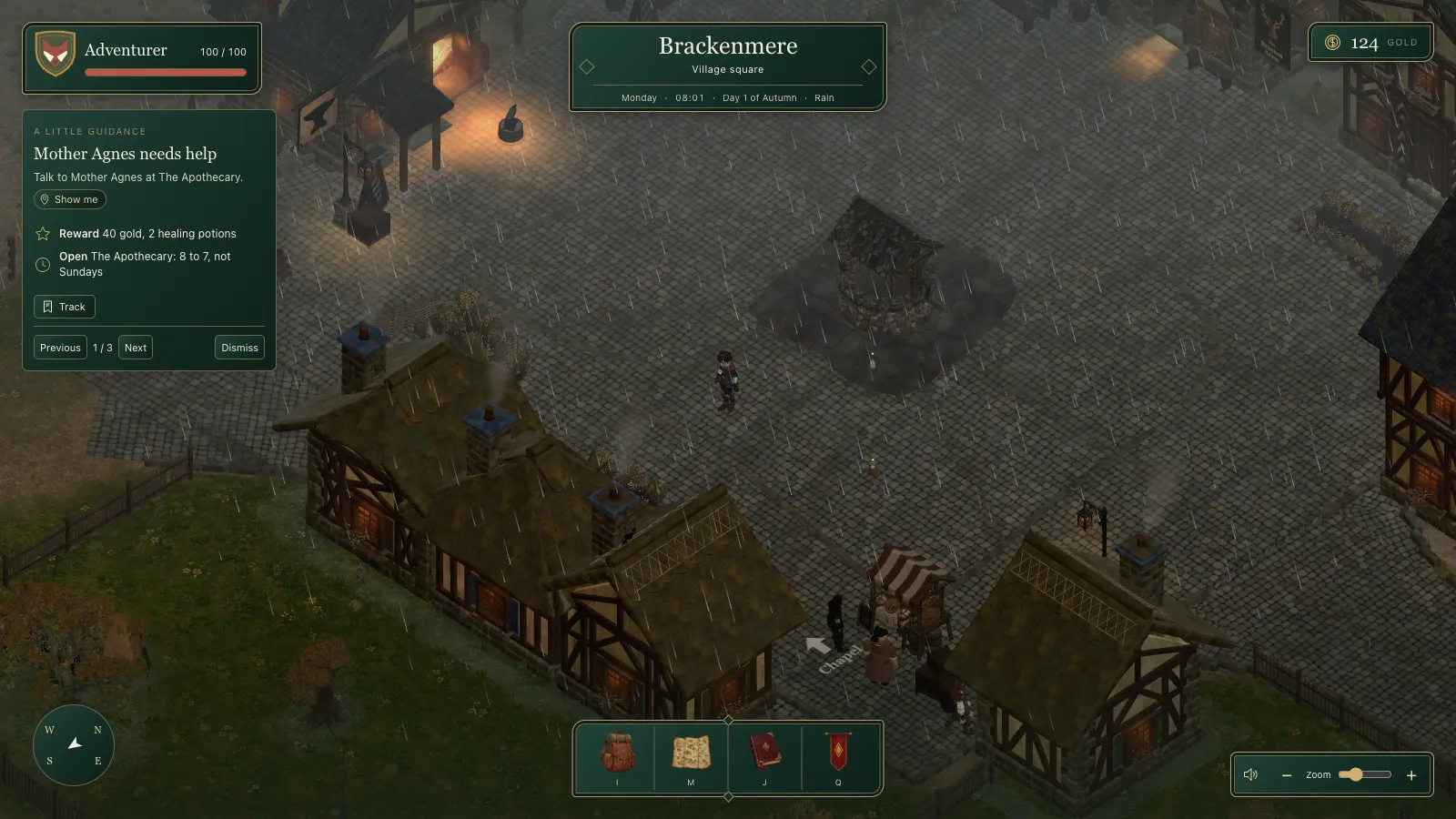 Before: a new game's first minute on 9 October, in the seed's rain.
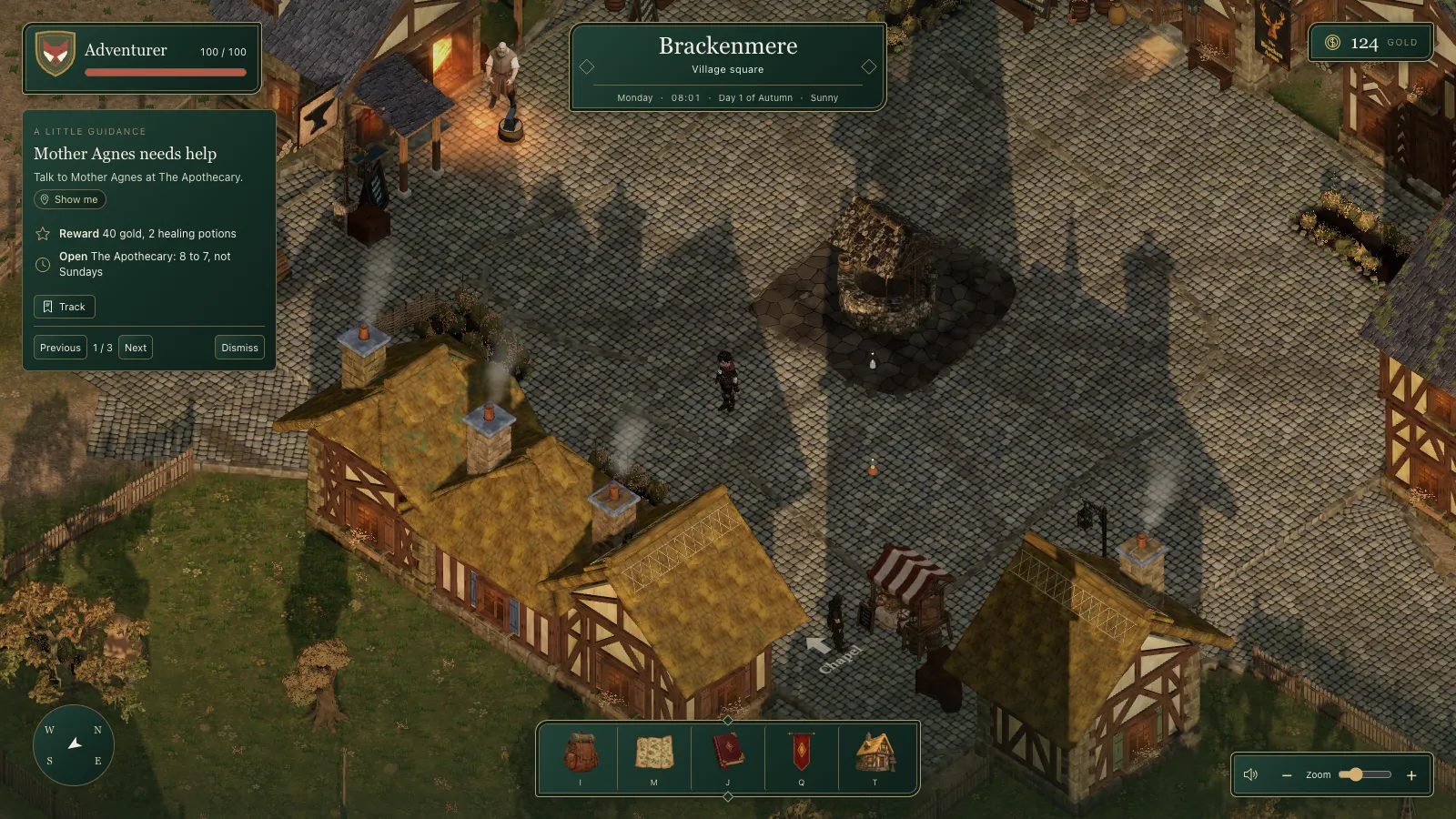 After: the same moment with the pinned autumn morning and its long shadows.
Under the hood The town is a simulation, so even the weather has knock-on effects. A sunny first day sent the innkeeper on more errands, and a test that checked shops stay open had to be measured over 20 seeds instead of 5.
The same day, around it
A few other pieces that day belonged to the same first impression. Blind reviews had called the panels "a tidy web app in beige", so they became rag paper bound in leather with brass corners, and conversations a sheet pinned to an oak board. Eight townsfolk got painted portraits: "Portraits look great, approved."
ElevenLabs v4 was free that week, so I asked for more voice. "I'm just wondering whether to add some audio to the characters when you first talk to them... 'Hey, how's it going? What can I do for you?' kind of thing." Then: "Let's create greetings for all the characters and any future ones as well."
Under the hood That afternoon produced 1,602 spoken greetings across 96 voices. A credits page generated from the asset manifest followed, and its check caught the intro's own narration and score, merged without a credit, within minutes.
What I took from it
The first minute is the only part every player sees, and it was nearly the last part we built. Paper, a voice and a score cost a few dollars of pictures and a day, and say more about Brackenmere than any system.
And watching it as a player showed a gap no test would: a prologue that promises one thing and a game that starts another.
Late that afternoon I asked to start over properly: "can you load up a new game for me, starting with the intro, no saved game etc, from the start". By the evening my kids had watched it too, and then they went looking for a flower and could not find it.