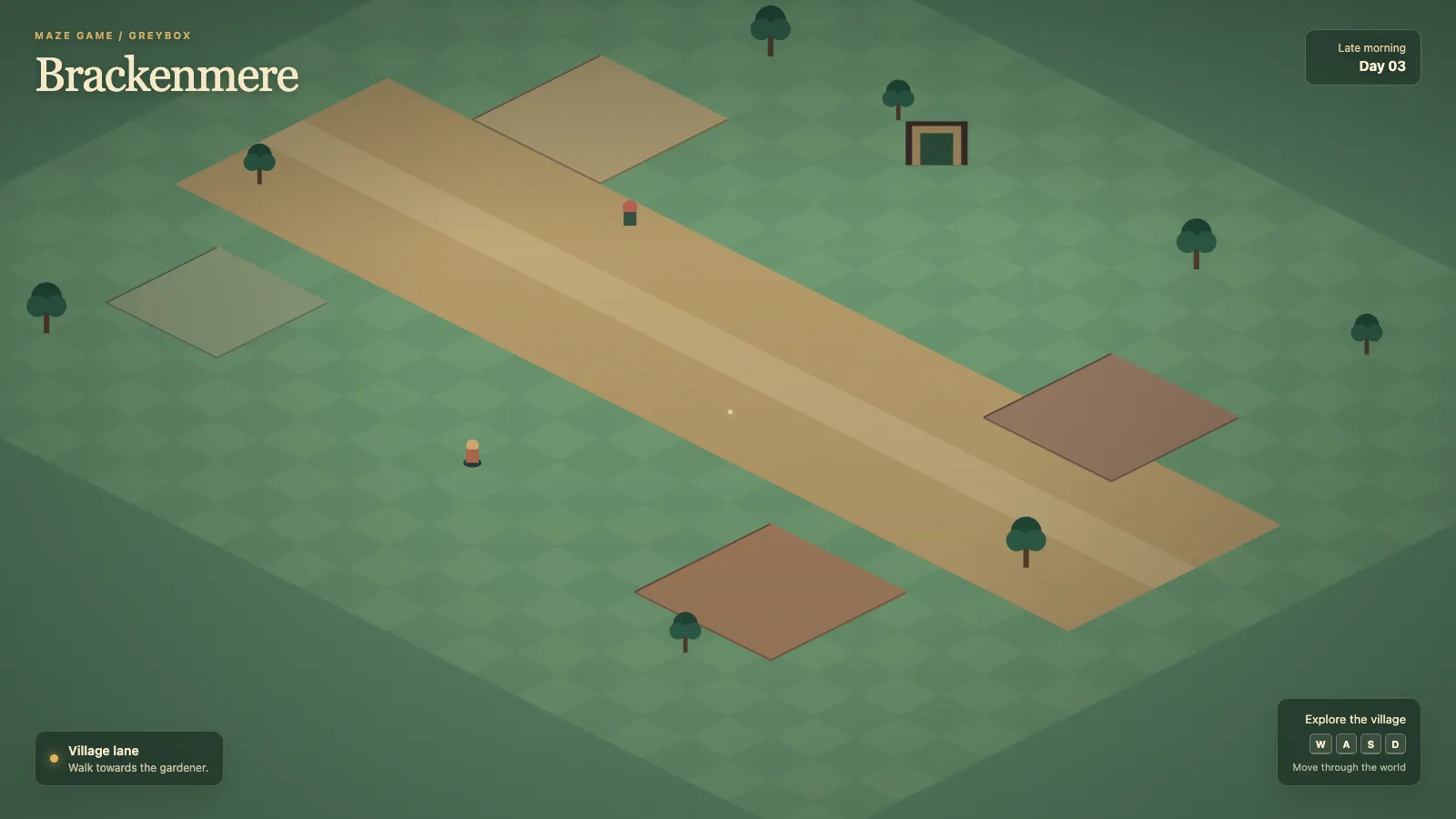
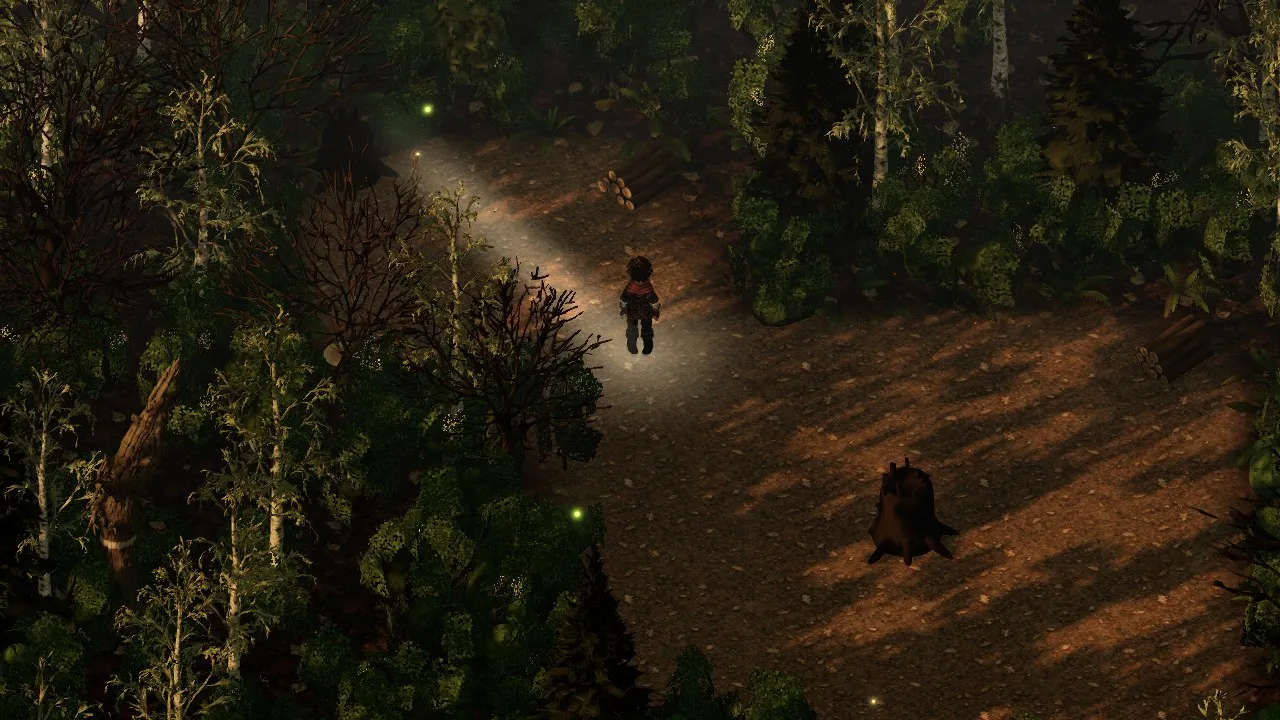
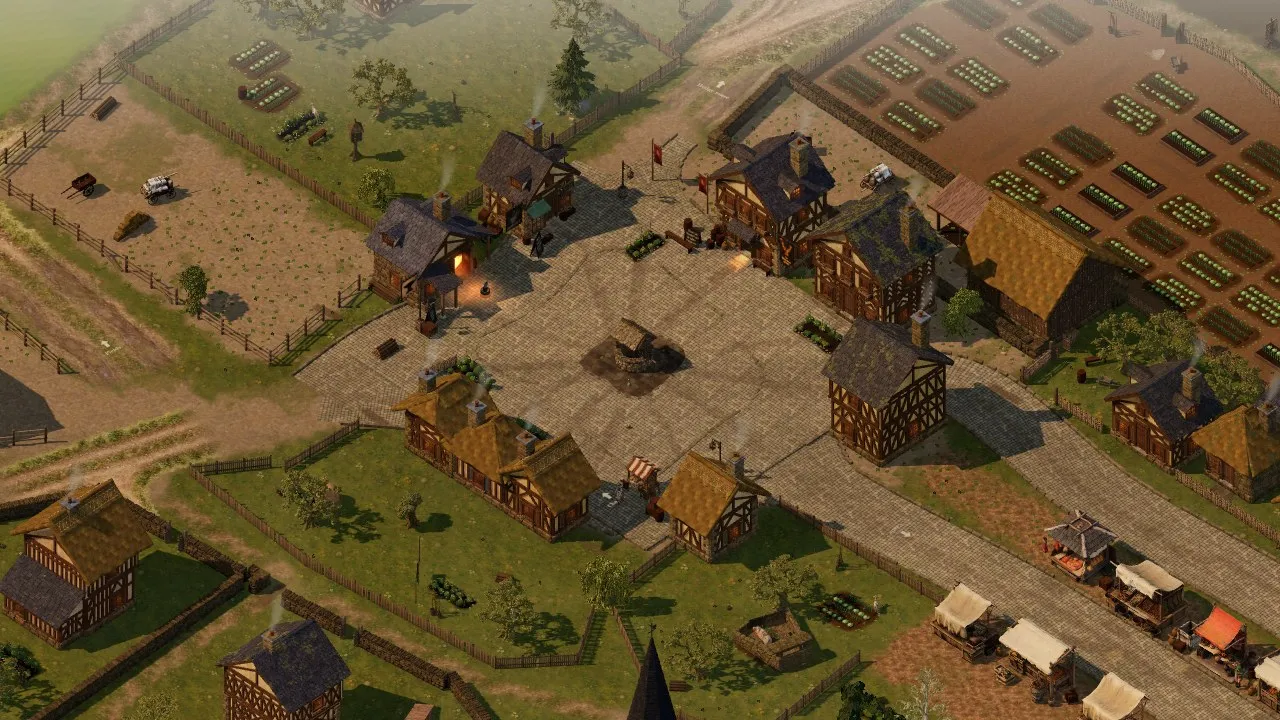
By the evening of 23 September the village had houses you could only look at. Their doors were painted on. So I asked for the obvious thing: "From the village scene, I want us to be able to open a door to the house and go inside."
Where the day started
That morning I was still in the castle, fighting the walls that fade away so the isometric camera can see the hero. "I think we need to see the door at all times, even if it means not being transparent." Doors were already on my mind.
Later I sent the agents a pack of new hero animations and was clear about scope: "I just want these stored for later use. The only one we are implementing right now is probably the run to walk." I wasn't sure about even that one: "maybe the run to walk might not be needed, but let's see how it feels in the game, implement it for now with easy removal."
It was built and switched on. "Can I view the run to walk quickly now?" A minute later: "remove run to walk, I don't like it." The clips stayed in the library, and within the hour two of them were in use on the castle's new ladder.
The ask
Early that evening I opened a new worktree and dictated the whole idea in one go. When you go inside, "it will kind of shift to a whole new view of the inside. Like you wouldn't still be looking at the village. It's kind of as if you're going to the hedge maze or the castle, it kind of transports you inside."
Then the rule that made it fun: "We can make it a little bit like the TARDIS, where the inside of buildings can be larger than the outside might kind of show at first. Let's create maybe the blacksmith inside, create an inn inside, and another random kind of shop for the third one."
I wanted the moment of entering to feel like something: "opening the door and maybe just some kind of light spilling out from inside." Inside, "being able to walk around parts you can but not other parts." And people, but later: "we can download some characters as needed, but I want to get all this kind of interaction sorted first."
The agent's plan, and my models
The agent picked the apothecary as the third shop and recommended treating each room as its own small world, loaded like the maze and the castle, rather than swapping scenes inside the village. It also suggested a fixed doll's-house cut for the isometric view, front walls dropped to low stubs, as "simpler and steadier than the castle's per-frame ray cutaway". After my night of fading castle walls, that sounded right.
While it planned, I emptied my downloads into the chat: "3 folders with various bits in. Including doors, frames, signs, swords, axes, shields, bar items, potions, cabinets, tables, chairs, fireplaces, wood stacks." The agent found a place for every model except a hedge arch, which it kept for the maze.
One of its calls was to borrow two villagers as stand-in keepers. I had a better idea. "Some more assets, including people. I agree with all your calls, except I've given you new people."
Then I left it to it: "I'm now away from keyboard, so just go and build this. Ask me no more questions. Don't do any mock-ups that need approval... Let's take this all the way through to build now." I said much the same to a second session reworking the hedge maze: "Now I can always look at the final result with nearly everything done after and tweak from there." That is how I want to work: build it all, then I punch-list it.
Under the hood The inn's house is 5.2 by 4.1 metres from outside; the room is 16 by 12. Each room is a plain data file (walls, furniture, lights, people, the exit) read by one shared builder, so no room needs code of its own.
What I came back to
Walk up to the inn and the prompt says "Enter the Inn". Press E and the door swings in, warm light falls across the step, the screen fades and you are inside. Leave by the same door and you come out on that step, facing the square.
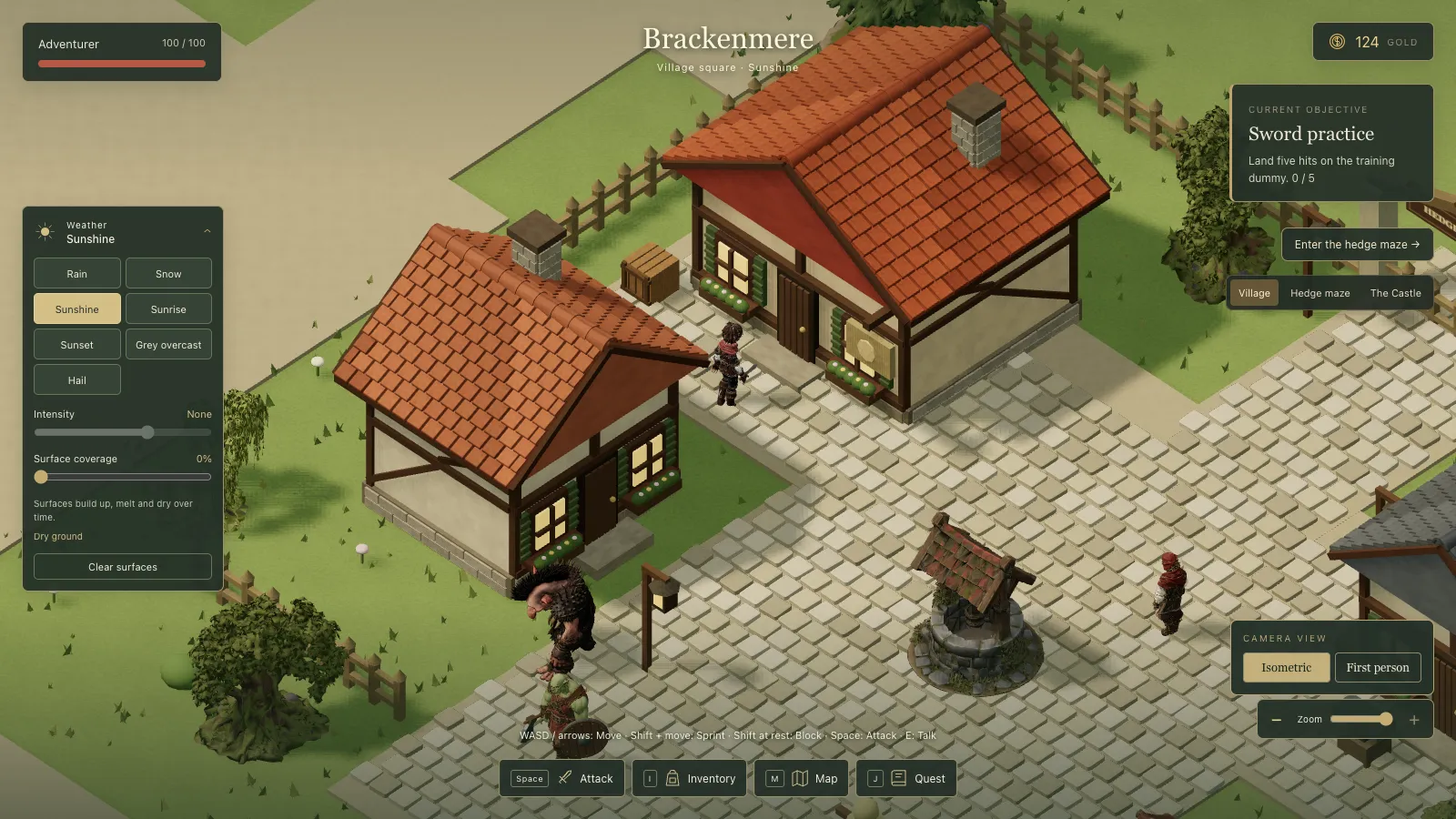 Before: the doors were painted on.
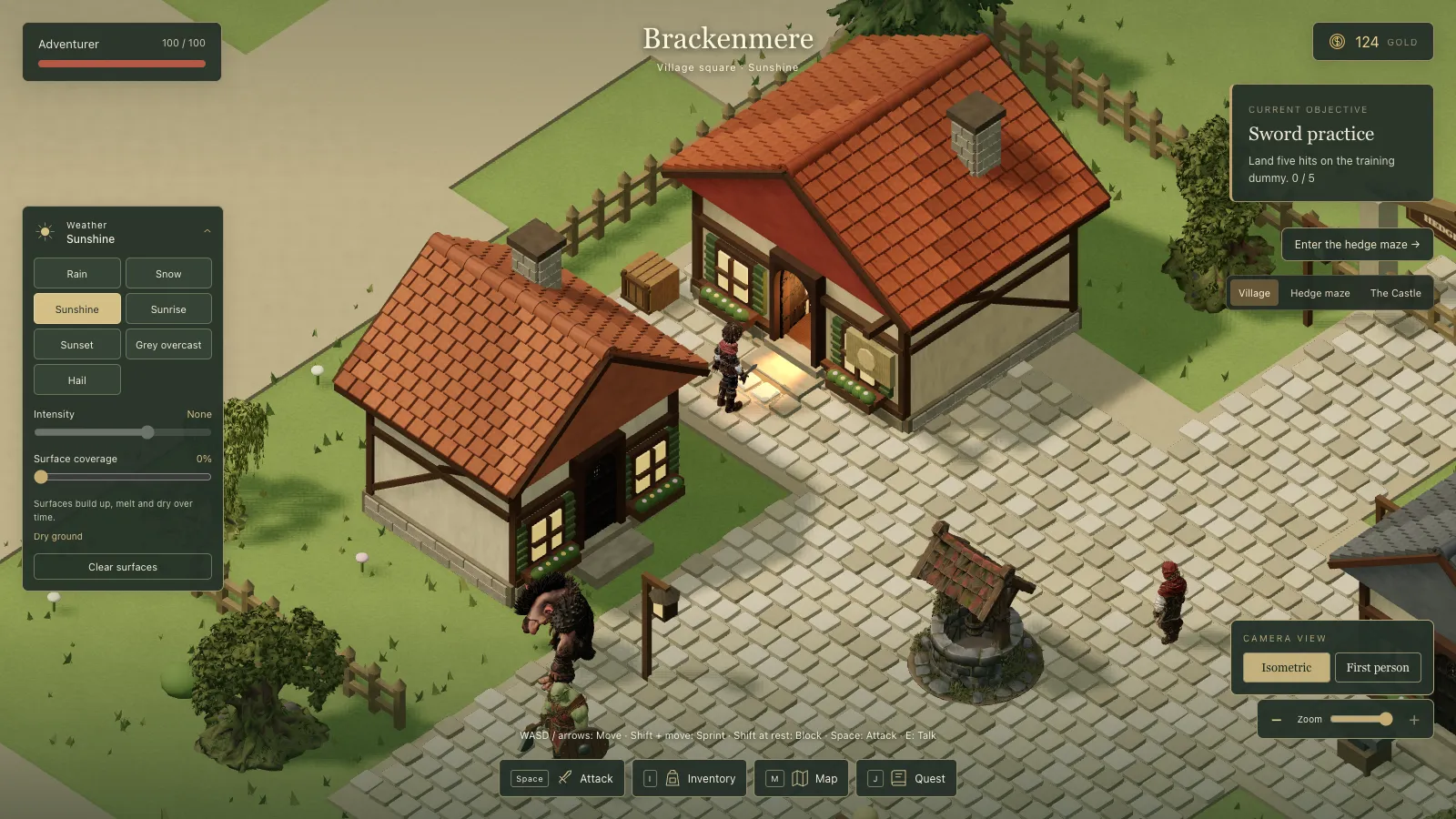 After, a moment after pressing E: the door swings in and the light spills out.
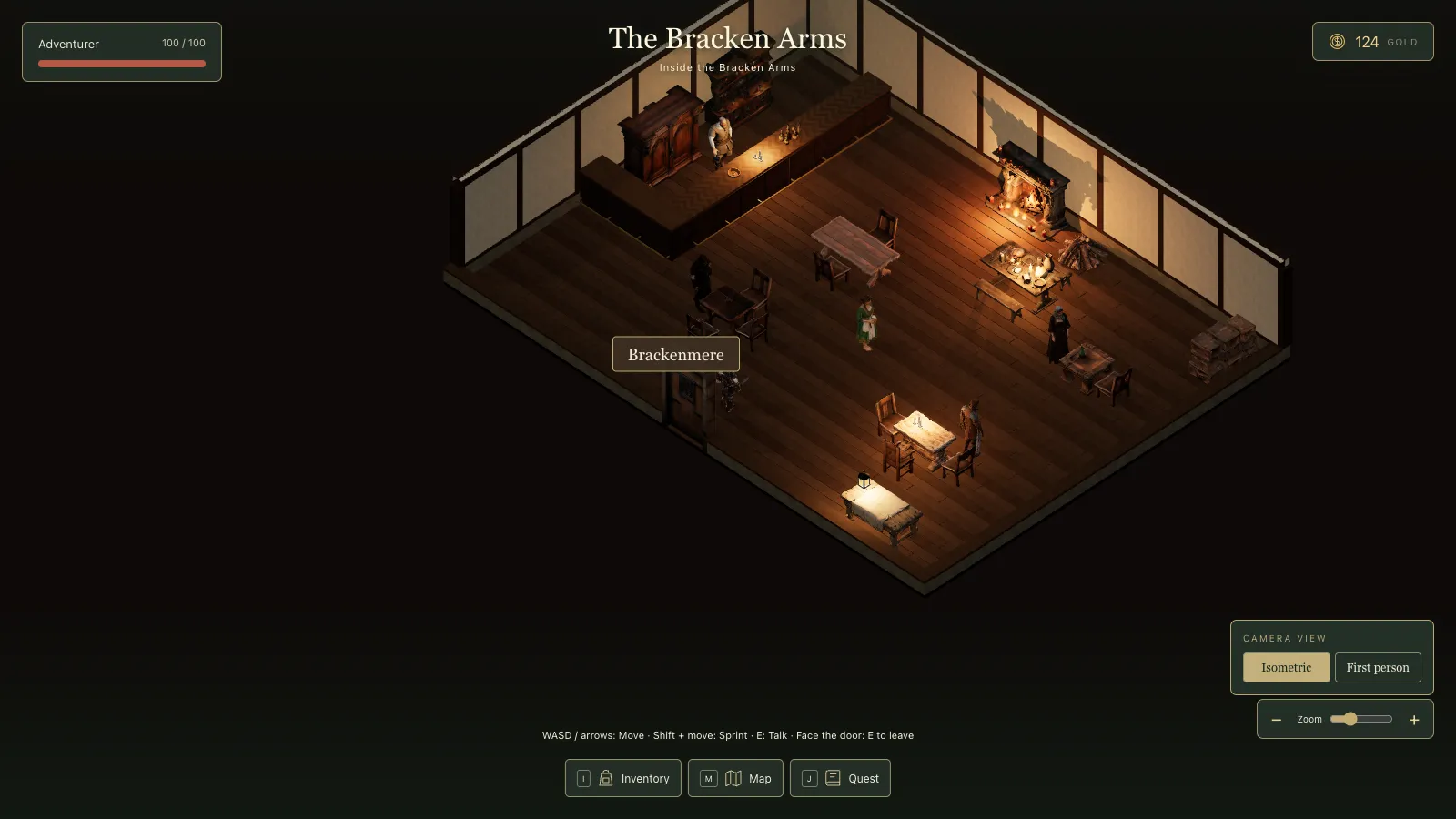 The Bracken Arms, cut away like a doll's house. The bar, the fireplace and nearly everything on the floor are my models.
In first person the walls go back up under a beamed ceiling. Behind the bar and the counters the floor is fenced off, but you can talk across them. Nothing fights indoors.
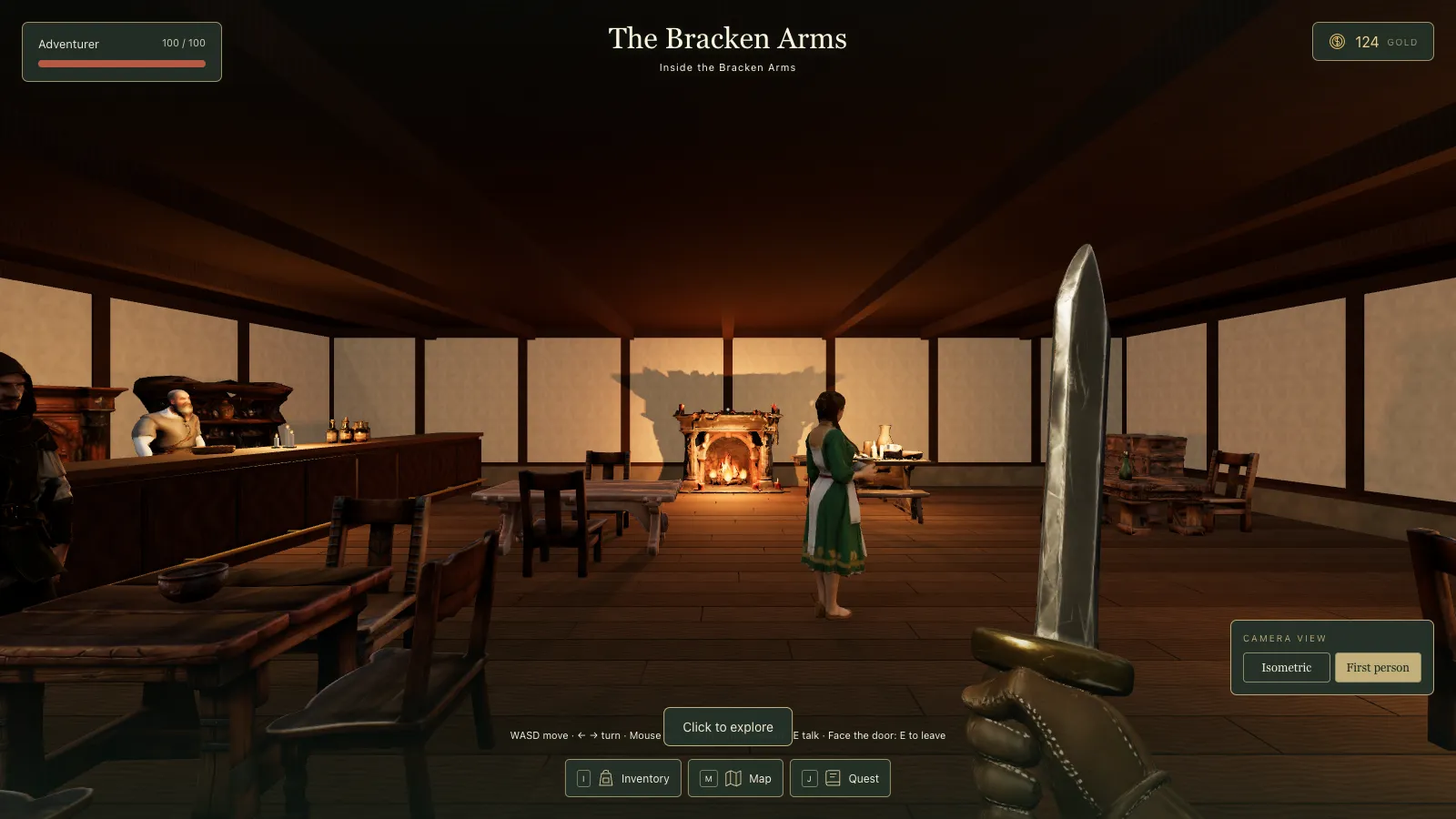 The same inn in first person, with the ceiling back on.
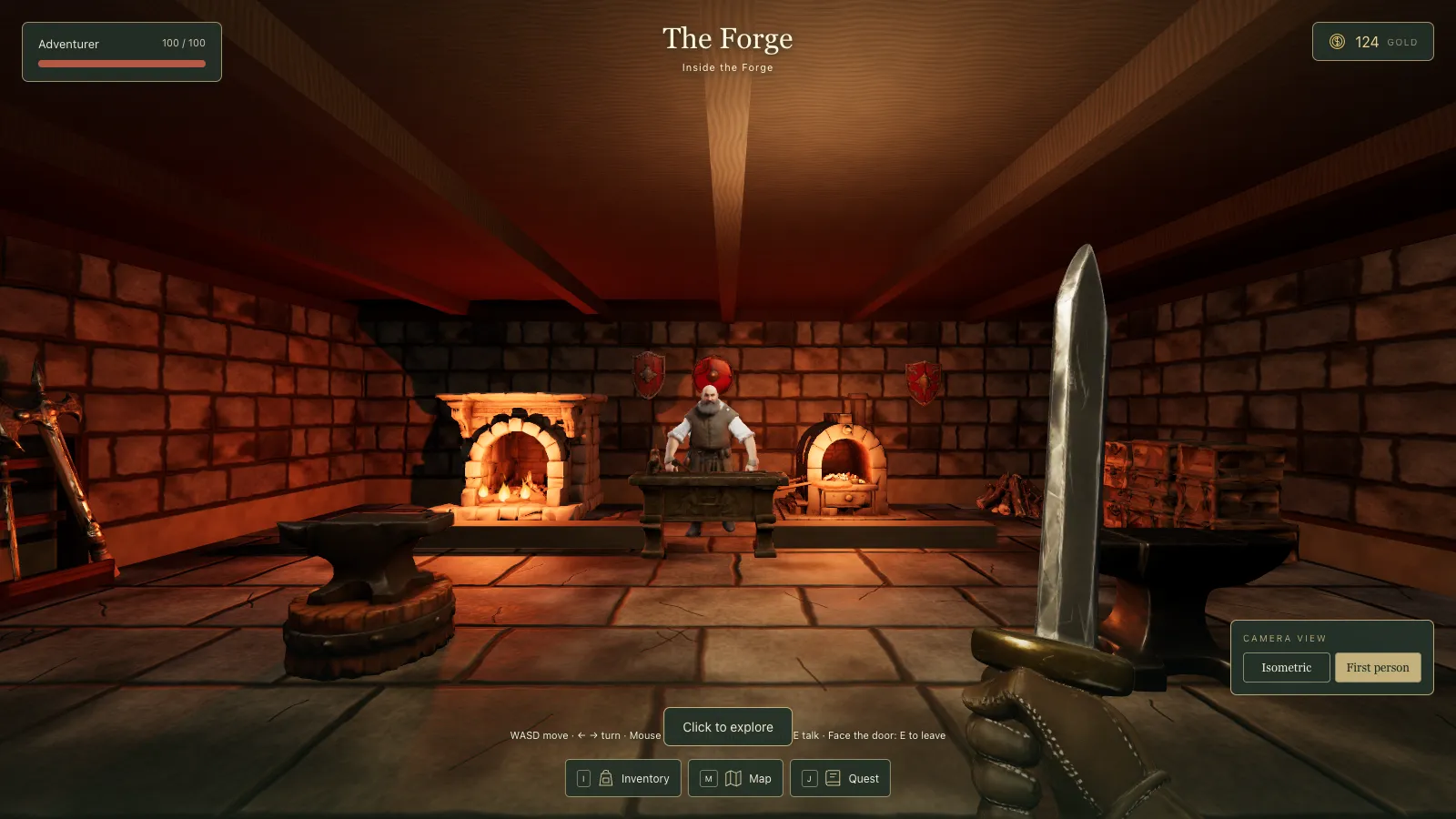 The forge, with Bram at his bench.
The people were mine too, eight of them: an innkeeper, a serving woman and three regulars in the inn, a smith in the forge, and Mother Agnes and a waiting customer in the apothecary. The smith is called Bram. On the first night I had removed a procedural villager of that name with three words, "Remove that guy." The name came back on a proper model with a forge to run.
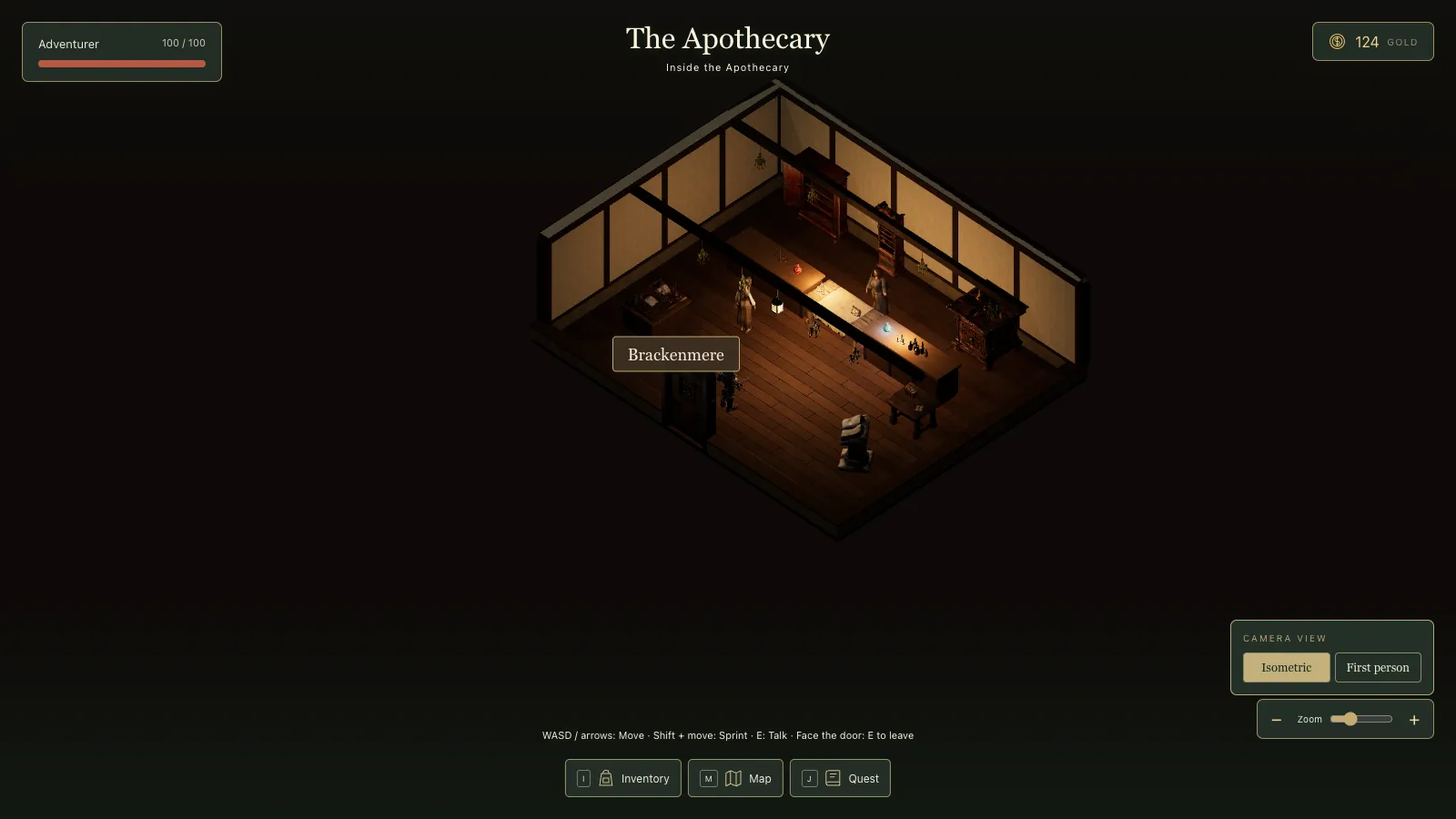 The apothecary, the smallest of the three.
What the checks found
The final job on the plan was a separate agent that drove the real game in a browser and wrote PASS or FAIL against each check. Most of it passed. Two things did not.
The inn was too heavy. It broke the download budget the plan had set, partly because every room fetched the same sword twice. And one of my people, Sella, showed small torn shards at her collar when you stood right next to her. The tool that slims models down had pulled her mesh apart at its seams. The fixes were one sword download, smaller textures on six inn-only props and a gentler, seam-aware slimming for three of the people.
Under the hood The verifier measured the inn at 20.5 MiB against a 20 MB budget, with 340,000 triangles against a 400,000 cap and no more than six point lights. All three rooms held 60 frames a second on my Mac.
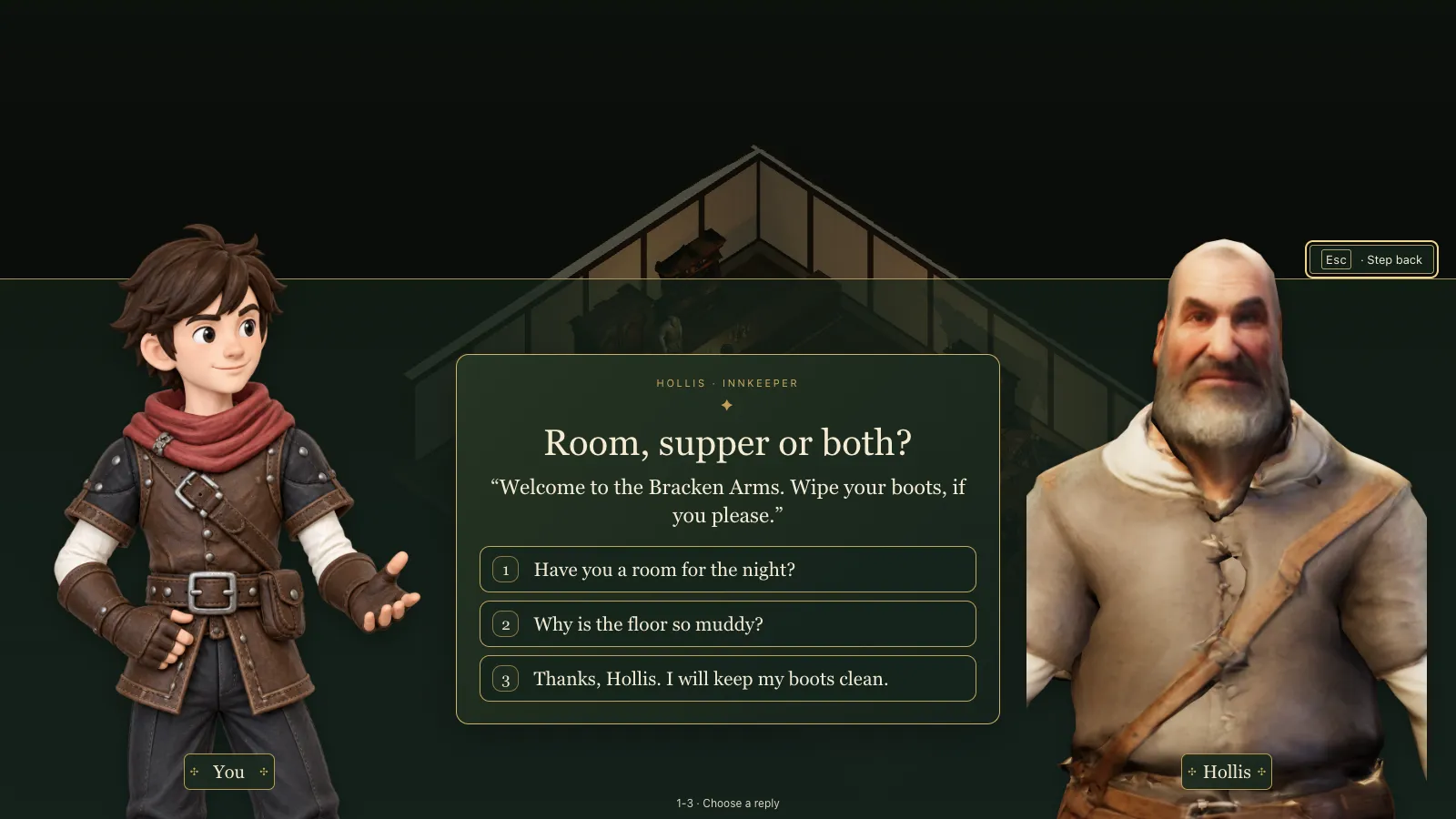 Hollis, the innkeeper. Every person got a portrait for the conversation screen.
Doors, everywhere
That evening the castle session and the rooms met over doors. Back in the castle I had climbed the new ladder, come down the stairs and opened a door into my own path: "the passage is now blocked, because I can't close it... When we build a maze later on we will have to ensure we don't make blockable issues, but for now let's make the ability to close doors a thing as well."
So doors learned to close, and not to swing onto anyone. Then: "Merge everything into main or master, commit and push there." Before the end of the evening the rooms were on main.
Under the hood From my request to the rooms being on main took about four hours: a spec, a plan, an import of my models, the rooms, the people, the doors, a verification run and two rounds of fixes.
What I took from it
- Make the room its own world. Loading a room like a level kept the village light, and the doll's-house cut was easier than the castle's clever fading.
- Ask for easy removal. The run-to-walk animation was gone in a minute because I said so up front.
- Let a second agent check the first. The verifier caught a broken budget and a torn character that no test was looking for.
The next morning I came back to find the castle session "still going as I did close my laptop", and asked: "We basically at a clear slate now?" Not quite. The inn had only just squeezed under its budget, and the game as a whole was carrying hundreds of megabytes of models.