From the first day, every model in Brackenmere came the same way: I made it on Meshy's website and dropped the file into a chat. On day one I had asked: "does meshy have an mcp you can use? Or some way for you to use it?" For the next week the answer was me, and the agents kept a list of what they needed.
By 28 September that list was long. That morning I asked: "If I gave you access to meshy api / mcp could you do the meshy assets?" An hour later I opened a cloud session with the key in its secrets: "Can you create 3 models using the API and give them to me to review so we can see if we are creating the right type of scene / art direction etc."
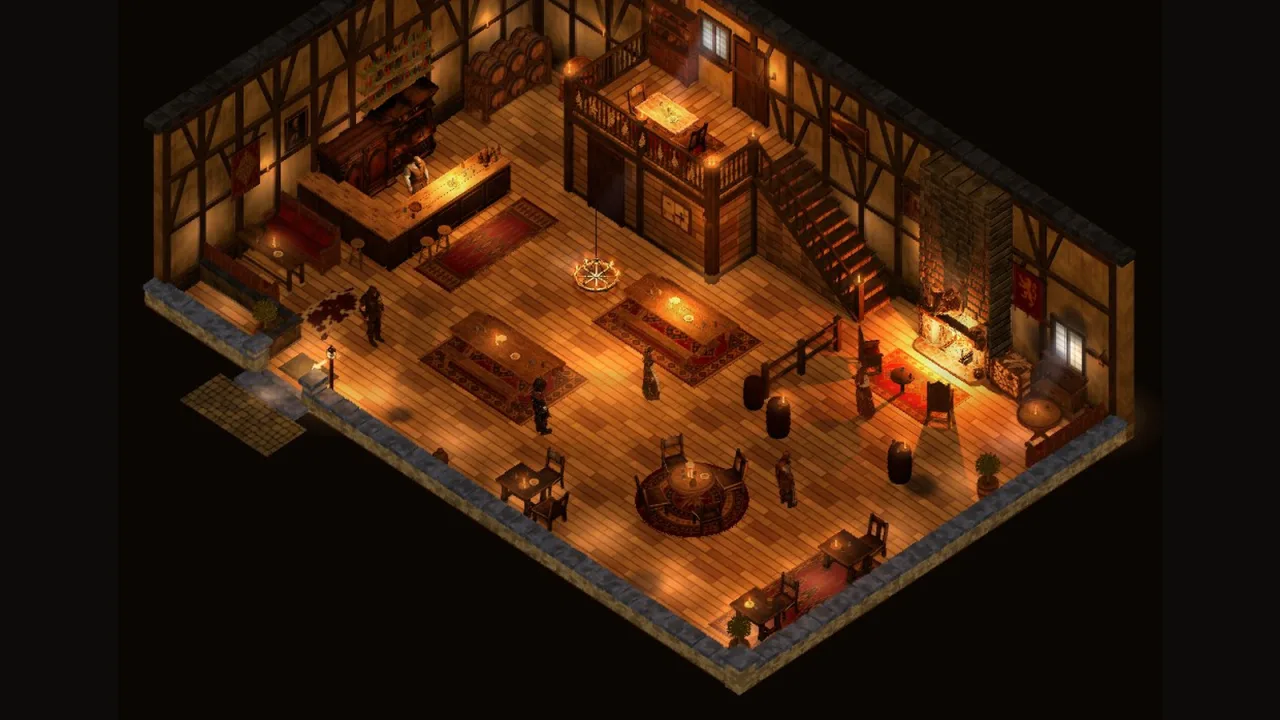
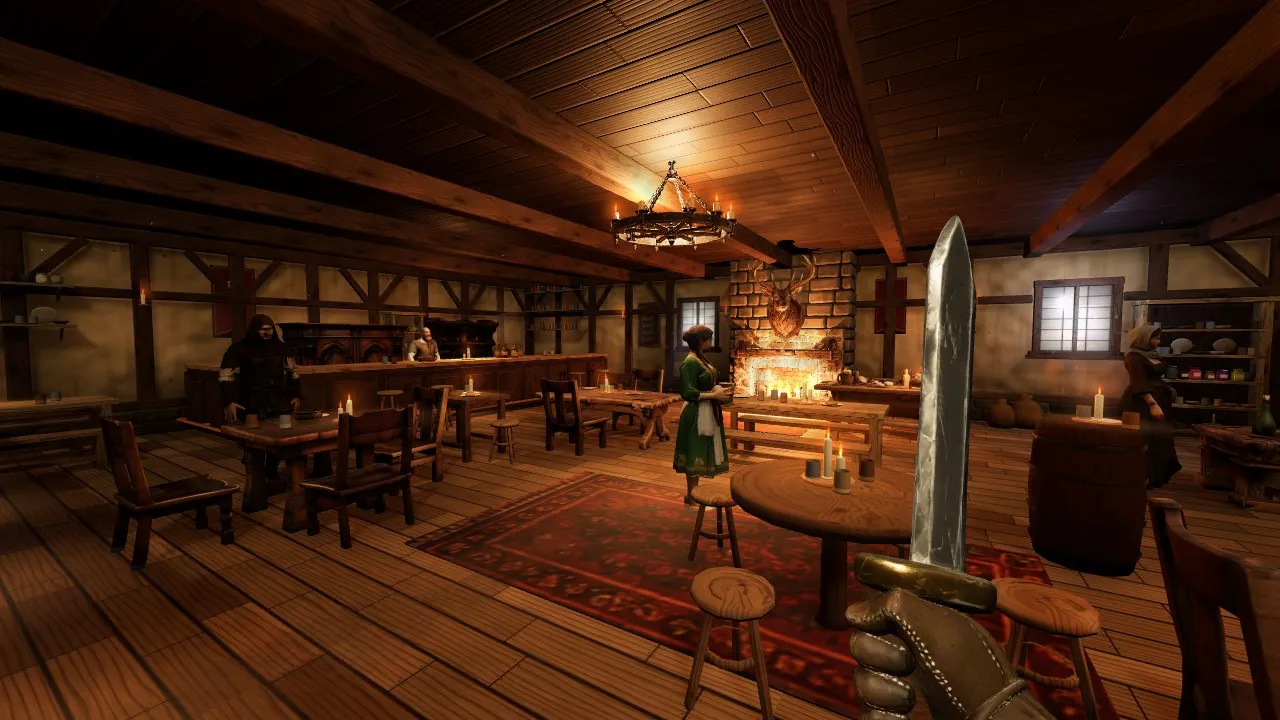 The inn on the evening of 28 September: chandelier, hearth and stag all came from pictures.
A script that refuses to overspend
I had typed the wrong cap and corrected it ("200 credits", then "not 100, sorry, typed wrong number"). Before any model, the agent wrote the thing I cared about most: a script that prices a batch of jobs and refuses to run it if the estimate goes over my cap or the balance.
The trial took three pieces from the list (the anvil, the cauldron and the inn fireplace), each made two ways: from the list's text prompt, and from a crop of one of my reference paintings.
Under the hood A textured model costs 30 credits, so the trial was six models for 180 of the 200. Every job writes its prompt, task id and cost beside its model.
What the trial showed
Neither route was good enough, but both failed usefully. The text prompts gave computer-made models; the trial notes call the anvil "orange, glossy, toy-like".
The painting crops looked right, but Meshy builds all it sees. The fireplace arrived as "a miniature room corner: its own floor, stool, stag, candles and baked fire". The cauldron brought its neighbours' plant pots. Worse, anything lit in the picture was baked into the texture, and the game draws its own flames.
I had wondered while it ran: "Im wondering whether I create flat png images of everything we need first that then you can use?" Once I saw the results: "ok so its noted that we produce the images first - is that right?" It was. Every piece starts from a clean picture of that one object, alone on white, evenly lit, nothing burning, and a text prompt is only a fallback.
The anvil
I made a picture of the anvil to that brief. The agent wanted the iron darker and the hanging tools gone; I kept the banded stump because I liked it. Meshy followed it closely, with nothing extra and no light baked in. "ok so weve confirmed if I produce the images, then you take them through the meshy api, that works best," I wrote, and sent a chandelier next: "use the anvil we've just created, its the best by far".
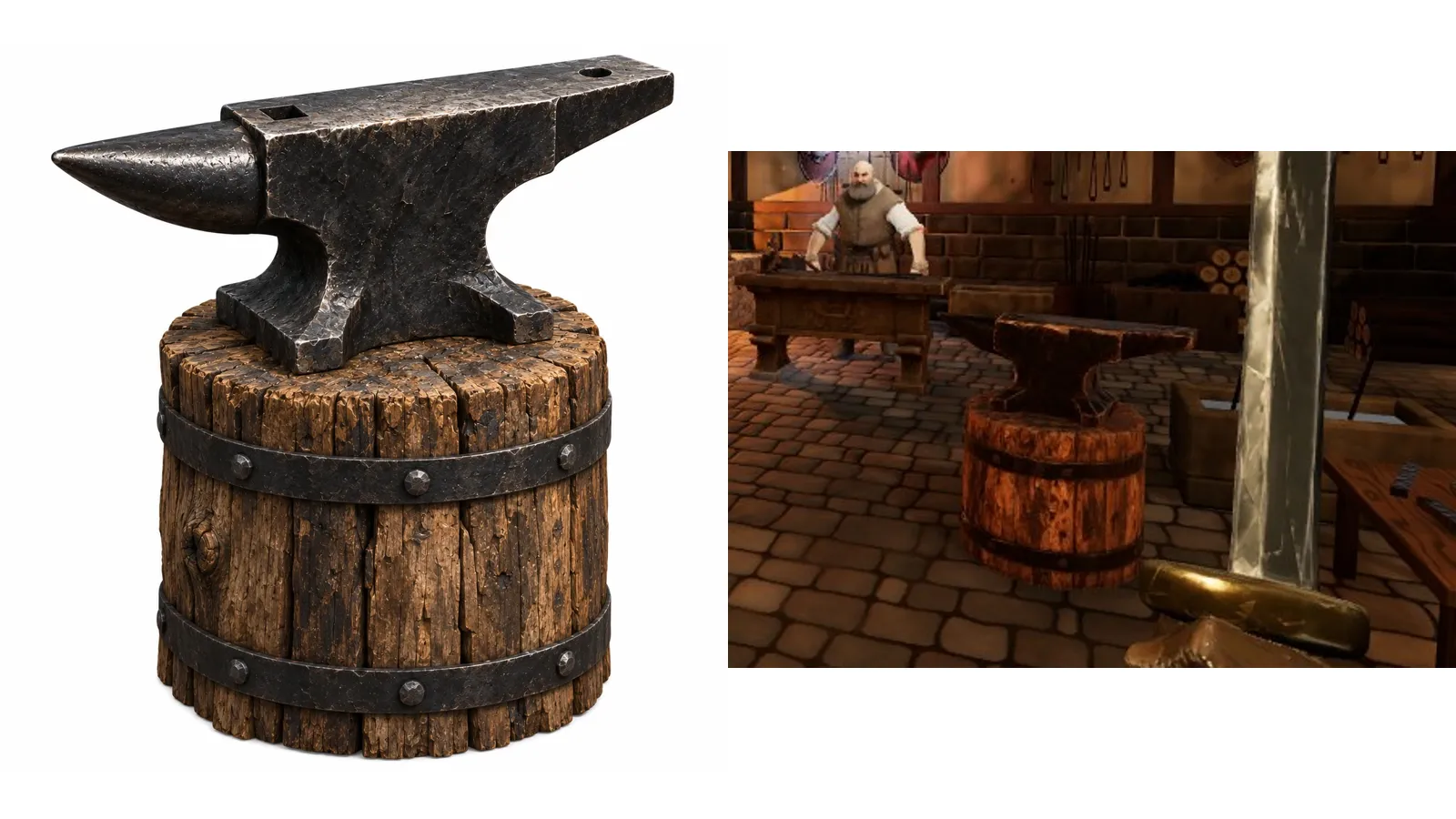 My picture of the anvil (left) and the model Meshy built from it, in the forge that morning.
Then I looked at the size. "is 1.04Mb game play size - seems very large for an anvil object?" The agent halved it with 512 pixel textures, and I pushed again: "0.52Mb still seems fairly large for a single item in a shop?" It offered two savings: ask Meshy for each item's own triangle budget, since more only adds download, and store every model's shape at lower precision. I took both: "I want everything to work in the cloud - can you start #1 here in the cloud so I can close my laptop?"
By mid-morning both were in the game.
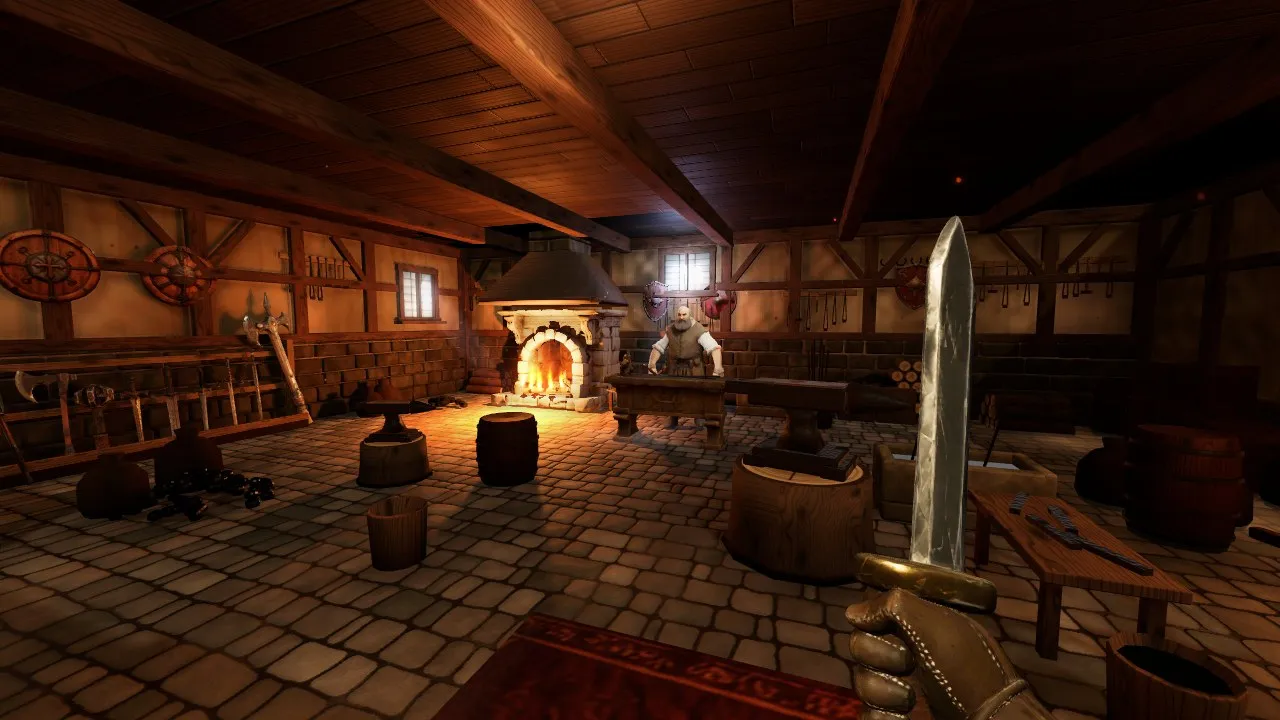 The forge that morning, before: the anvil and hearth drawn in code.
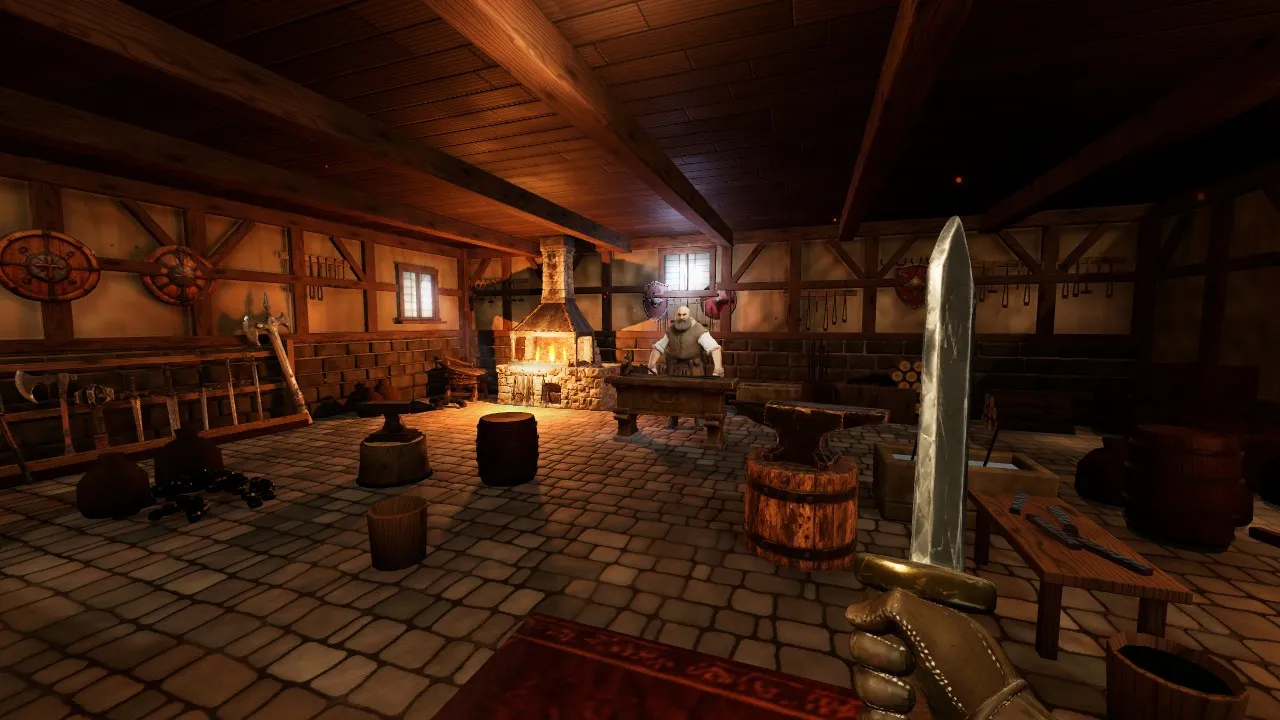 The same view that evening.
Then the floodgates
At lunchtime I emptied my downloads folder on them. "So I've got a folder of GLB items. There's a lot in there... That way we don't need to recreate all these through the Meshy API."
There was also a folder of twelve flat pictures I had made with OpenAI. I knew the drop was raw: "none of those are checked for file size or kind of pixel density or number of vertices, so they'll need to be down scaled." On spend I was specific: "I don't want you to run any of those images through Meshy more than once."
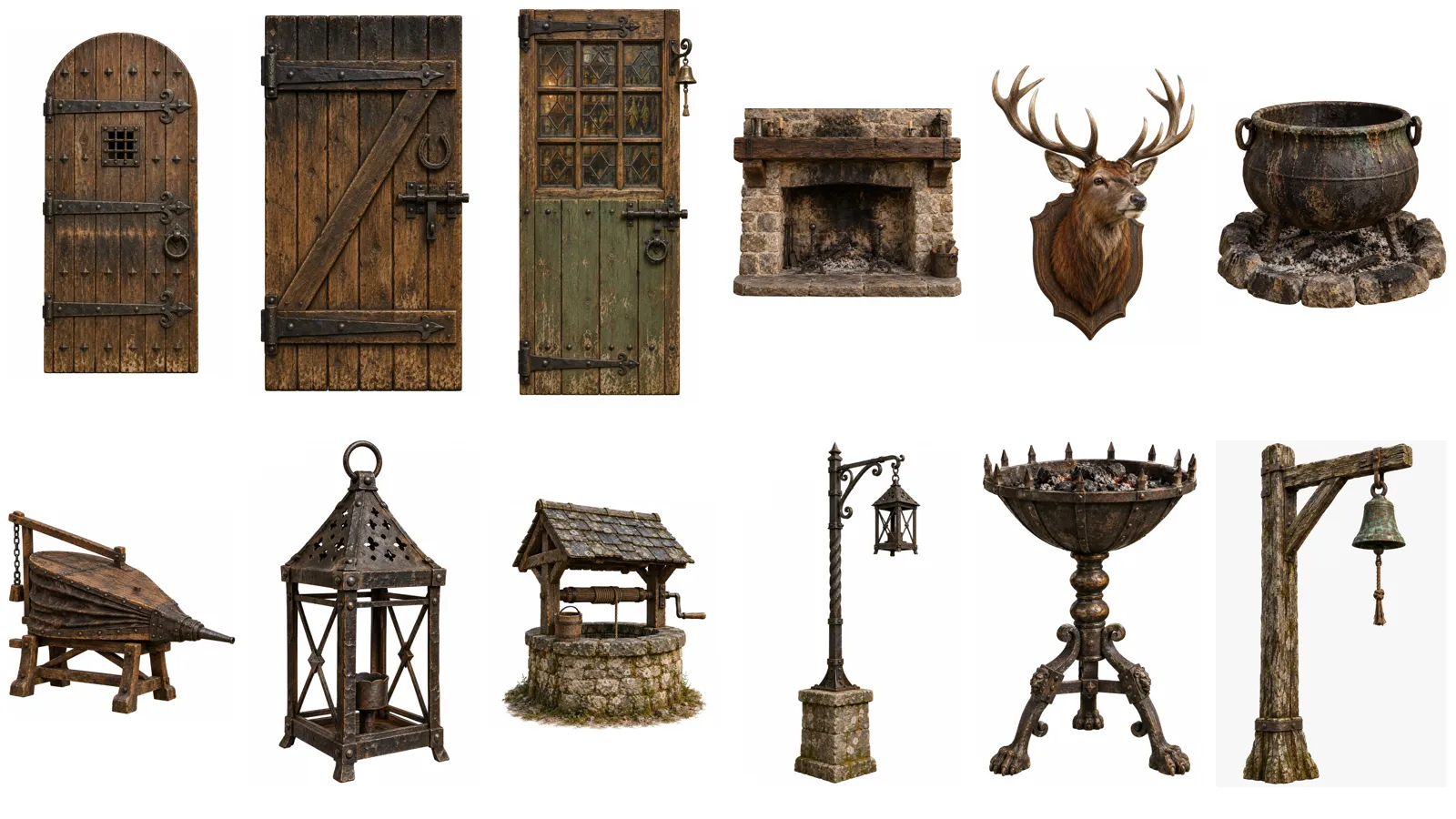 The twelve flat pictures, each run through Meshy once.
Then a practical worry: "Do you think we need the originals anywhere?... I think this is going to grow really quickly." The answer split by source. Bulk drops keep their originals on my Mac; anything made through the API goes into Git LFS, so cloud sessions can rebuild it.
Under the hood The first drop was 111 models: 58 use, 22 maybe, 31 skip, and 1.3 GB of originals came down to about 40 MB shipped. Exports too dense to simplify now go through a headless Blender rebake: the hay bale went from 16.9 MB to 0.23.
Taking me out of the loop
Making each picture was still my job, and the slowest part, so mid-afternoon I handed it over. "Let's create the image first in OpenAI. You can explain it to OpenAI: white background, isolated, no shadows, etc. Exactly what you want, and then take that image as reference from Meshy."
The agents built a concept route: OpenAI draws each object to the staging brief, and Meshy builds from the drawing.
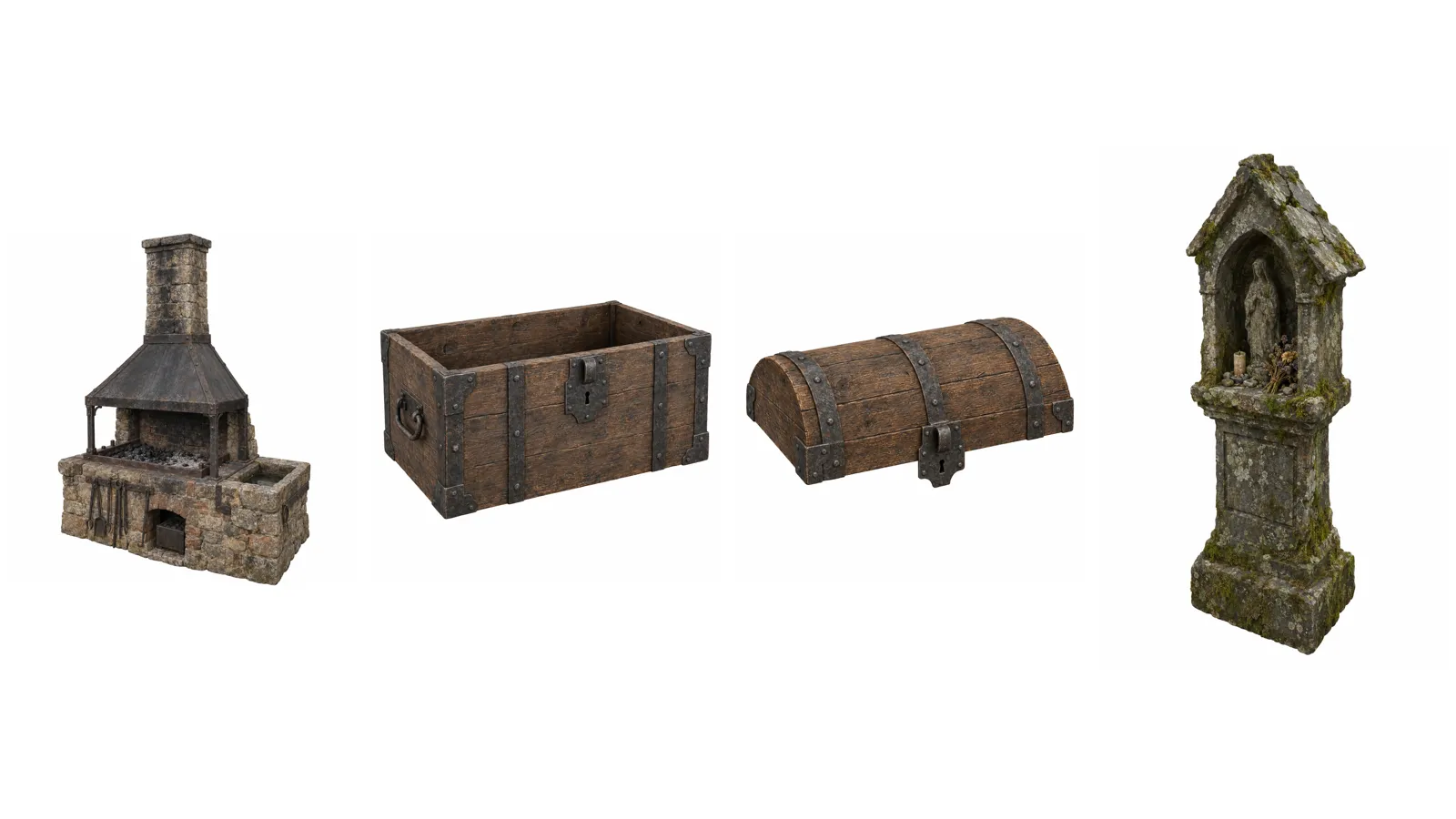 The concept route's first four pictures, drawn by OpenAI to the staging brief.
After a four-piece trial, the agents queued every static piece still missing and waited on my cap. My answer: "no price cap, lets go".
Under the hood Fifty-four more pieces, from farm animals to the graveyard's lych gate: about $2.59 of OpenAI pictures and 1,620 Meshy credits, each piece built once. Around 650 MB from Meshy shipped as 42.6 MB.
Quality over size
One thing I reversed that day was my own doing. Since my size worries that morning, room props had imported at 512 pixel textures. By the afternoon I had seen enough: "make judgements, I'd rather quality rather than cut to 512px as we've tried that and it visibly looks worse." Fifty-seven models were rebuilt from their originals at 1024.
The saving came from the other idea: the piece I had started in the cloud stored every static model's positions in 14 bits.
Under the hood 101 static models re-encoded; the High download at spawn across all worlds fell from 243.0 MB to 233.3 MB, with pixel-identical shots before and after. Rigged characters keep full precision.
By the evening
"push, merge to main", I wrote just before six. The branch brought 150 Meshy models. Forty-five replaced the drawn pieces they were made for, from the doors and the well to Whisperfen's statues; the rest went into the kit's catalogue.
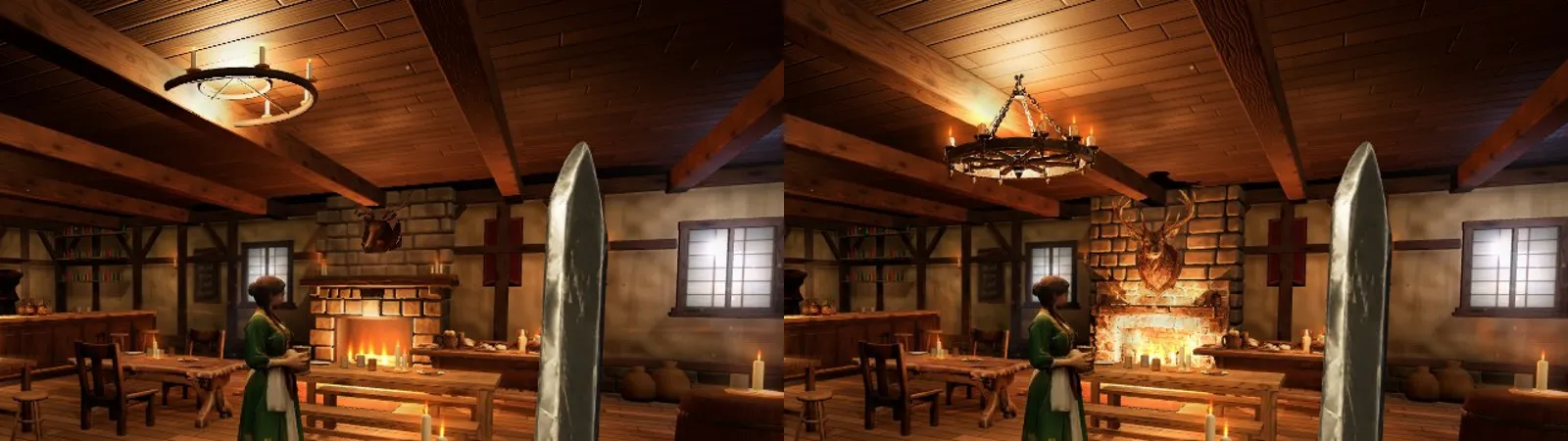 The inn from the same spot, morning (left) and evening (right).
What I took from it
Two things. A paid tool in an agent's hands needs its limit enforced by code, not a polite line in the brief. And the input matters more than the prompt: a clean picture of one object beat both words and my paintings.