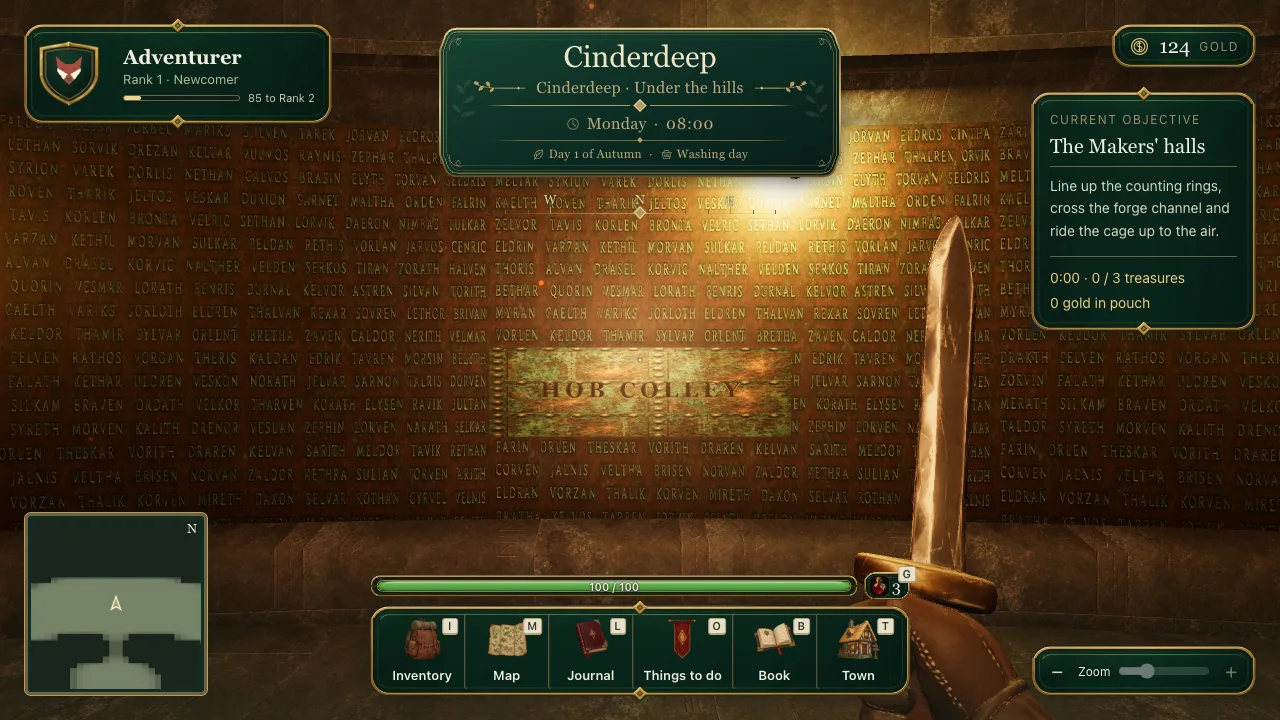
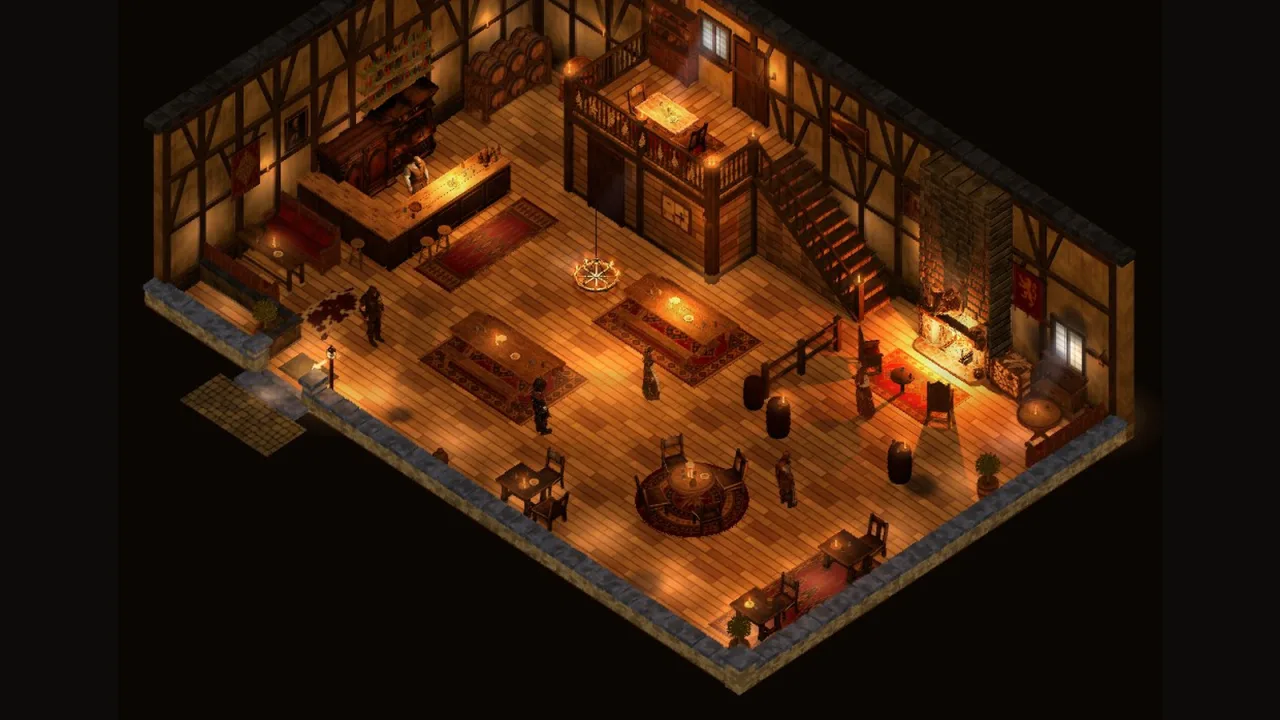
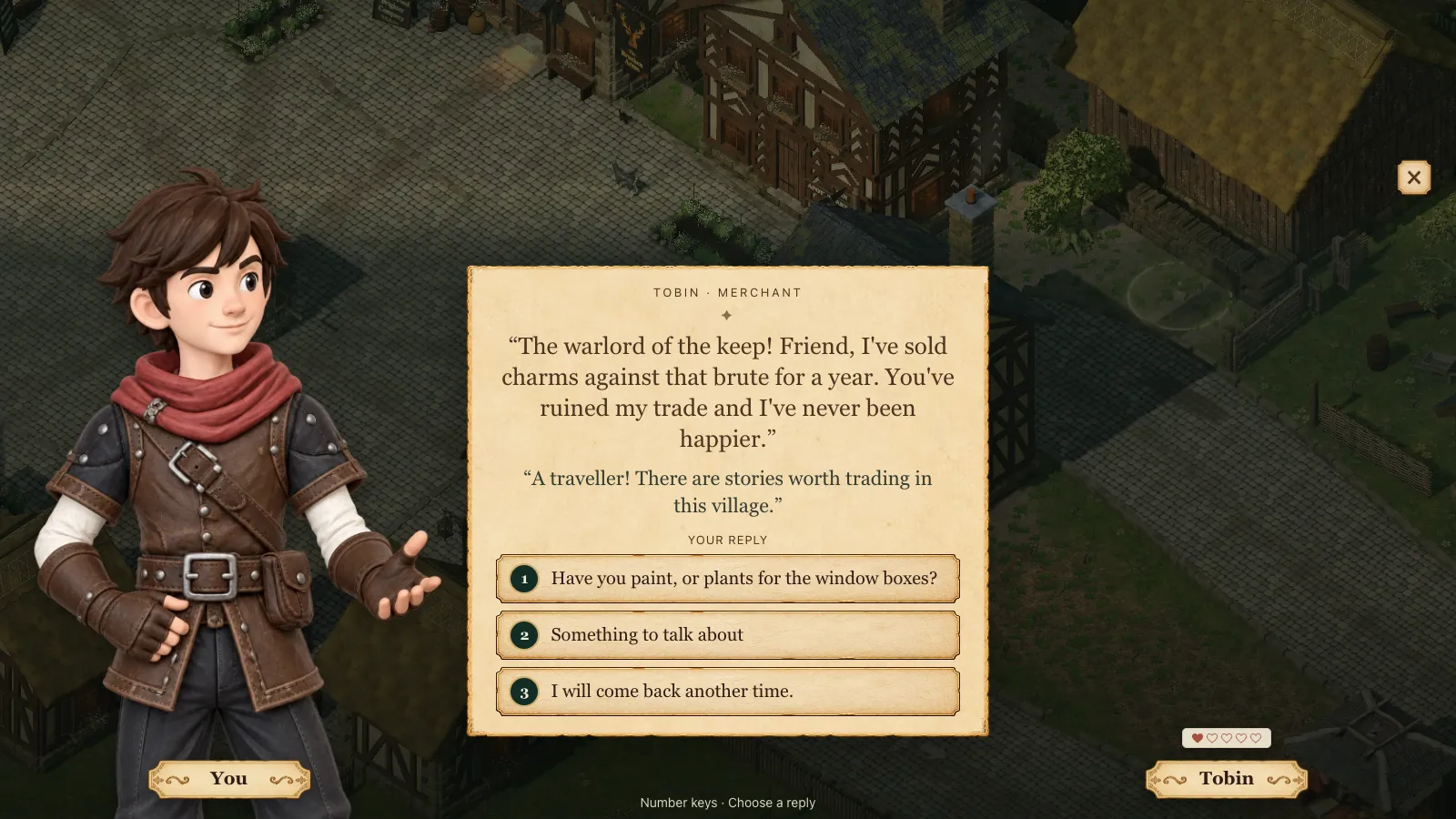
The day before, I had made renown mean something. On 18 October I played the whole game through myself and found a bigger problem underneath.
"I've just done a run through of the game myself, and although there's many great elements to this... I think it's just some underlying game structure here that we just need to tweak slightly."
What playing it was actually like: "talk to this person, get the quest, go do the quest, get a few rewards, come back, go talk to this person, get the quest, do the quest, come back, get a few rewards... and it was just that on repeat. It didn't feel like it was a kind of organic world. It didn't feel like things happened in happenstance."
The rewards didn't help: "I was just getting healing potions and gold." And the side quests went unfound, because the game always named who to see next, and "You're not going to talk to anyone else."
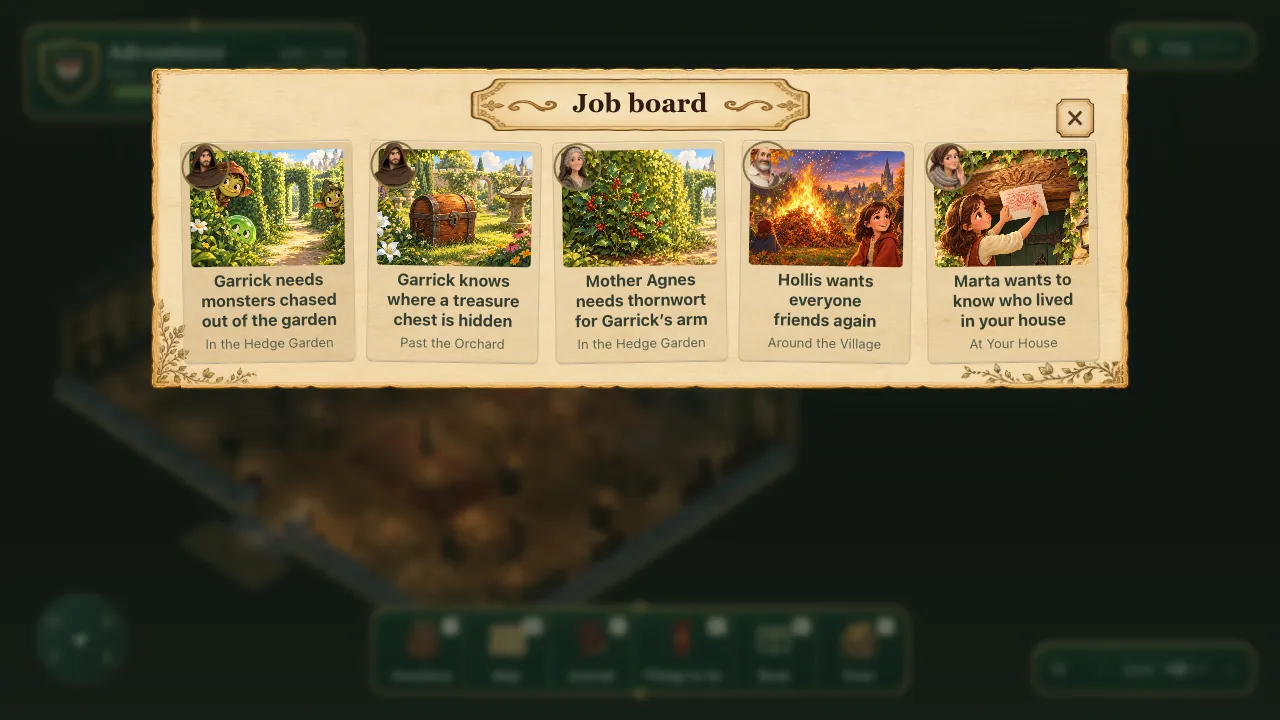 The job board in the Bracken Arms, by that evening.
Asking without leading
I had my own half-ideas ("Should we have little attacks on the village? Should there be orcs in the village? I don't know, like other things"), and ChatGPT had sent back a page of notes. I didn't want either to steer the answer, so I asked for three designers, Claude Fable, Claude Opus and Astra on Codex, each with the same neutral brief and the whole repo. "I want them to come up with their own answers to the problem." Credit was fine, anchoring was not: "I don't mind having full visibility. I just don't want them to be opinionated from the start." ChatGPT's notes came in only at the consolidation. (The agents series covers how that ran.)
One diagnosis, three times
Without seeing each other's work, all three reached the same diagnosis, which the consolidated proposal put in one line: "The game has a rich living town behind a single-thread presentation layer, and the economy pays only for following that thread."
That stung, because the town really was rich. But everything facing the player answered one question: where is my next step? The arrow, Show me, the tracked quest, the gold pennant. Each had been a good fix for my kids getting lost. Together they told you what to do before you could wonder, and with one loud thread and many silent ones, you followed the loud one.
Under the hood The proposal listed ten causes, each tagged with who named it. The main line was seven quests in a fixed chain, and nearly every side quest also waited on a main-line quest, so side content opened in bursts. The lore defined six ways a quest could start; the engine built one.
My son gets a vote
The proposal was careful, long and not written for an eight-year-old. So: "can you give me a .html file to show this to my 8yr old, interactive, so he can see what he thinks". One idea per card, three buttons. A few cards in we wanted to explain ourselves: "Give us a textbox to enter text".
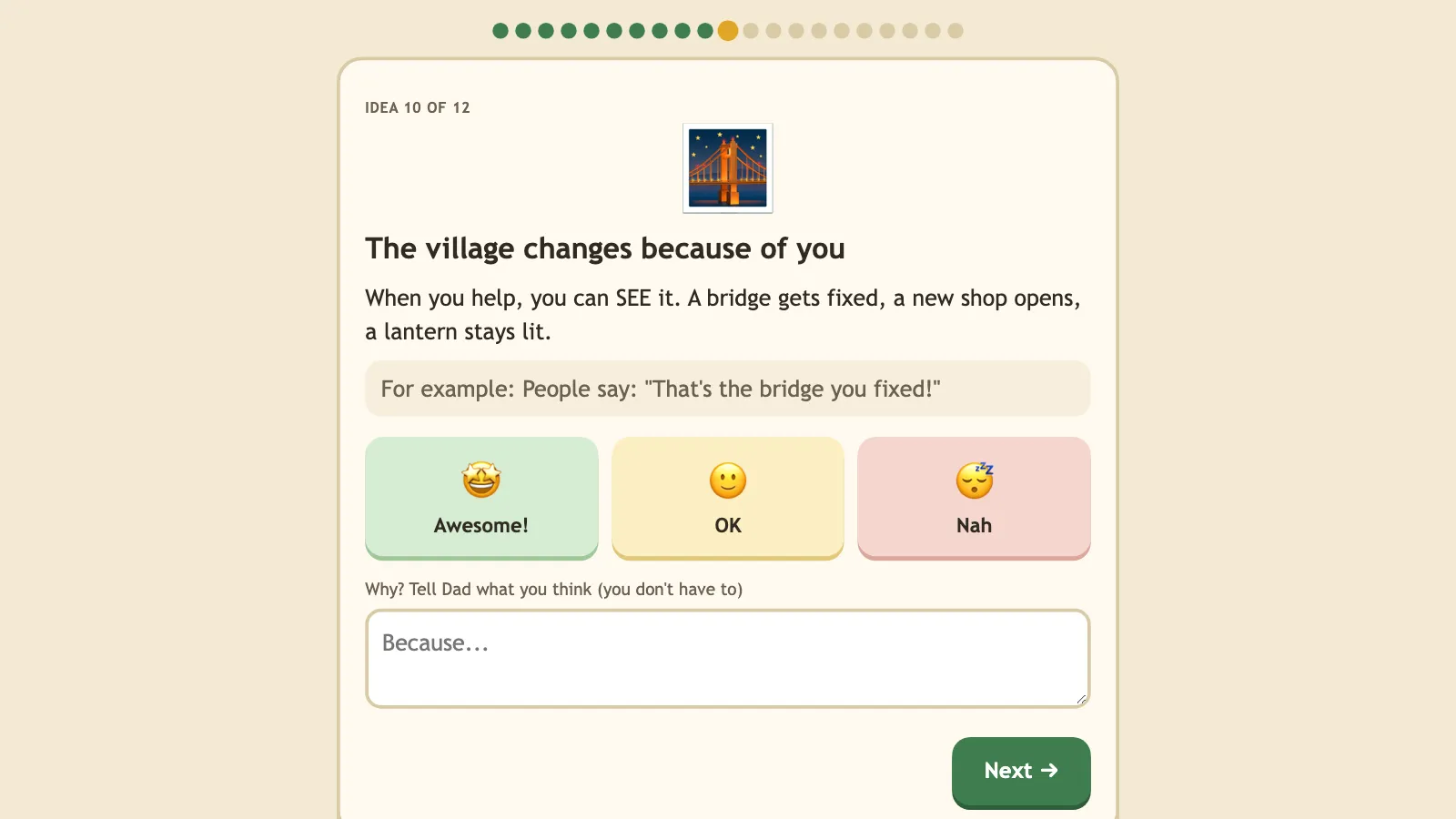 The voting page: one idea per card, with a box for "why".
His top three were the village changing because of you, a Secrets page and a job board at the inn, which was Awesome "as long as its not overwhelming for an 8-12 yr old". Surprises: "Most days, maybe not every day". Named monsters, "And people react and compliment you". Secrets: "Love this, with new hidden not available yet ones". Choosing the adventure order and Bram forging your own sword only got an OK, and were dropped.
Where the designers had disagreed, we just answered. Goblins in the village? He picked the option where they run in and you fight them. Rewards: "The person who you finish it with should give you something relative to their character". Signposting, which I had expected to change: "We like how it works right now". Walking: "The distance is about right, right now, if things on the way are there". Then the overrule: "We like all of the things we ticked as awesome before, don't limit it to that 3."
Built in an afternoon
"You are the orchestrator. Lets build," I told the root agent, and went AFK. "Can go 3 subagents at a time working on different things."
The plan cut the work into thirteen pieces in five waves, each with one Opus owner in its own worktree, review rounds, and root landing it on main. One rule sat at the top: the main line and its signposting don't change, and everything new is an extra way in, riding systems that already existed (the village's staged sets, quest data, the drama manager's arcs). The top three merged in the early afternoon, the last piece by early evening.
Under the hood Thirteen pieces and a polish pass took about thirty review rounds, and two hit the three-round cap. Only one needed a save schema bump; everything else was derived from what the save already held.
What changes because of you
Every quest now leaves something lasting in the village, and somebody mentions it. Bring Wren's fen-light home and it sits lit on a barrel by the Arms' door ("I light it every night now", she says).
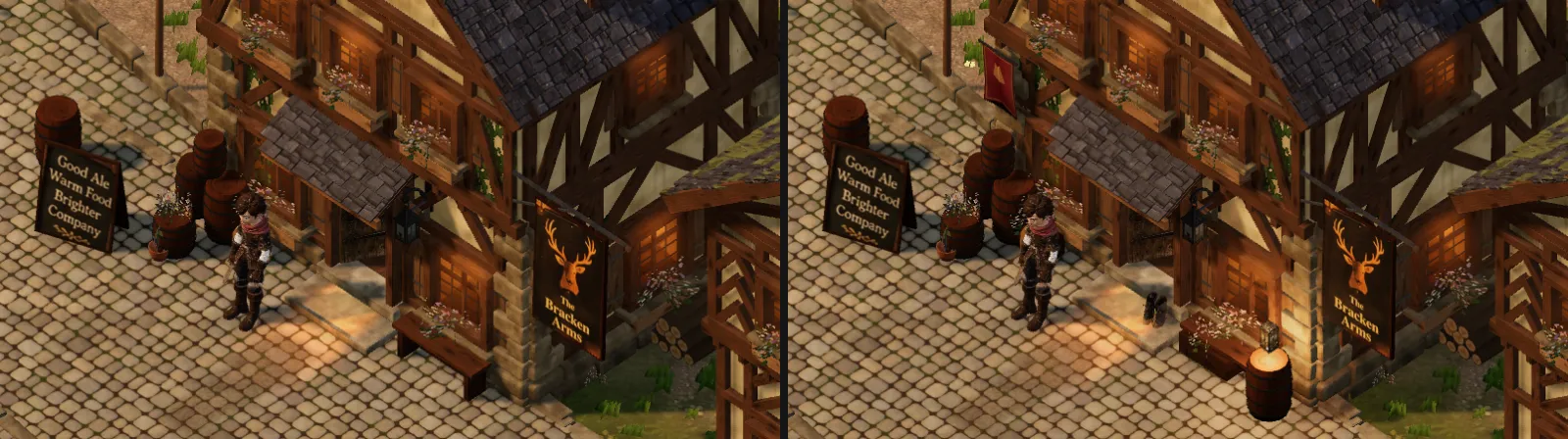 The Bracken Arms before (left) and after its quests: the Vere banner, the fen-light, Marta's boots on the step, flower boxes.
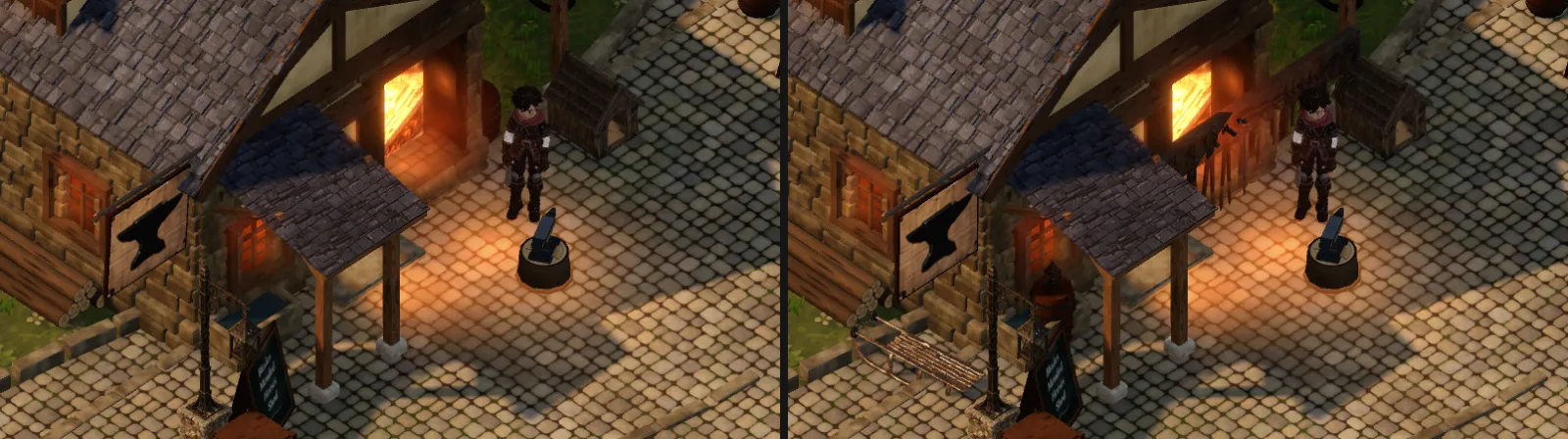 The forge: the finished blade on its rack, Hob's lamp by the door, the sledge from Frostpeak.
Small props, but they're yours, and the village says so.
The Secrets page is a new tab in the Book: blanks with half-true hints, plus the locked "not yet" rows my son asked for. Villagers rumour each one, and Marta always gets hers wrong.
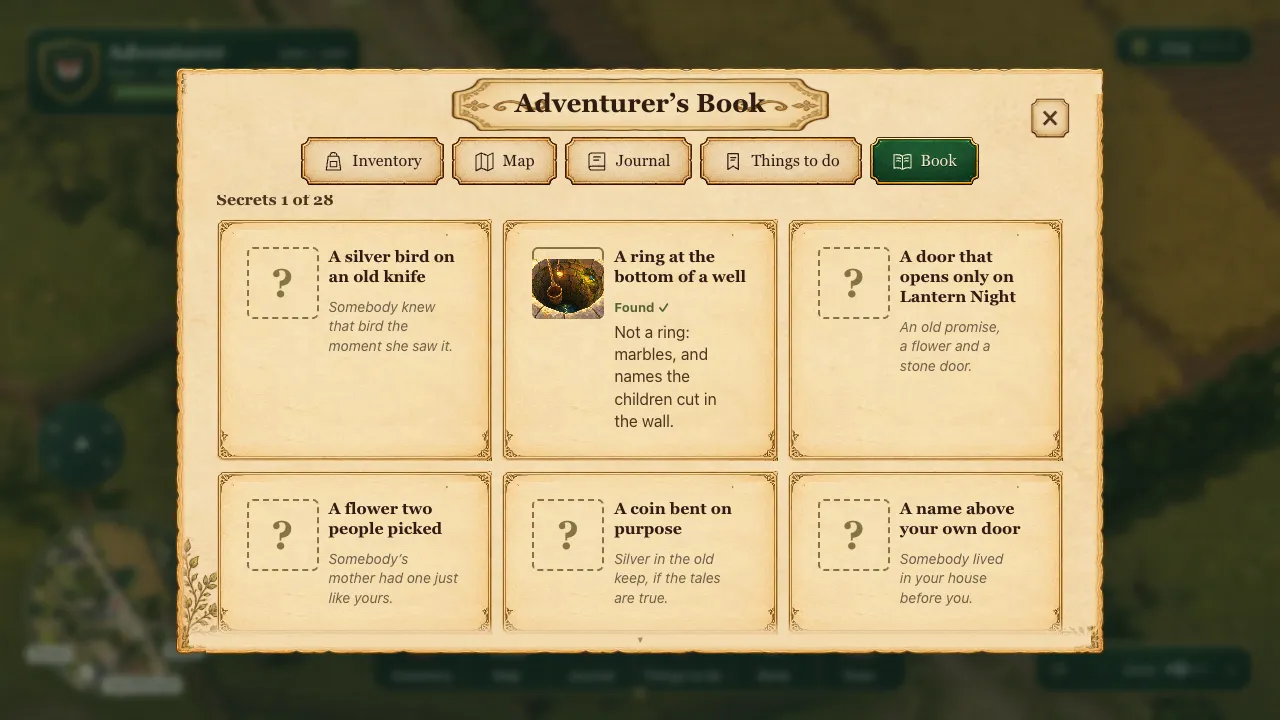 Secrets 1 of 28: the ring at the bottom of the well turns out to be marbles.
The job board shows up to five cards, picture first, and side quests open on what the world holds (a pick in your pack) rather than on story progress. Quests start from things lying around, like Marta's boot in North Lane. People with a job wear a small dot and call out as you pass.
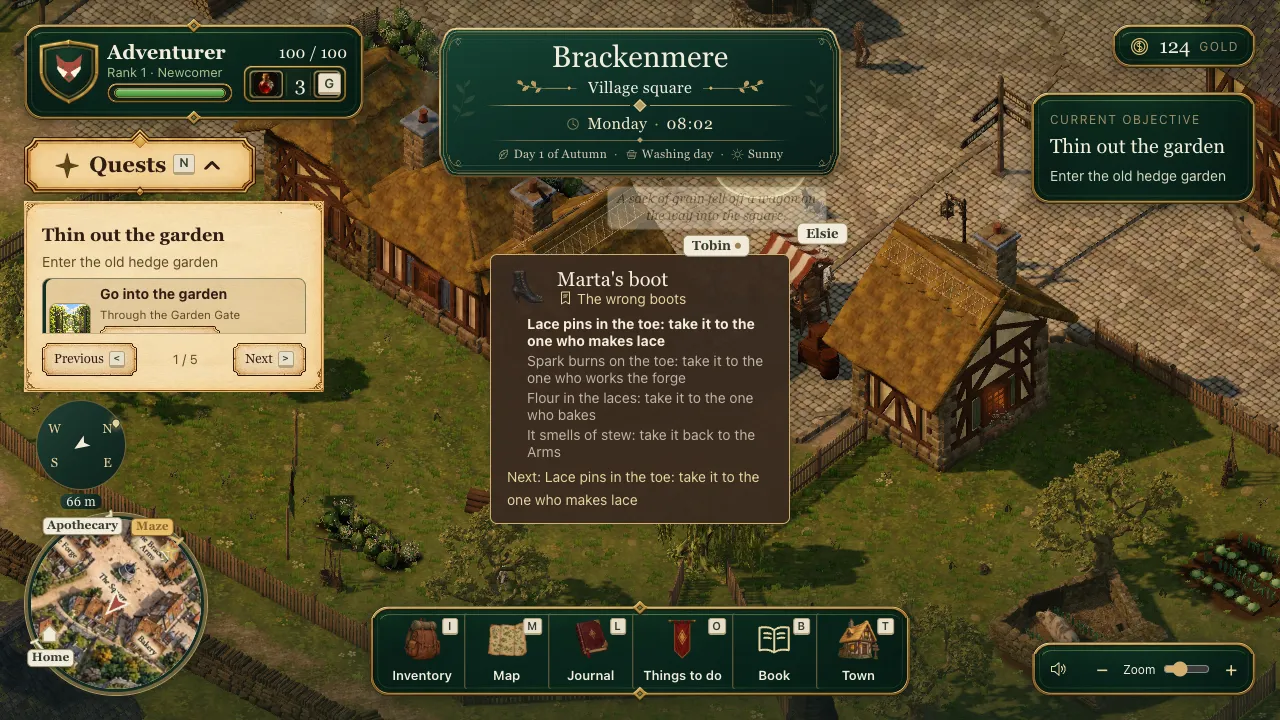 A found boot opens its own card. Behind it, Tobin's name plate carries the dot.
Something happens most days, a tree across North Lane or a pig loose, and if you were down the mine, it waits for you. Rewards fit the giver, so Tilly pays for the wolves with a pelt, not two potions. Named beasts roam the Charwood, and items like an ember pot open optional ways.
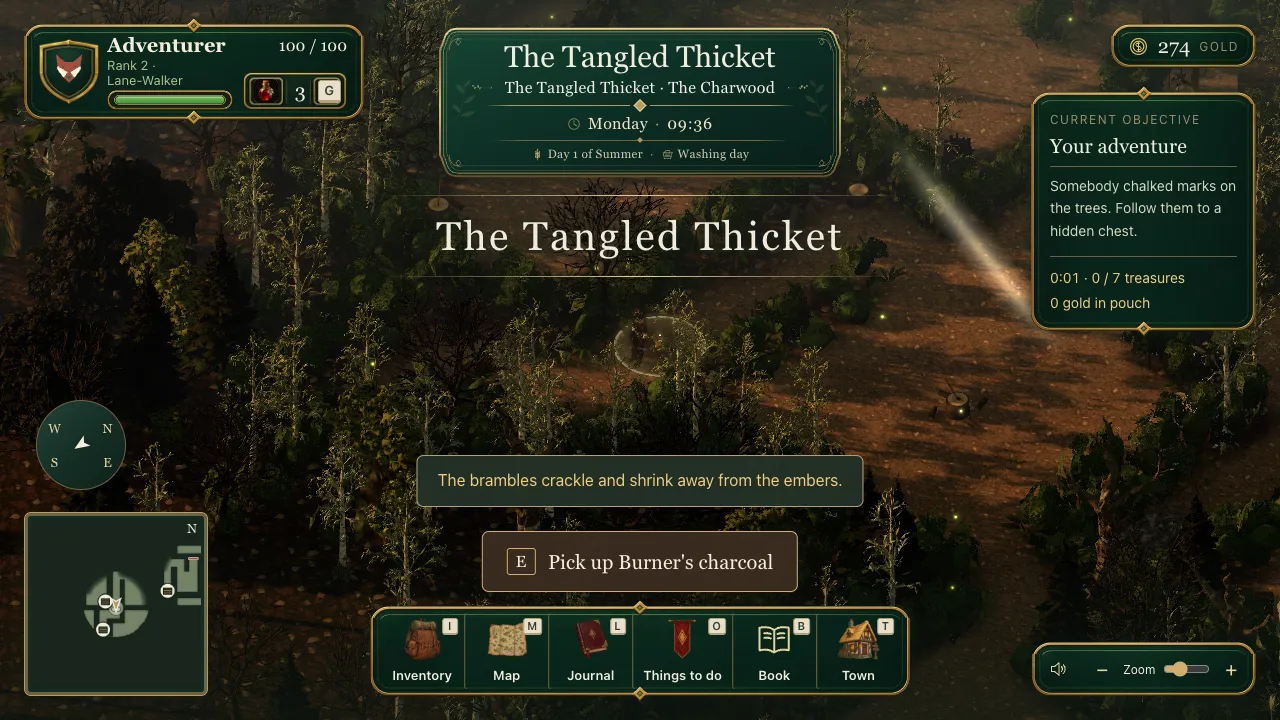 An optional way in the Charwood, opened by the ember pot.
Under the hood The target for happenings was his "most days, maybe not every day". On eight seeded four-week runs, 54% to 75% of days started one.
The next morning
I played it again. Mostly small things ("The notice board is fine. However, can we put a white background within the circle behind the person avatar?"), but one showed the new nudges outrunning the town's clock: Show me for Jory at one in the morning. "I'm almost certain that Jory in the village is asleep..." The fix was mine in a line: "Let's make it say wait till morning."
The swift boots he had rated Awesome took the armour slot, so wearing them meant taking armour off. "Speed boots should be different to armour slot." That meant a save change, and I cut the migration short: "I don't have any current players using it."
What I took from it
The engine was never the problem. The town had been living for weeks; every surface just pointed at one next step. Asking without leading gave me a diagnosis I trusted, because three designers got there separately.
The best design session, though, was three buttons and my son. The things I expected to change, he told me to leave alone. The one I would have argued against, he wanted most.