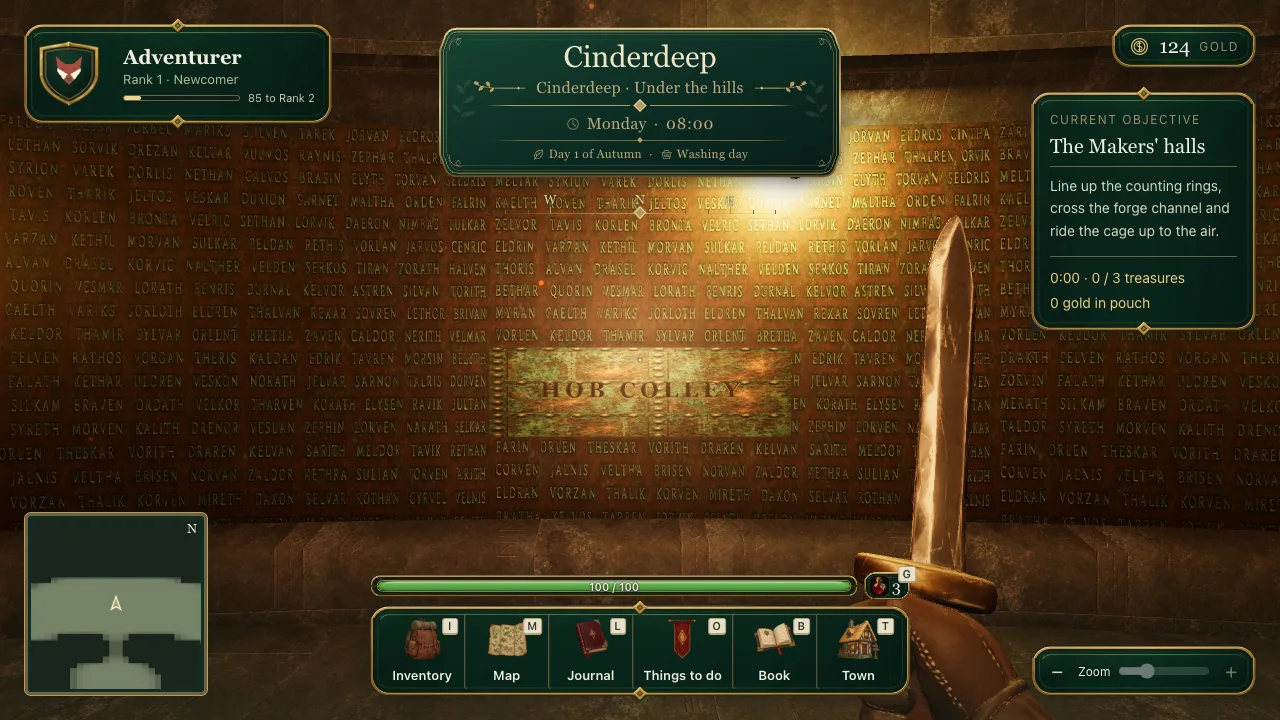
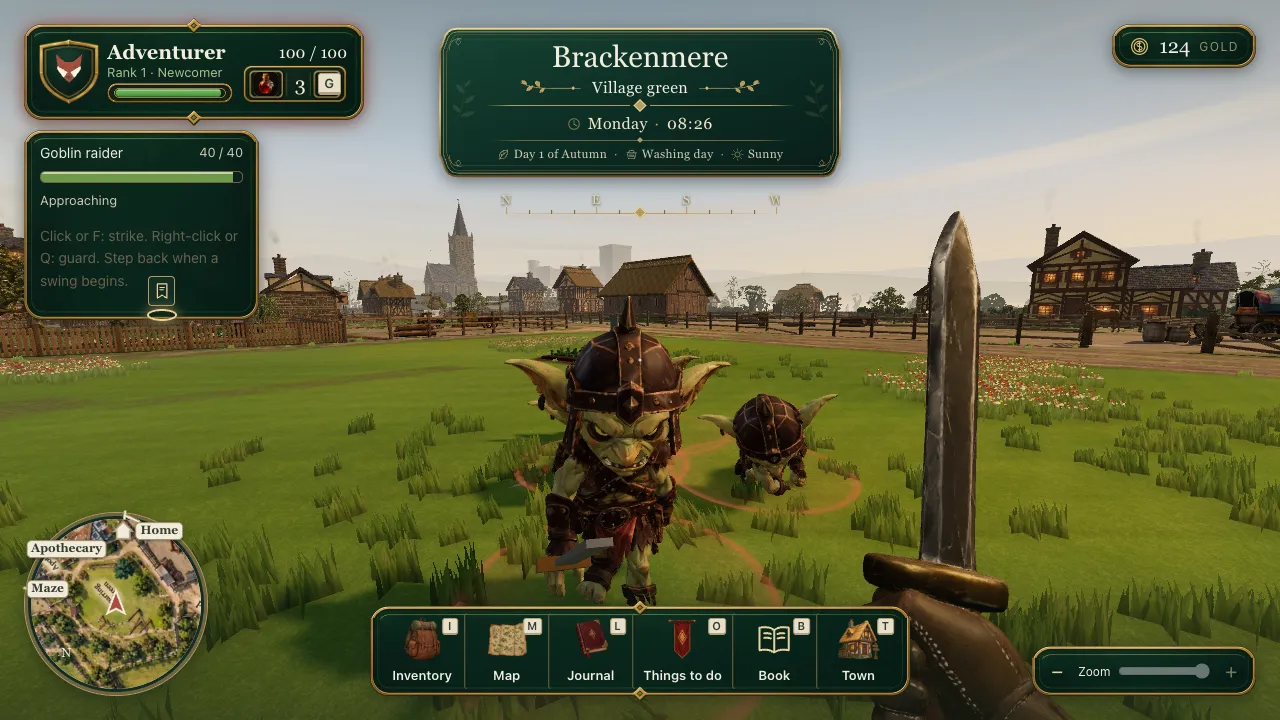
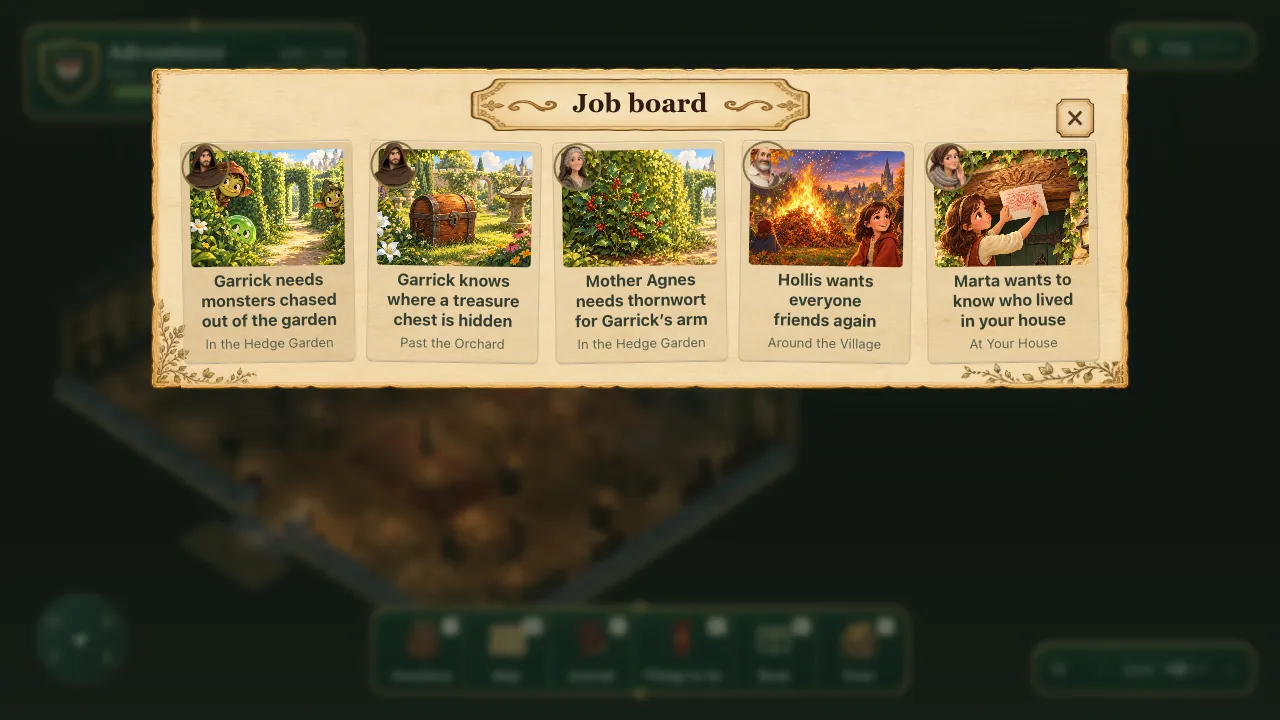
The Charwood had only just been given its own mood when the bigger problem caught up with me. The first note on my list after the kids' playtest was about the story, not the woods: "I got a bit confused about the story line about cutting a root... why am I doing that? I didn't understand why the old man has asked me to do it?"
Where things stood
The game had places and four main quests, but no story to follow to an ending. In the same long list of notes I wrote: "I didn't want to do the hedge maze again, I wanted Charwood, or castle... users should go through the various mazes, worlds rather than repeating." And the sentence that set the direction: "The core premise of the game here is mazes around the core story arc."
The main line should stand out and the rest be found: "Other quests can be added of course, but they should be discovered organically, rather than directed." Then: "Let's cook!!!"
Late that evening: build the lot
Late that evening I handed the whole thing over: "carry on creating the quest and flow and mazes / side quests / story arc, with the needed worlds, conversations, characters, items, meshy models and more."
Then the part I cared about most: "For story arcs, mazes, look and feel give it an independent reviewer with context on the story and what the player would have done. Ensure the level is right, the look feel is of interest to a player and keep building as much as you can." And I went AFK.
The Claude orchestrator started with one spec: "a child can play one hero from the first morning to an Act 2 finale on Lantern Night". Tilly's fever remedy in the hedge maze, wolves in the Charwood, silver in the old keep, a fen-light for Wren's lantern, Hob's lamp from the old mine, then the spiders of the deep hedge garden. Last, Lantern Night itself: say a lady's name at the well, leave Grandfer's pressed flower on the Vere vault, and cut one root at the garden gate with his heron knife.
That root is the one my kids asked about. Now the whole campaign explains it.
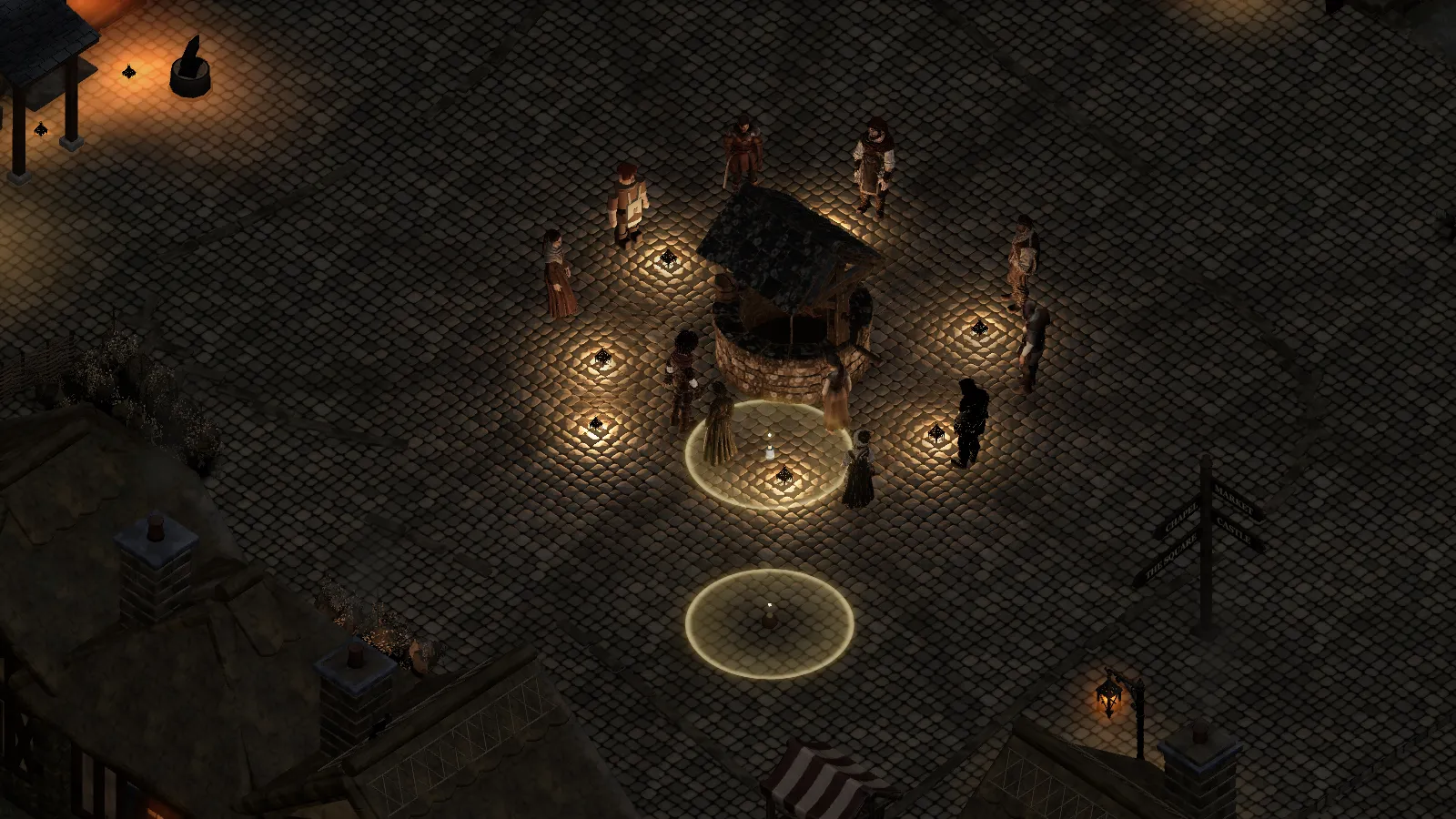 Lantern Night at the well: the village gathers and the lanterns are lit.
Two reviews before any code
The spec was reviewed twice before any code: for story, then for feasibility.
The story reviewer's top finding was simple: Lantern Night lasts four game hours, about eight real minutes, and a slow reader could miss the finale. So the night now waits for the child. While a Lantern Night step is open the clock stops before midnight and the village keeps its places, even after a reload. It also called the twist unearned: the spiders turn out to guard the garden, but the hero would have spent the quest killing them. So that quest has no hostile spiders: they sit on the hedge tops and watch, and the Silkmother yields to a hero who simply waits in her ring.
Then a Codex reviewer checked the spec against the code and found plenty that could not work yet: named bosses were refused, the mine road opened the old stub, and a serpent boss had no rig route. The mine got a goblin instead.
Under the hood The Codex review had 0 Critical, 8 High and 8 Medium findings, each checked against the code it cited; none was rejected. The save schema went to 13 for keepsakes, and the server's PHP ledger changed alongside the game's.
Five owners, two waves
Five owners built it overnight, each in its own worktree on paths no one else touched: the quest engine (keepsakes, festival steps and resting until Lantern Night), places and bosses, assets, quest content, and the village staging.
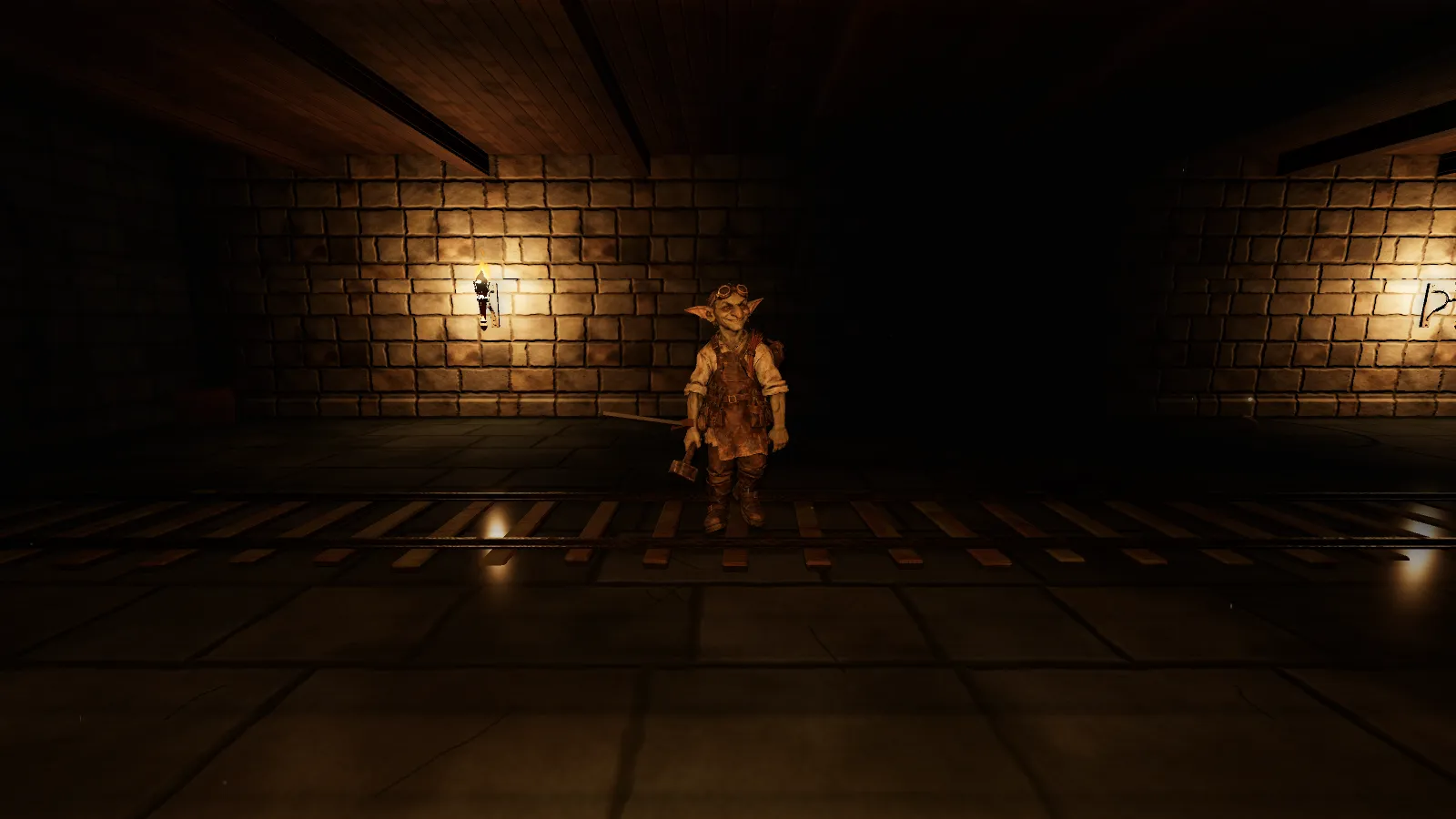 The Goblin Tinkerer in the old mine, "a cheeky tinkerer with a hammer and goggles, not a horror", as his brief put it.
Under the hood The whole asset bill was US$1.68 of a US$50 OpenAI cap and 149 of 250 Meshy credits, 30 of them on an ore cart made before the assets owner found the kit already had one. It recorded that as its own mistake.
A fresh hero plays it
The last piece played it. A verifier started a new hero and played all seven main quests and four side quests with real key presses: no teleporting, no debug grants, time passing only by play and sleep.
Every reward landed, but it found the gaps a child would hit. Guidance sent you to an empty keep while Sella was elsewhere. The heron knife moment was buried three menus deep. The Charwood canopy hid the goal. And Old Greymane stood on the only route through two "small" side-quest woods, so a starter hero spent two potions each time.
Under the hood 52 of 66 checks passed, with 15 defects and none critical. It also wandered the village for ten real minutes on Lantern Night and reloaded halfway through; the night held both times.
The story reviewer read that record as a child would and ranked ten changes. Two fix pieces closed them by morning. People the main line needs now wait somewhere public. Goals sit in clearings. Side-quest woods are small, with no Greymane. The Silkmother lowers and her ring dims while you wait. The Tinkerer stayed an ordinary fight; Bram's hand-in line says where he went: "The clanking goblin has gone home to his own hills."
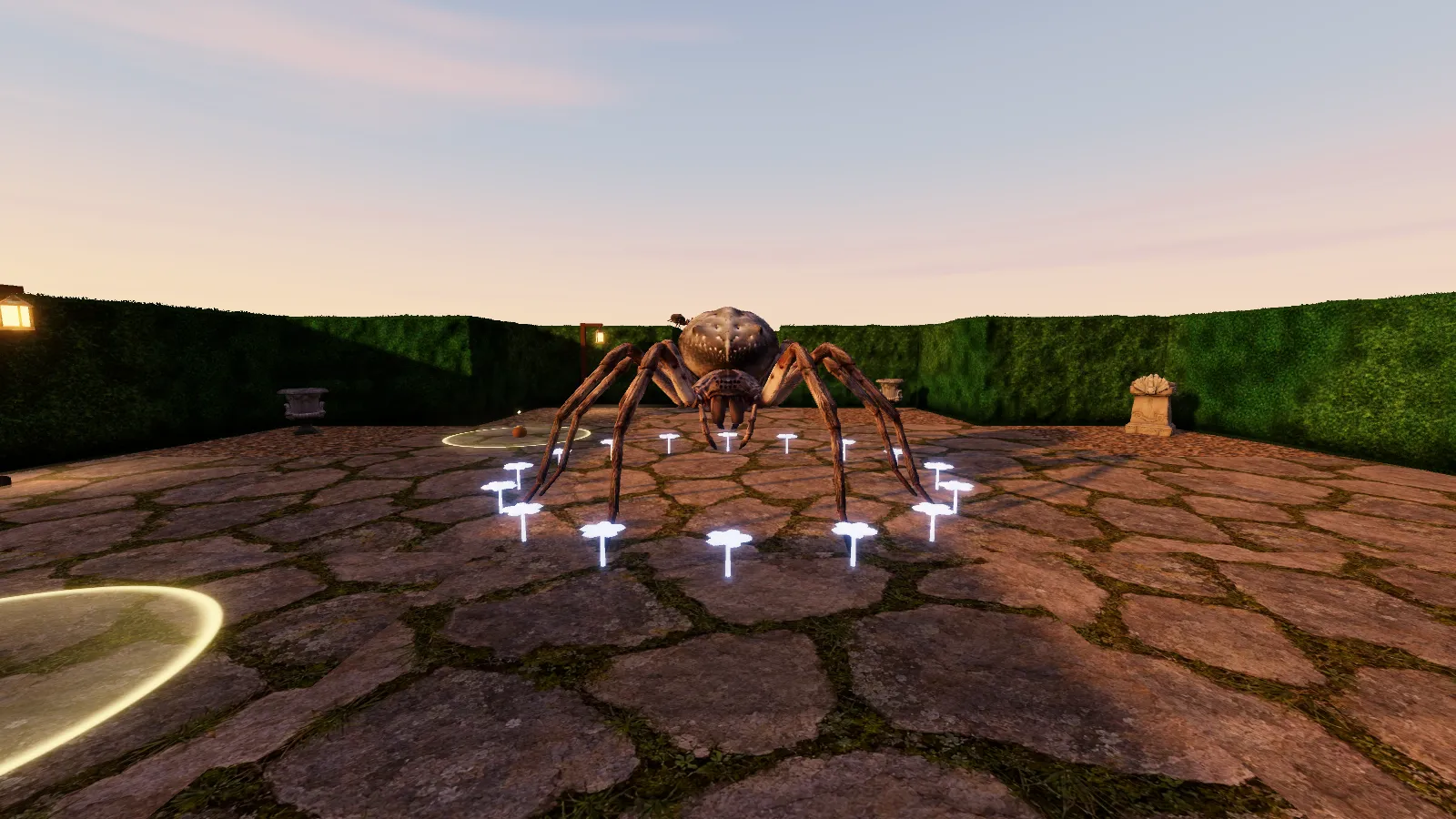 The Silkmother's web court in the deep hedge garden. Stand in the ring and wait, and she lets you pass.
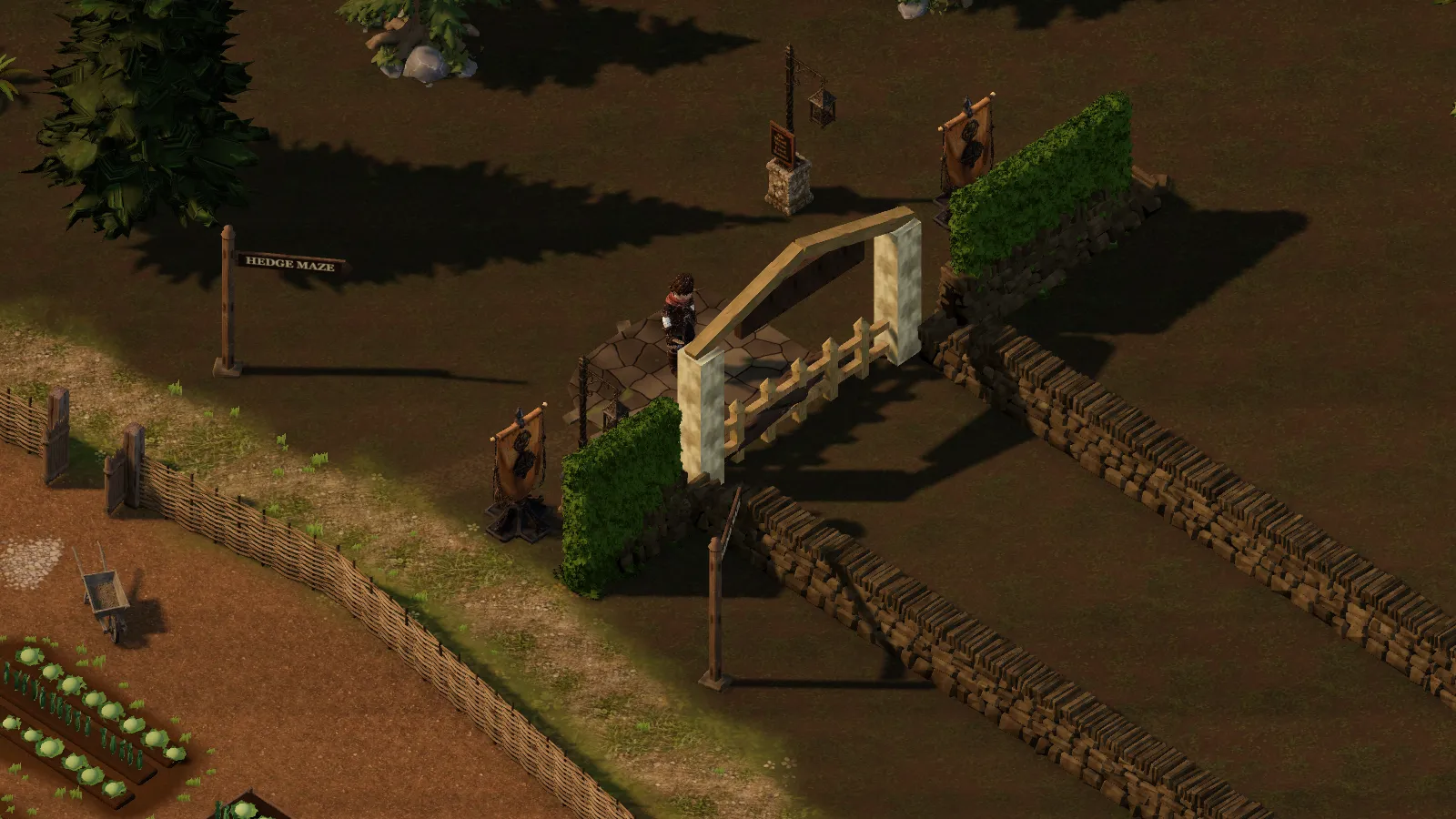 The garden gate before Lantern Night.
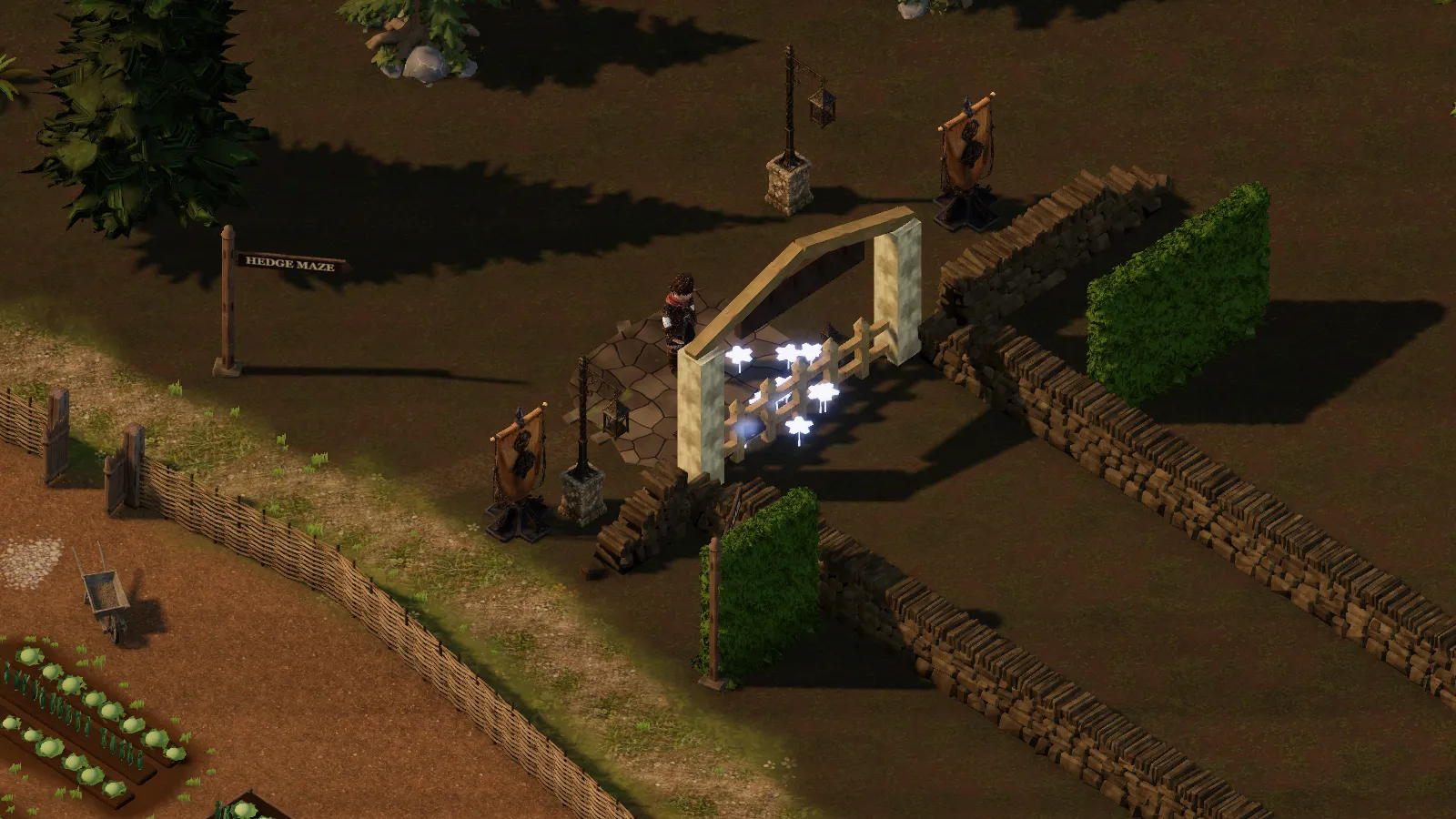 And after: the root cut, the hedge drawn back and moonpetal in the gap. The change stays in the village.
Playing it myself
My first message the next morning was "how do I start a new game?" A little later: "Can I do a run through now of the game, for feedback".
I found what no review on paper can feel. "After I've done the first quest, some 'hint' at the next quest should be shown... I was a little lost at first." "Does time pass when I'm in a maze / quest area? If not it should." "We need to guide the user that sleep is an option." That one mattered more than it sounds: Lantern Night is in winter, and you reach it by resting. "Queue all this stuff," I said, and a sleep tip and a clock that runs in every world came out of it.
By the afternoon: "I'm happy at what you've done." I asked for voices too: "I should have some credits in ElevenLabs to do this." The campaign's 37 new greetings went in, each in its speaker's voice.
Then: "Can you do some more quests." Six more side quests followed, Wren's drowned lanterns and the marbles in the well among them, with no new step kinds and no schema change: the best proof the overnight engine was right.
One side quest beat me: "I've looked above my door but it's nowhere to be seen? I can't seem to find a name or complete that". The house's way out was taking the prompt. Now the lintel wins.
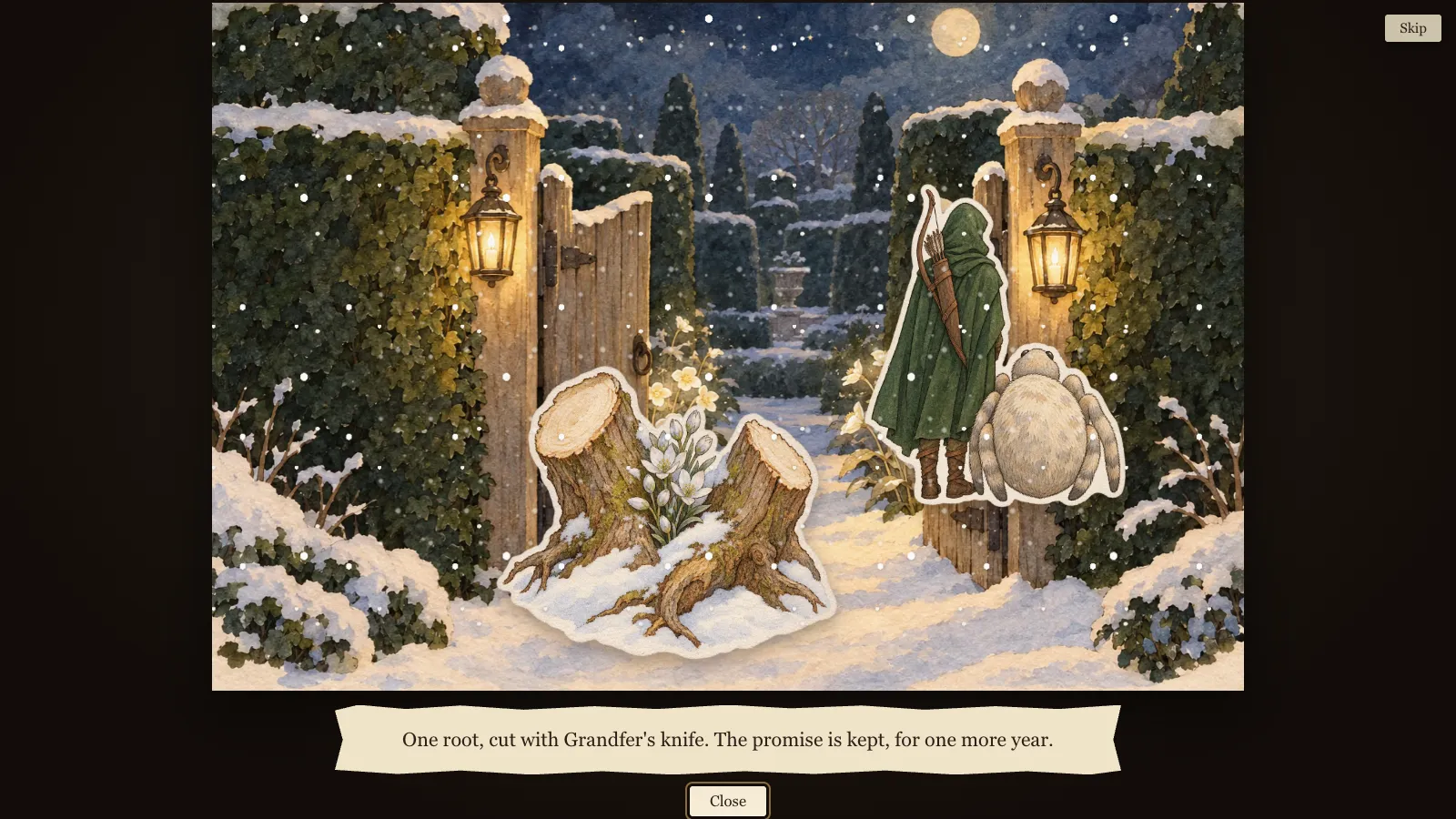 The last page of the Lantern Night storybook, which plays once when the promise is kept.
What I took from it
Reviewing on paper is cheap: the eight-minute window and the unearned twist would each have taken a playthrough to find. Owned paths let five agents build at once. A fresh hero's playthrough found the confusing parts before my kids did.
The small things were still mine to find, by playing. And the card that offered each of these quests was, in my words that morning, "too much for an 8 year old to take in".